

Emergency assessment and management of pediatric polytrauma
1. Introduction
Initial assessment and stabilization of the pediatric trauma patient in the emergency department is vital. Factors affecting morbidity and mortality include:
- Injury energy
- Brain injury
- Age
- Injuries to vital organs
Measurable risk factors for mortality are:
- Delay between injury and admission/presentation
- Shock index, pediatric age-adjusted (SIPA)
- Initial vital signs in the emergency department (systolic blood pressure, respiratory rate, body temperature, airway status)
- Glasgow coma scale (GCS) at the accident locus and in the emergency department
The risk of death in hospital correlates closely with a GCS score of 3 and a systolic blood pressure <98 mm mercury in the emergency department.
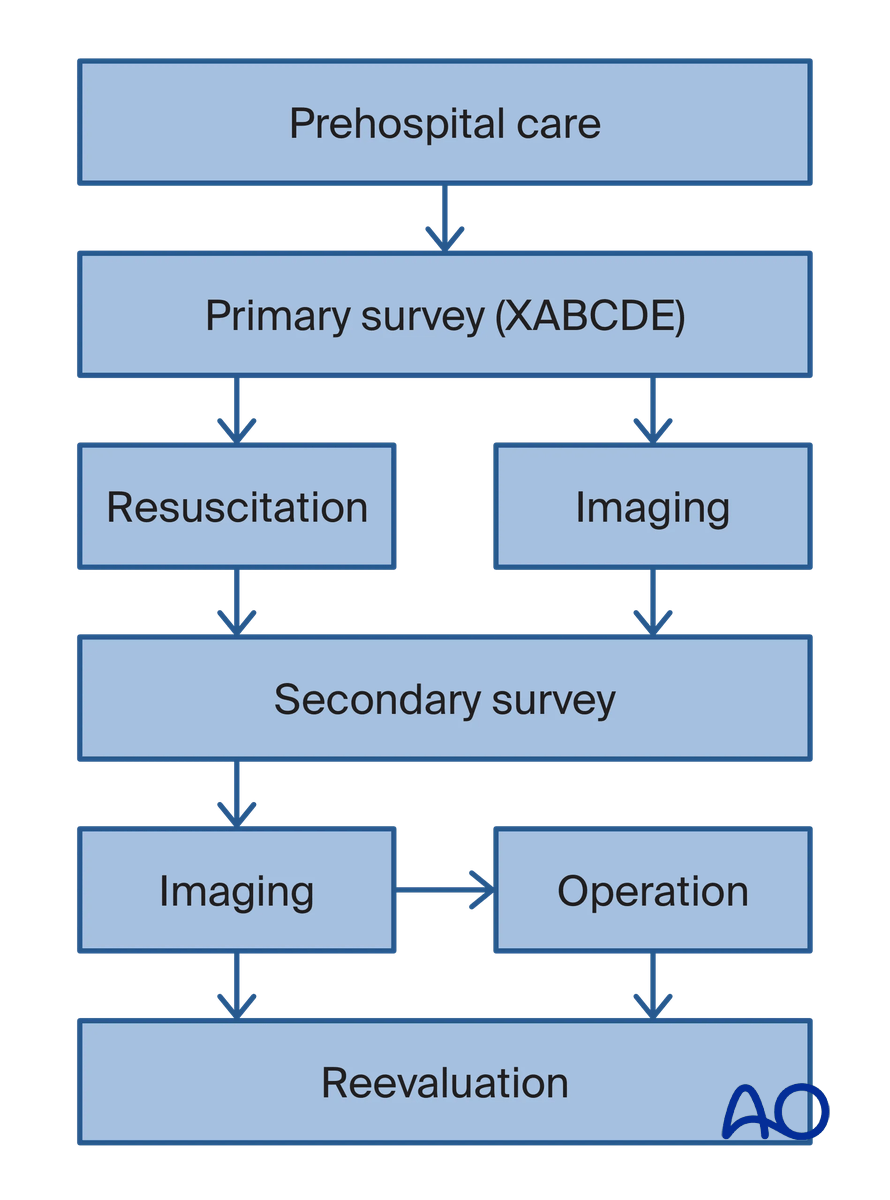
Sequence of care in the emergency room
The care of the pediatric polytrauma patient should follow a systematic approach, eg, the principles of its advanced trauma life support (ATLS) and trauma resuscitation in kids (TRIK), which includes:
- Rapid diagnosis of respiratory, or circulatory, compromise
- Correcting problems with oxygenation, ventilation and/or perfusion, to prevent cardiorespiratory collapse
The sequence is as follows:
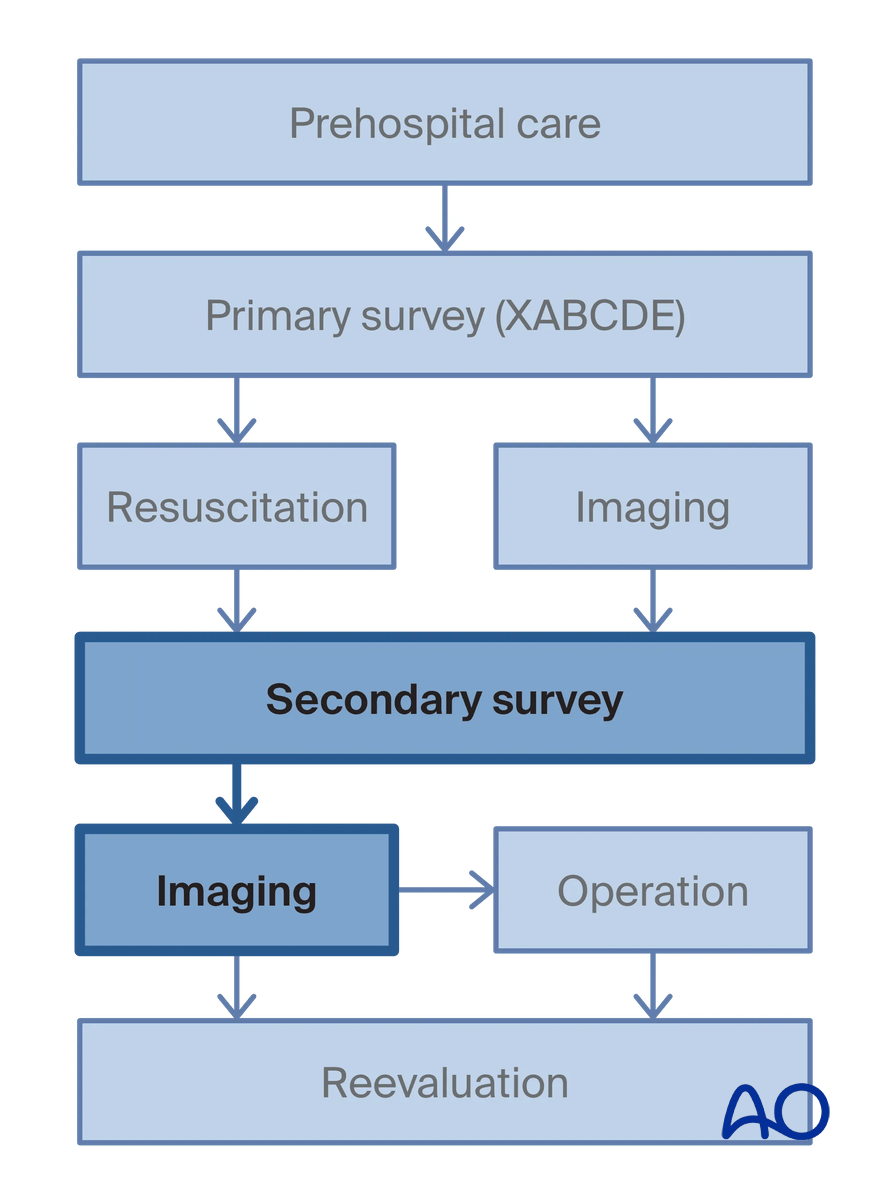
- Primary survey with resuscitation, adjunct imaging, and preliminary fracture stabilization
- Secondary survey with adjunct imaging
- Decision for transfer/definitive fracture management
Special conditions, eg, burns and neurotrauma, should be considered during primary and secondary surveys.
2. Team preparation/development
To prepare a hospital/team for emergency care of polytraumatized children, the following points may be considered:
- What is known in the field (building shared mental model)
- Need for additional resources (people and material)
- Readily availability of equipment obtained or supplies
- Clarification of role of each team member
3. Prehospital care and handover
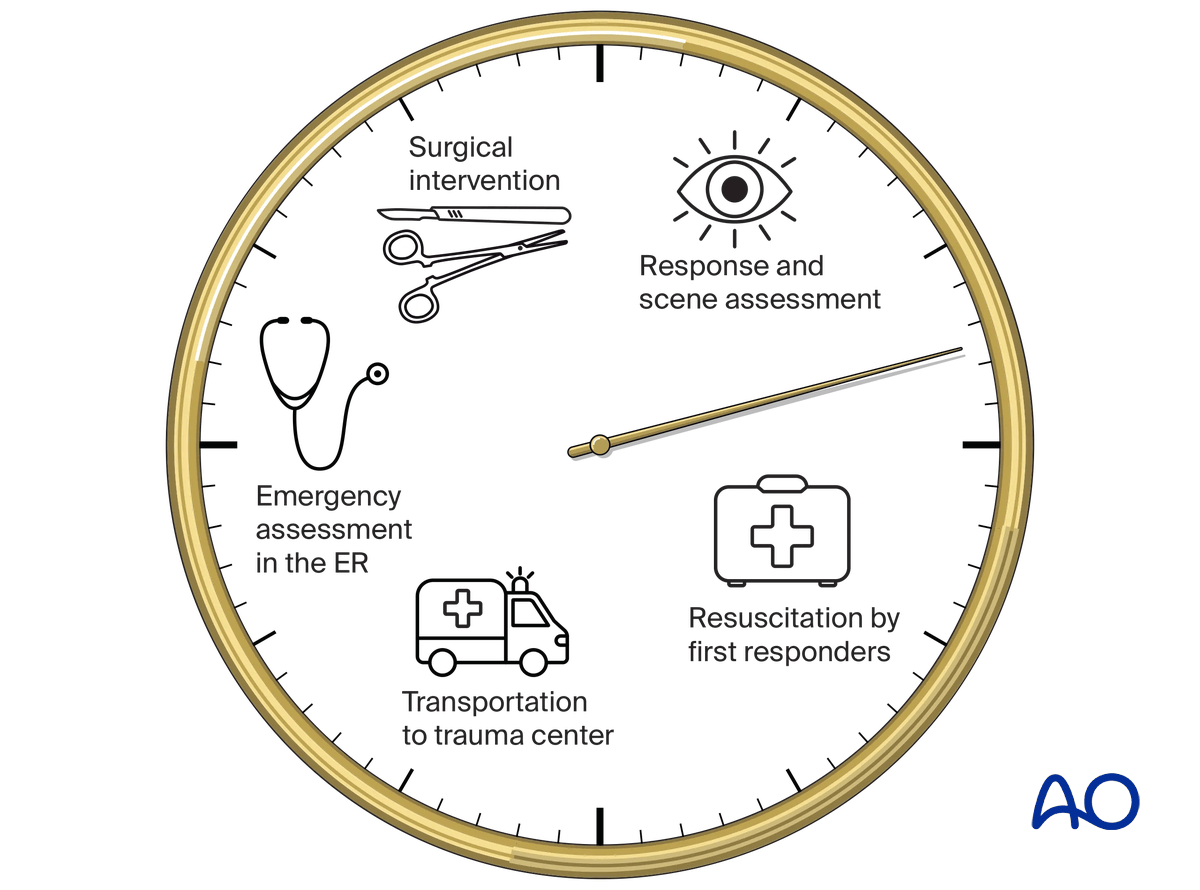
Golden hour concept for resuscitation
Resuscitation should start right at the injury site by the first responders. The aim of prehospital care is urgent treatment of life-threatening injuries and rapid transportation to the nearest trauma center.
The first one hour after the life-threatening injury is called the golden hour. Initiation of treatment within this time period significantly reduces morbidity and mortality.
Handover
The handover of a patient from the first responders to the emergency personnel should be performed in a systematic way. Such a protocol is detailed in IMIST-AMBO:
- Identification of the patient
- Mechanism/medical complaint
- Injuries/information relative to the complaint
- Signs, vitals and GCS
- Treatment and trends/response to treatment
- Allergies
- Medications
- Background history
- Other (social) information
4. Primary survey
The primary survey should follow the XABDCE sequence:
- X - Control of exsanguinating external hemorrhage
- A - Airway assessment and management
- B - Breathing and ventilation assessment
- C - Circulation assessment and volume resuscitation
- D - Disability: neurological assessment and management
- E - Exposure and environmental threats
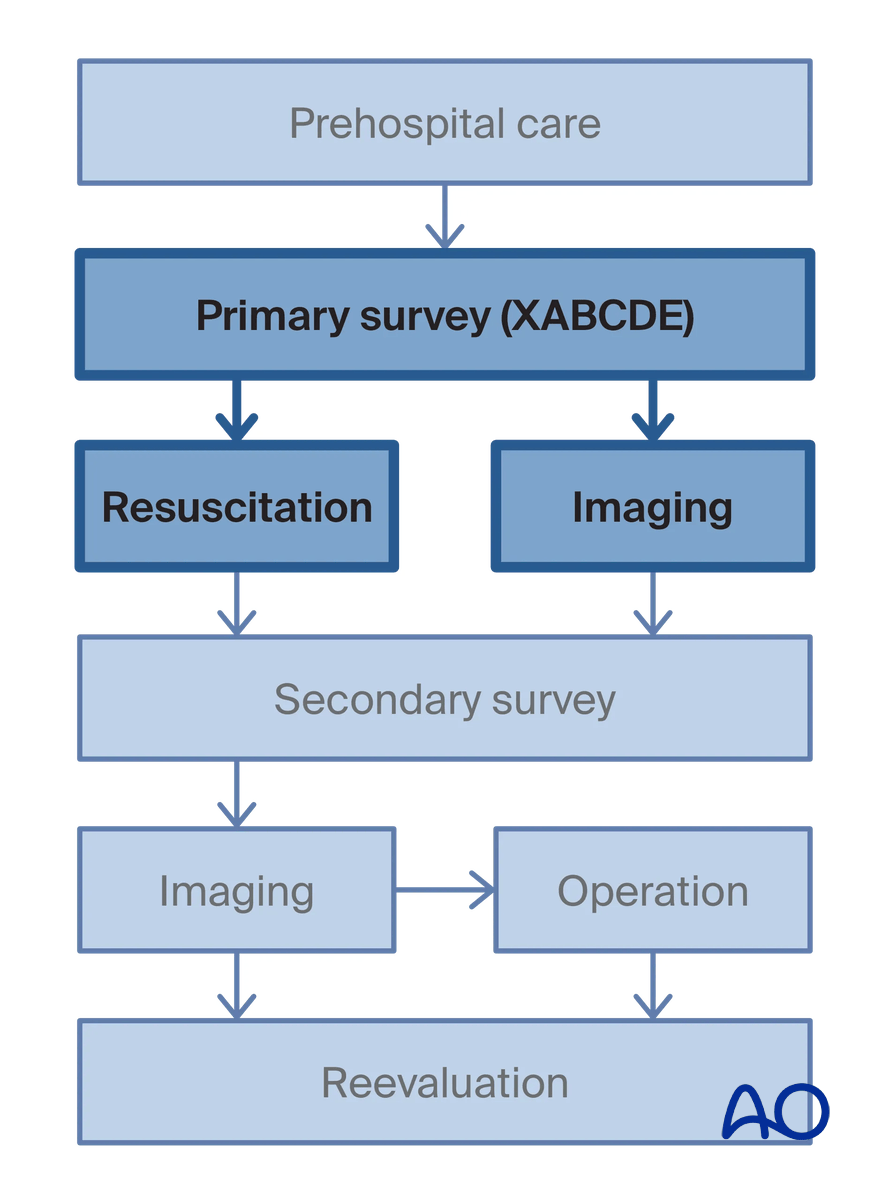
Pediatric modifications of ATLS
The adult ATLS sequence is outlined in the adult trauma section, pelvic ring, of AO Surgery Reference.
The components of ATLS apply in pediatric settings with pediatric specific injuries and physiology.
Trauma resuscitations follow a standard, protocolized approach outlined in ATLS and TRIK. Then afterwards, in certain injuries, there may be specific considerations, such as large body surface area burns or neurotrauma, to minimize adverse effects and improve outcomes.
Read more about burns and neurotrauma in the chapter Special considerations in pediatric polytrauma.
Emergency department setup
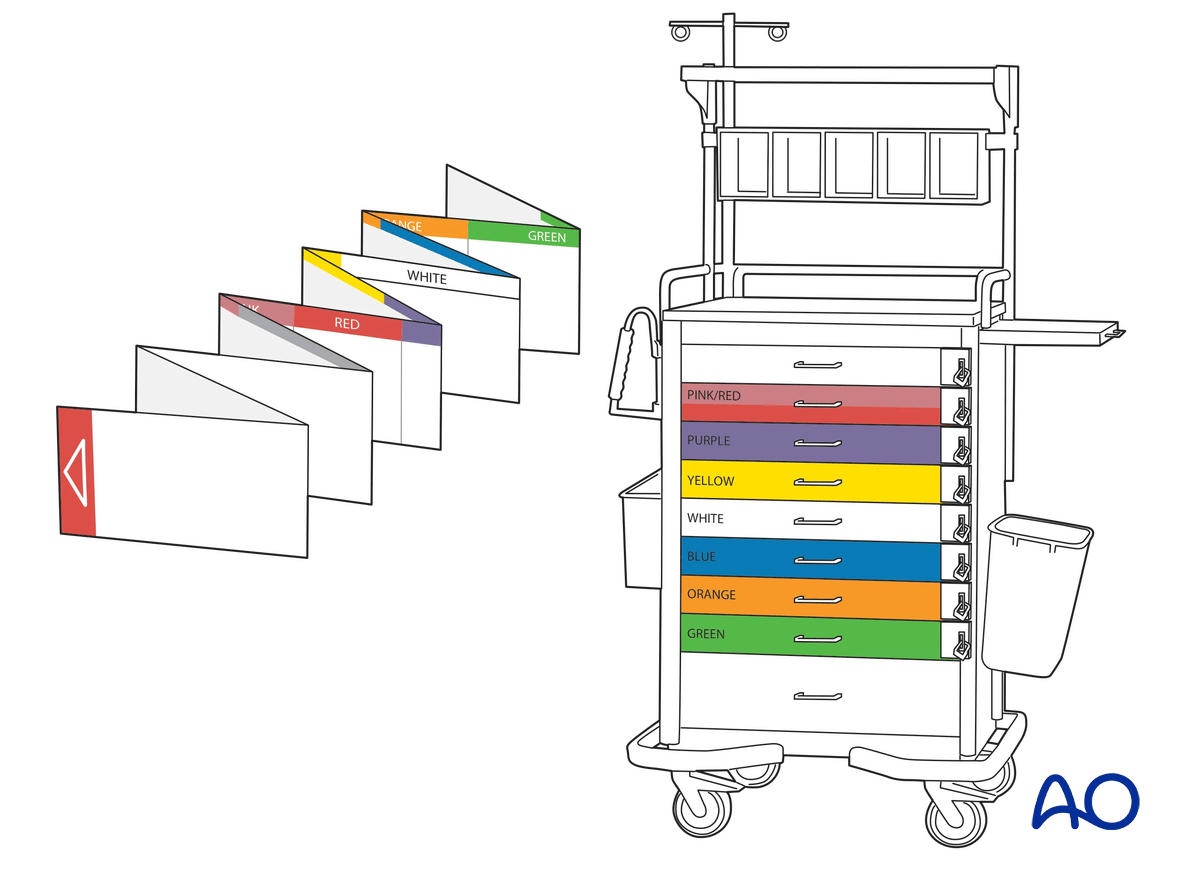
Use of the Broselow pediatric emergency tape and color-coded equipment trolley is standard for determining height, weight, correct drug doses, and drip concentrations in a child, and the appropriate size of equipment for resuscitation.
Pediatric considerations during resuscitation
AirwayFailure to oxygenate and ventilate is the most common cause of mortality in polytraumatized pediatric patients.
There are anatomical differences in the airways: they are smaller and have softer surrounding structures.
The occiput is proportionally larger in infants and small children, placing the neck in flexion which may result in an obstructed airway.
They also have a large floppy epiglottis and larger tongue. The trachea is anterior and shorter relative to an adult.
The diameter of the tracheal lumen is relatively smaller immediately in the subglottal region.
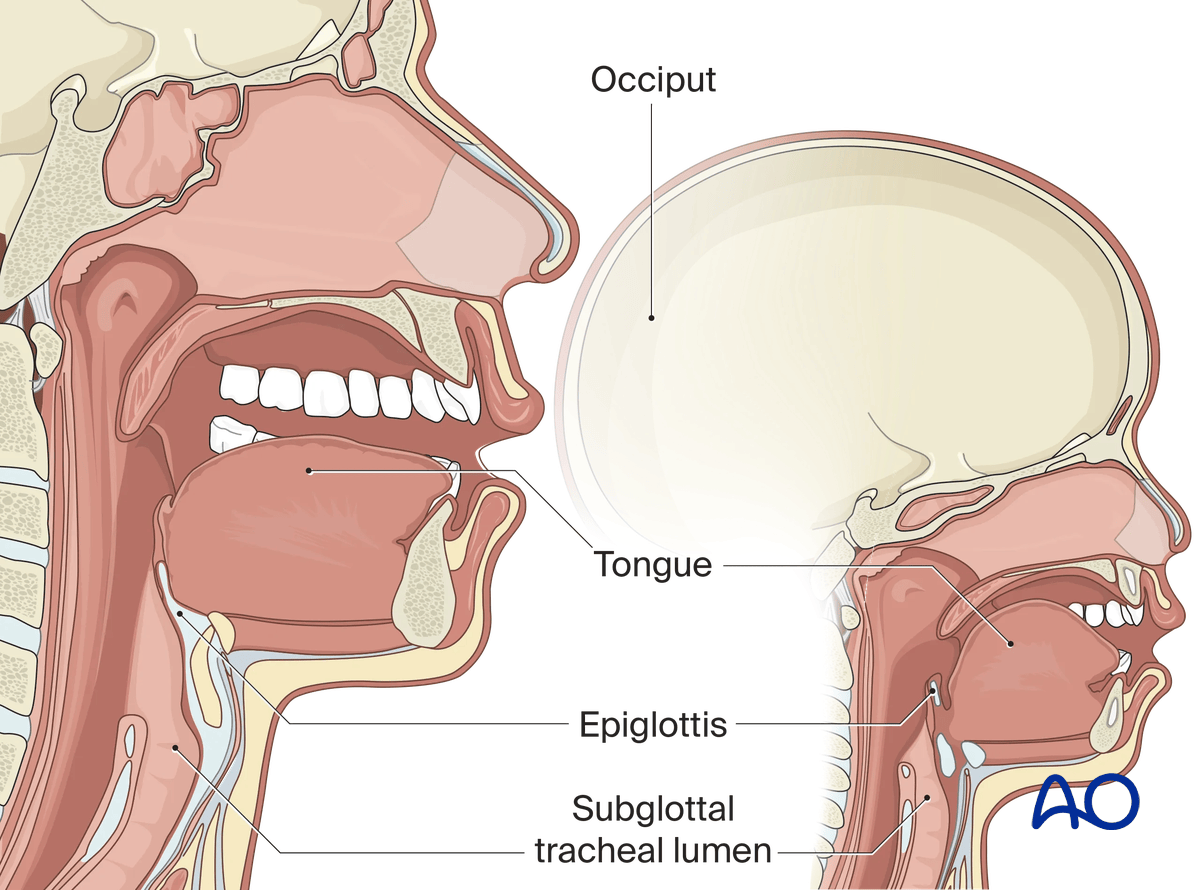
Adults breathe using their chest muscles where children use their abdominal muscles to move their diaphragm. This is an important consideration as abdominal injuries may impair a child’s ability to ventilate adequately due to pain.
Unlike in adults, permissive hypotension is not a viable strategy for resuscitation. Children have a significant physiological reserve and will not show vital sign derangement until they are decompensating.
Blood transfusion volume: Hypovolemia in a pediatric trauma patient is thought to be secondary to hemorrhagic shock and is best resuscitated with blood.
Tachycardia and poor skin profusion are early signs of hypovolemia and the need for resuscitation. The pediatric trauma patient becomes hypotensive when about 25% of the circulating blood volume is lost: delay until this point is reached is highly undesirable and, for this reason, early resuscitation and constant monitoring of the heart rate is vital.
Due to the increased body-surface-to-mass ratio, children may experience hypothermia more easily.
See also the section on Physiological response in pediatric polytrauma patients.
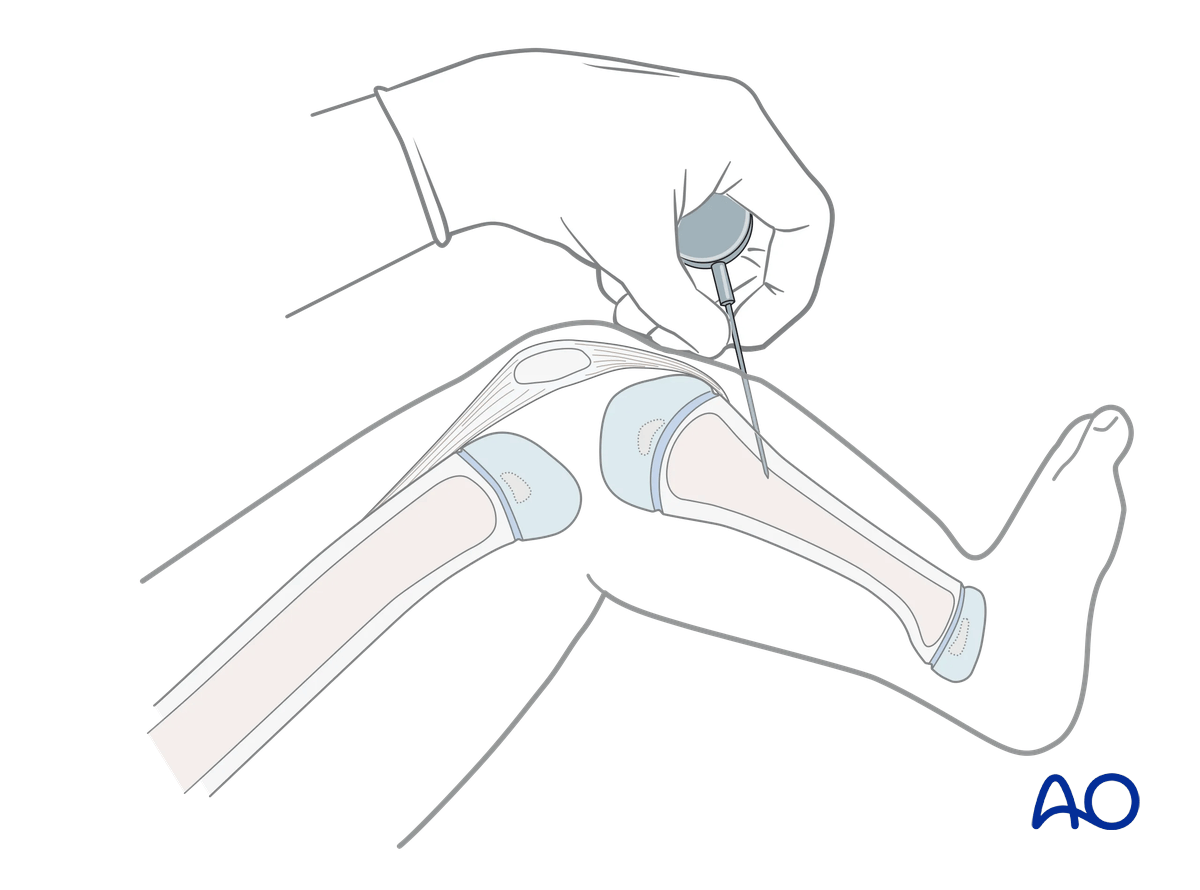
The underlying objective of the primary resuscitative effort is to avoid acidosis, hypothermia, and coagulopathy. Perfusion maintenance is critical and large-bore intravenous access is essential. In cases of difficulty of intravenous access, intraosseous infusion, via a cannula inserted into the proximal tibial metaphysis, can be used. Other sites include the distal femur or proximal humerus.
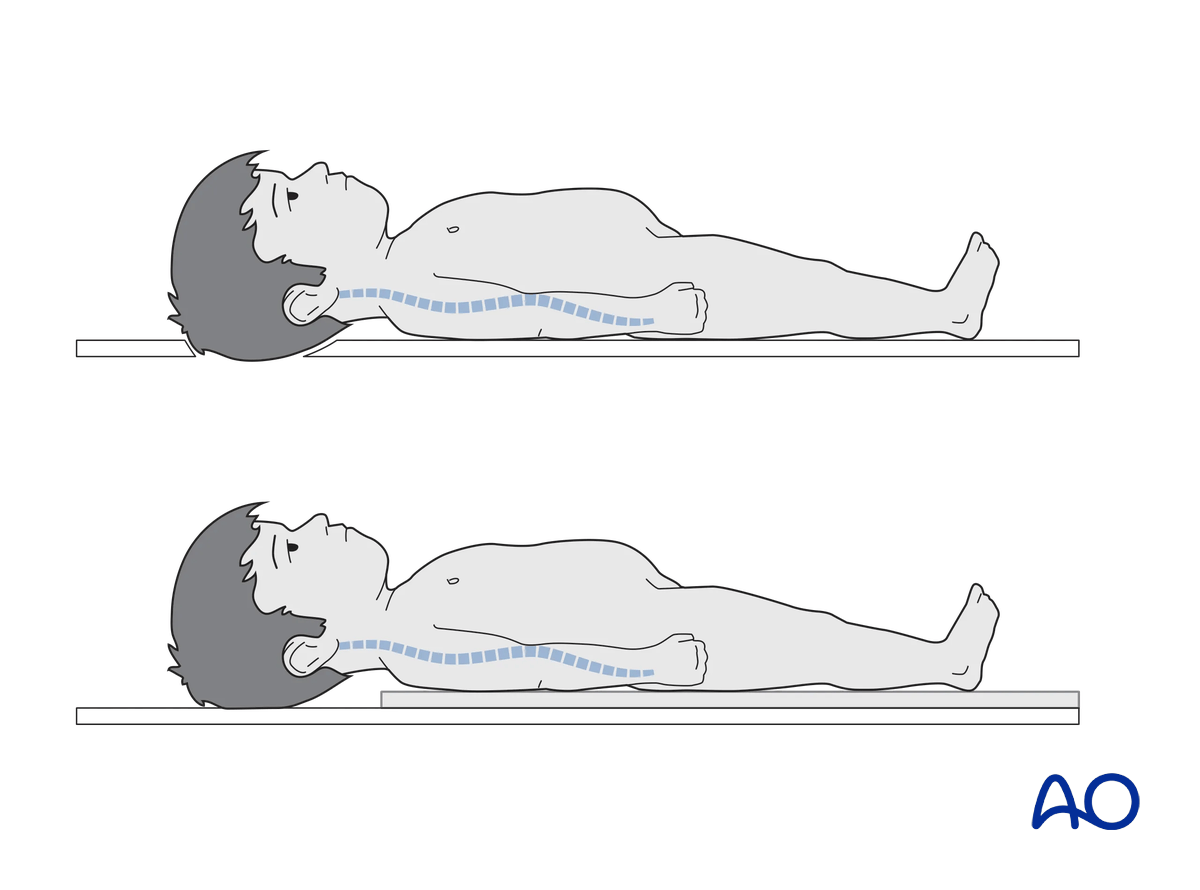
In any child with high energy-transfer injuries, the cervical spine should be stabilized whenever there is suspicion of neck injury.
Children have a relatively larger head in proportion to the rest of the body and a smaller chest size than adults; thus, the child’s neck is flexed in an unsafe position when a standard trauma backboard is used.
Proper immobilization of the pediatric cervical spine can be achieved by using a backboard with an occipital recess, commercial cervical collars, stabilizing blocks or a mattress pad to elevate the child’s body.
For management of spinal cord injuries, see the chapter on Special considerations in pediatric polytrauma.
Preliminary fracture stabilization
Preliminary fracture stabilization is part of the resuscitation of a pediatric polytrauma patient. It can help to control bleeding and helps with pain relief.
Imaging in primary survey
After primary survey, adjuncts may be obtained:
- Chest x-ray
- Pelvis x-ray
- Cervical x-ray
- E-FAST
Read more in the chapter on Imaging in pediatric polytrauma.
5. Secondary survey
Purpose
The secondary survey is performed after completion of the primary survey, resuscitation, and stabilization of any immediately life-threatening conditions. Its purpose is to identify injuries that may not have been apparent during the initial assessment. The examination should be systematic and repeated as the patient’s condition evolves.
Components of the secondary survey
The patient history should be completed (including last meal).
A detailed head-to-toe examination should then be performed, including:
- Head and facial injuries
- Cervical spine assessment
- Chest and thorax
- Abdomen and pelvis
- Spine
- Upper and lower extremities
- Neurological examination
- Skin and soft tissues
Children, particularly younger patients or those with altered consciousness, may be unable to localize pain or cooperate with examination. Therefore, a high index of suspicion for occult injury is required.
Adjunct investigations
The findings of the secondary survey guide further investigations and treatment. Additional imaging may include:
- Radiographs of suspected extremity injuries
- CT when clinically indicated
- MRI for selected neurological or soft-tissue injuries
Read more in the chapter on Imaging in pediatric polytrauma.
Fracture management
During the secondary survey, all suspected fractures should be assessed for neurovascular compromise, soft-tissue injury, and stability. Preliminary fracture stabilization should be optimized and priorities for definitive treatment established.
Read more in the chapters on Preliminary fracture stabilization and Osteosynthesis.
6. Decisions to treat vs transfer
Definitive management is dependent on institutional capabilities.
If the hospital has the capabilities to diagnose, monitor, and treat the child, they can remain in the hospital.
Early transfer to a specialized center is essential if such capabilities are not available in the local hospital/facility.
If a patient is hemodynamically unstable and not responsive to resuscitation efforts, early operative intervention is required based on suspected injuries. In these settings, damage control surgery is essential.
Preliminary fracture stabilization is part of the resuscitation of a pediatric polytrauma patient. It can help to control bleeding and helps with pain relief.
7. Special situations
Having adult facilities ready for pediatric resuscitation
RationaleGood trauma care is good trauma care.
What should be available for pediatric trauma care:
- Preparation for pediatric airway (experience and equipment)
- Knowledge in weight-based resuscitation and medication
- Appropriately sized equipment (Broselow set)
- Designated pediatric trauma expert
- Ability for debriefing to relieve the moral stress after each case
- Established relationship with a pediatric trauma center
Pediatric resuscitation in low resource settings
An algorithmic approach recognizing that some of the resources are not available should be taken.
In a low resource setting, a transfer mechanism to centralized specialized care should be developed within the trauma system. There should be clear guidelines and communication in the local care centers.
An interactive approach should aim to address most common injuries locally and to minimize the need for transfer where possible. Knowledge of local practices and outcomes are essential for performance improvement.
In cases of surge activity, triage calling additional resources (in personnel and equipment) is important to properly address the situation.
Mass casualty incidents in pediatric trauma
IntroductionA mass casualty incident (MCI) occurs when the number or severity of injured patients exceeds the resources immediately available to provide routine care.
Hospitals may activate a disaster response plan (eg, Code Orange) to coordinate personnel, clinical resources, and patient flow.
During an MCI, clinical priorities shift from optimizing care for an individual patient to achieving the best possible outcomes for the greatest number of patients.
Orthopedic surgeons should be familiar with their institution’s mass casualty response plan, including:
- Activation and notification procedures
- Incident command structure and assigned responsibilities
- Availability of operating rooms, equipment, and personnel
- Patient triage, transfer, and communication pathways
Participation in multidisciplinary simulation exercises helps identify gaps in preparedness and clarify individual and team responsibilities.
Mass casualty triage prioritizes patients according to injury severity, urgency of intervention, and available resources.
During an MCI:
- Initial assessment should focus on life-threatening injuries.
- Triage is dynamic and requires repeated reassessment.
- Definitive treatment may be delayed to preserve resources for patients requiring immediate intervention.
- Clinical decisions must be coordinated with the trauma team and hospital incident command.
Children require age-appropriate assessment, equipment, and consideration of their unique physiological needs.
Orthopedic surgeons play an important role in identifying limb-threatening injuries and prioritizing surgical treatment.
Key principles include:
- Prioritize injuries requiring urgent intervention, including vascular compromise, compartment syndrome, and severe open fractures.
- Use splinting or external fixation for temporary stabilization when definitive fixation is not immediately feasible.
- Apply damage control orthopedic principles when patient physiology or resource limitations preclude definitive surgery.
- Coordinate operative prioritization with the trauma team, anesthesia, and other surgical services.
Definitive fracture management should be planned as resources become available, with continued reassessment of patients awaiting intervention.
8. References
- Linnaus ME, Notrica DM, Langlais CS, et al. Prospective validation of the shock index pediatric-adjusted (SIPA) in blunt liver and spleen trauma: An ATOMAC+ study. J Pediatr Surg. 2017 Feb;52(2):340–344.
- Iedema R, Ball C, Daly B, et al. Design and trial of a new ambulance-to-emergency department handover protocol: 'IMIST-AMBO'. Br Med J Qual Saf. 2012 Aug;21(8):627–633.


