

ORIF 3-point fixation (without orbital reconstruction)
1. Principles
Each fracture case should be individualized for treatment planning and execution because fixation requirements differ from one fracture to another. There are some general principles for fixation of zygomatic complex fractures when plate and screw fixation is used:
- Self-threading screws are utilized.
- Plate selection: titanium plates and screws have reduced scatter in postoperative CT scans. Selecting an L-, T-, or Y- shaped plate for zygomaticomaxillary buttress region fixation allows greater flexibility in positioning screws to avoid tooth roots in the alveolar process.
- Use a thin plate at, or preferably below, the infraorbital rim to minimize visibility and palpability. The skin and muscles overlying the infraorbital rim are thin and may atrophy with open reduction procedures.
- In cases that have concomitant fractures of other midfacial bones, it may be necessary to use additional points of fixation. Maxillomandibular fixation (MMF), should be completed before reduction and fixation are begun.
- Areas of bone loss: span the gap after initial reduction with a bone plate stabilized at either end of the defect. Alternatively, the comminuted fragments can be provisionally reassembled, stabilized with inter-fragment wires, their position improved, and the entire structure then stabilized with rigid fixation. In the case of extensive comminution with or without bone loss, judgment is required to fix the bone in the proper position without spanning the gap, or the pieces can be reassembled provisionally to confirm proper zygoma positioning. Generally, gaps over 5 mm can be bone grafted if native bone is unavailable. Grafts or comminuted fragments should be stabilized to the bone plate with individual fixation screws, the number of which is left to the operator’s judgment. This technique allows optimal osseous healing throughout the defect.
A correct anatomical reduction is required to reproduce the original structure of the zygomaticomaxillary complex and the proper alignment of the orbital walls. Fragments of the greater wing of the sphenoid and the orbital process of the zygoma should be appropriately aligned in a straight line to achieve an adequate contour in reduction of the lateral orbital wall.
The aim is to restore the orbital volume, the facial width, AP projection, and height of the midface. Proper reduction of the zygoma addresses the issues of AP projection and width of the midface.
Forced duction tests should be performed before and after reducing the zygoma to confirm that the extra-ocular muscle system has full and free excursion without entrapment.
Pre- and postoperative ophthalmologic examinations should be considered in all patients who have sustained periorbital trauma.
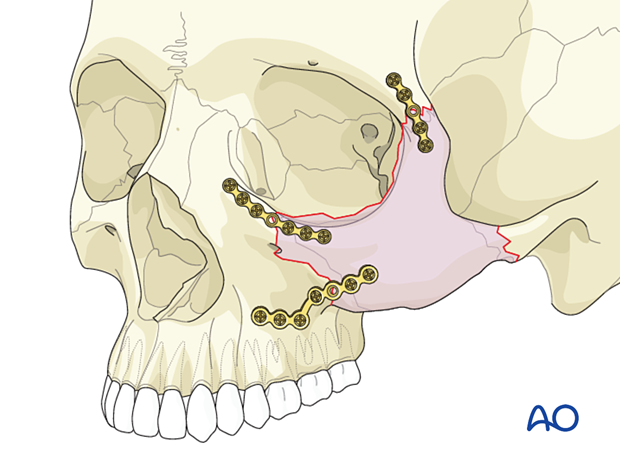
The 3-point fixation ensures accurate 3D repositioning of the fractured zygoma. The resulting orbital floor defects must also be evaluated and addressed if indicated.
Furthermore, reduction at the zygomaticomaxillary buttresses plays a vital role in the proper alignment of the zygomatic complex to achieve a good surgical outcome.
Order of reduction and fixation
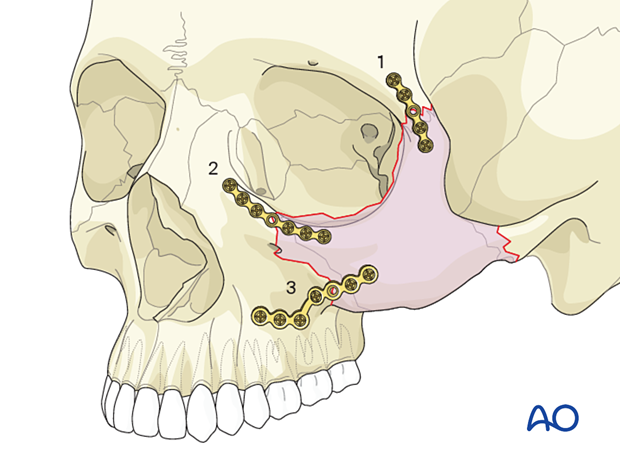
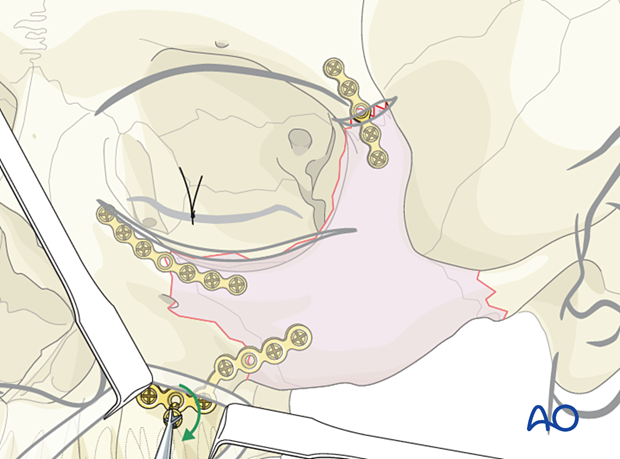
In a zygomatic fracture that does not require orbital floor reconstruction, after reducing the zygoma and inspecting the orbital floor, the first fixation plate is placed at the zygomaticofrontal suture.
It is debated whether the second site for fixation should be the orbital rim or the zygomaticomaxillary buttress.
Making the infraorbital rim the next site for fixation makes it easier to see if proper reduction of the lateral orbital wall has been achieved. Finally, a smaller plate is recommended for the infraorbital rim. A larger plate (commonly an L-shaped plate) is recommended for the zygomaticomaxillary buttress.
The 3-point fixation technique is commonly applied to comminuted fractures which are medially displaced and therefore do not require direct open reduction of the zygomatic arch through a coronal approach.
Perfect reduction of the zygoma in medially and inferiorly displaced fractures is usually possible through the three anterior approaches alone, resulting in satisfactory alignment of the zygomatic arch. Occasionally, placement of an elevator underneath the zygomatic arch from the zygomaticomaxillary exposure is helpful in further reducing the arch in these cases, helping it to snap into position. A description of the 4-point fixation technique is also provided in the treatments for zygomatic complex fractures.
Many surgeons argue that potential cosmetic sequela caused by a coronal approach to the zygomatic arch are worse than the deformity of a minimally displaced arch. The sequelae of a coronal incision include alopecia from the coronal scar, injury to the temporal branch of the facial nerve, and temporal hollowing from muscle and fat atrophy.
Involvement of lateral orbital wall
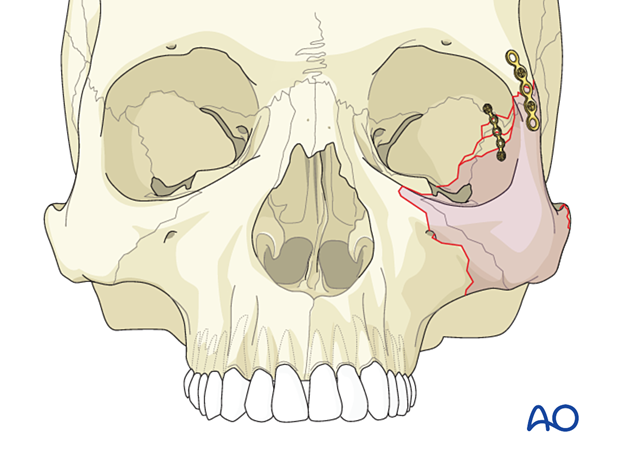
Isolated lateral orbital wall fractures are rare and only occur after isolated trauma to the lateral orbital rim. A lateral orbital wall fracture is a portion of every complete zygoma fracture (as shown).
Displacement of the lateral orbital wall (with or without combined zygomatic complex fracture) directly affects the intraorbital volume (ie, inwards displacement results in exophthalmos, whereas outward displacement results in enophthalmos). The increase in orbital volume may be camouflaged by posttraumatic swelling so that the sequelae mentioned above often become apparent only after swelling has decreased, which usually takes about two weeks.
For a detailed description of clinical and radiographic examination click here.
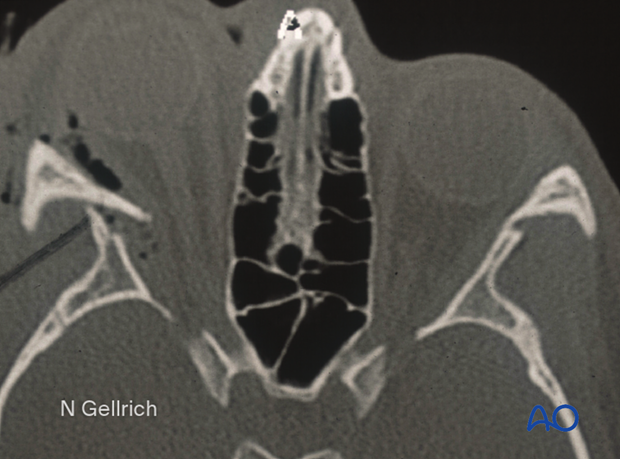
Clinical evaluation of fractures in the lateral orbital wall area may be more difficult due to the swollen overlying soft tissues. However, a CT scan can demonstrate fracture displacement at the lateral orbital wall area.
Severely inward displaced lateral orbital wall fractures might require emergency treatment if the intraorbital pressure is increased (due to displacement or intraorbital hematoma) or there are signs of compromised optic nerve function (see axial CT scan).
Some surgeons recommend placing a plate to reduce and fixate the lateral wall of the orbit between the greater wing of the sphenoid and the zygoma. This helps to achieve a proper reduction of this fracture. If there is comminution of the lateral wall of the orbit, the internal segments of the fracture should be reduced after alignment of the greater wing of the sphenoid beyond the comminuted fracture segments is confirmed. Placement of this plate is challenging because of the need for globe retraction.
This plate is best placed through the generous exposure provided by a coronal incision. It is difficult or impossible to place this plate through a short upper eyelid incision alone.
Teaching video
AO Teaching video on fixation of a zygomaticomaxillary fracture and an orbital floor fracture
2. Computer assisted surgery and patient-specific implants
Computer assisted surgery (CAS) has greatly improved the management of craniomaxillofacial trauma. Whenever available, an intraoperative CT scan should be obtained to verify the proper reduction of the fracture.
Read more about CAS here.
3. Approaches
Various approaches may be used for this procedure. They commonly include an intraoral maxillary vestibular approach, a lower-eyelid incision (transcutaneous or transconjunctival), an upper eyelid incision (upper blepharoplasty or brow incision), or a coronal incision with direct exposure of the zygomatic arch and lateral orbital region. Where possible, existing lacerations may also be used. Extension of existing lacerations is generally not preferred.
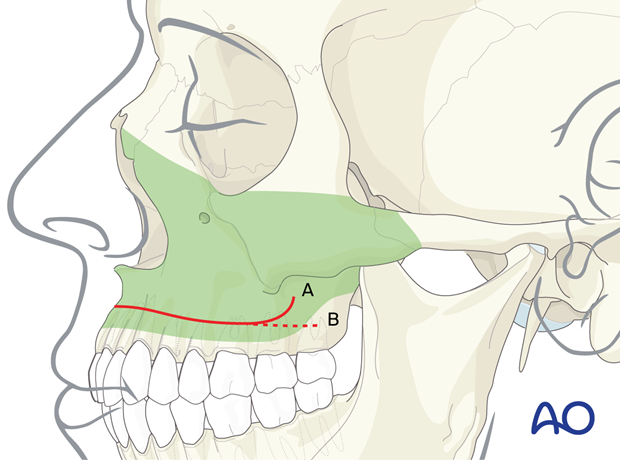
Intraoral maxillary vestibular approach
The intraoral maxillary vestibular approach facilitates the exposure of the medial and lateral inferior buttresses of the midface. It can also be used to expose the anterior and inferior portion of the inferior orbital rim. The maxillary vestibular approach is routinely used to reposition the depressed or comminuted zygoma.
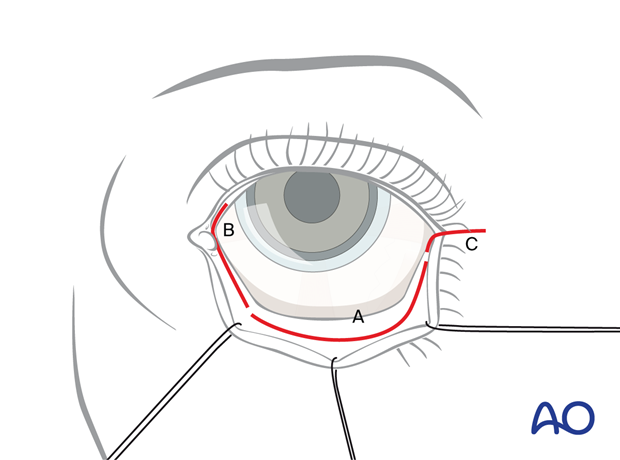
Lower-eyelid incision
A transconjunctival lower-eyelid incision is ideal for exposing the orbital floor, orbital rim, and the lateral orbital wall.
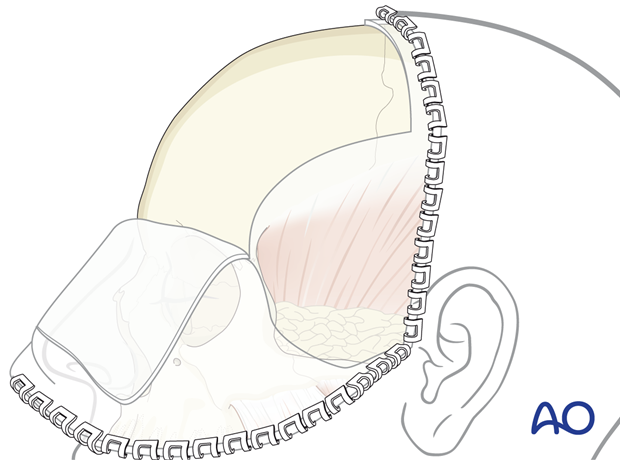
Coronal approach
A coronal incision is ideal for exposure of the zygomatic arch, lateral orbital rim (zygomaticofrontal suture), and lateral wall of the orbit (sphenozygomatic suture). It can also be used to harvest split calvarial bone graft.
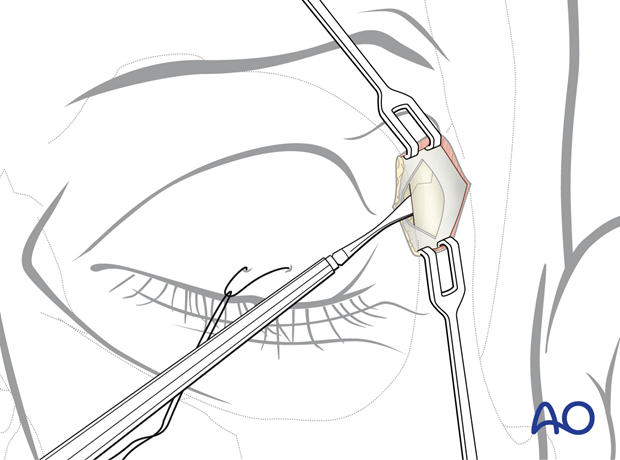
The lateral orbital wall can be approached via the lower eyelid incision (transconjunctival or transcutaneous) or the upper eyelid incision (blepharoplasty incision). It can also be approached via a coronal incision (if a coronal incision is otherwise required).
4. Zygoma reduction methods
Reduction maneuvers
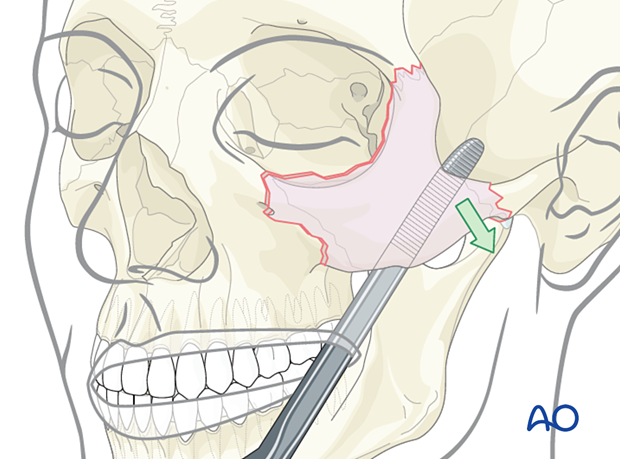
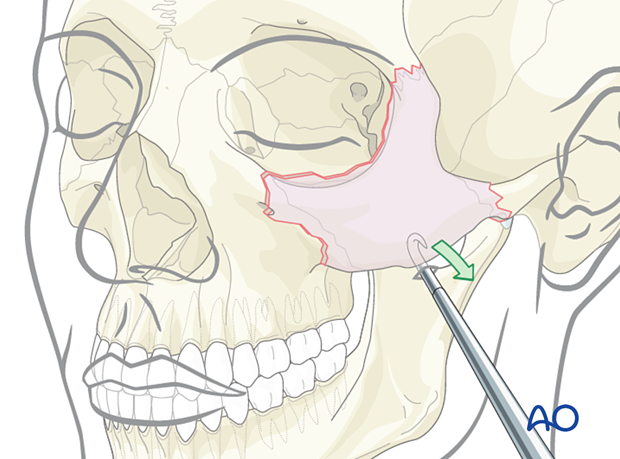
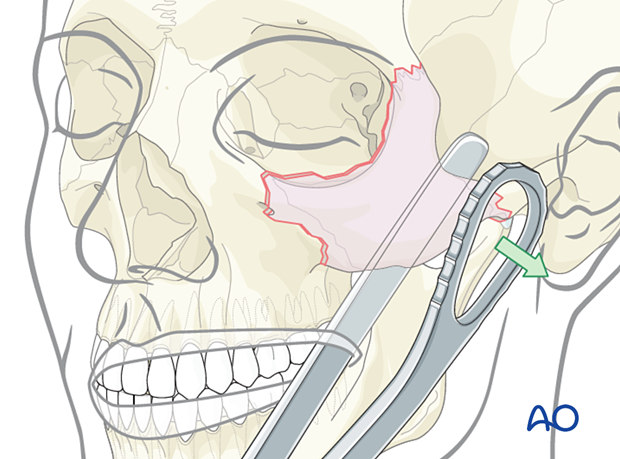
Mobilization and reduction of the zygomatic complex is achieved using a variety of instruments including elevators, hooks, screws, or Carroll-Girard type devices.
The reduction can be performed via a maxillary vestibular incision (Keen approach) using a Dingman elevator.
The reduction can also be performed using a hook.
A Rowe zygoma elevator can also be used.
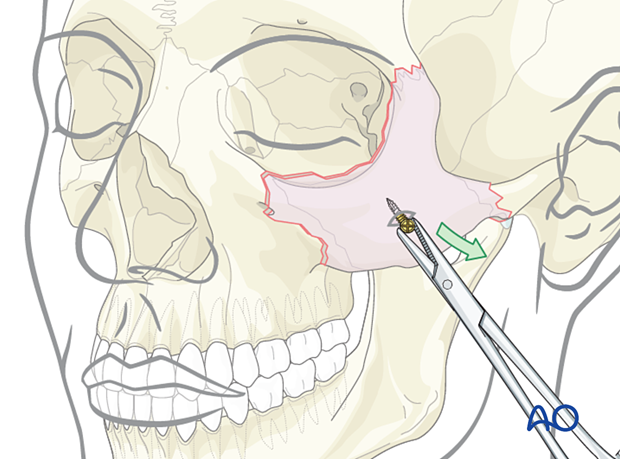
Alternative: screw and traction
A screw can be inserted into the zygomatic bone through the skin. This allows fracture reduction using the screw and a holding instrument.
Threaded reduction tool
A threaded reduction tool (Carroll-Girard screw) can be inserted into the zygoma through the lower eyelid incision or directly through the skin and used for reduction.
5. Placement and fixation of the first plate
Placement of the first plate
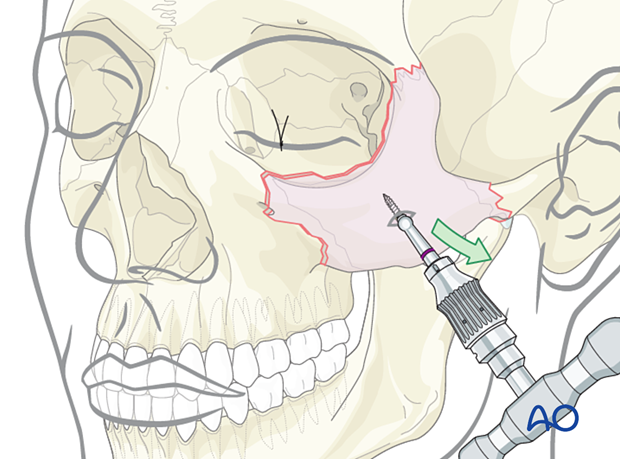
The first plate is placed across the zygomaticofrontal fracture area.
We recommend using a plate with at least five holes, with one hole spanning the fracture line. The plate should be appropriately adapted.
In this illustration, the first screw is placed in the unstable zygomatic fracture. An instrument is then used to pull the plate and zygomatic fragment in the cephalad direction to reduce the fracture further.
Fixation of the first plate
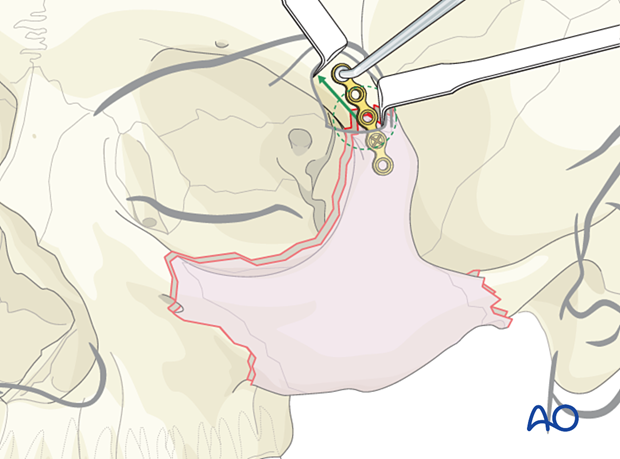
As a general principle, at least two screws should be placed on either side of the fracture. This often requires a plate with at least one extra screw hole to span the fracture. Ideally, the first screw should be placed on the mobile fragment side, and the plate used as a handle to close the gap and reduce the bone.
The first two screws should be placed in the plate holes closest to the fracture, one on each side of the fracture. Make sure that the fracture is adequately spanned so that each screw is placed in solid bone.
The final two screws in the zygomaticofrontal plate should be placed at the end of the intervention, after fixation of the zygomaticomaxillary buttress has been completed.
6. Placement of additional plates
Placement of the second plate
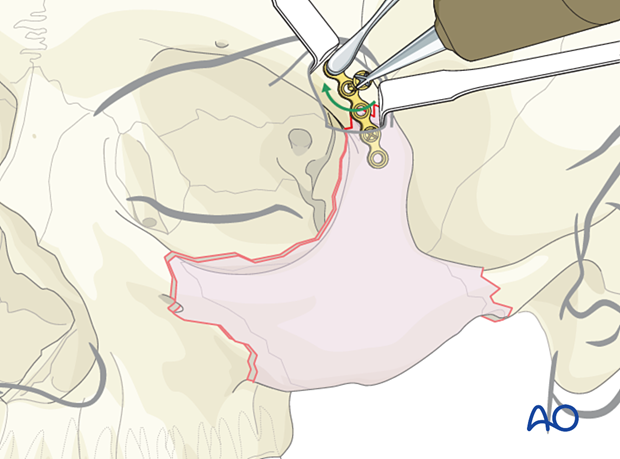
When looking through the lower eyelid incision, the orbital rim plate should be properly adapted. Use a plate with at least five holes with the extra hole spanning the fracture line. Reconfirm that the lateral orbital wall (greater wing of the sphenoid and zygoma) has been appropriately reduced before placing this plate. A minimum of two screws should be placed on each side of the fracture.
A common situation is comminution of the maxillary portion of the inferior orbital rim which aligns with the zygoma. In this case, the extra fragment must be spanned by a longer fixation plate which reaches the non-comminuted maxilla.
Placement of the third plate
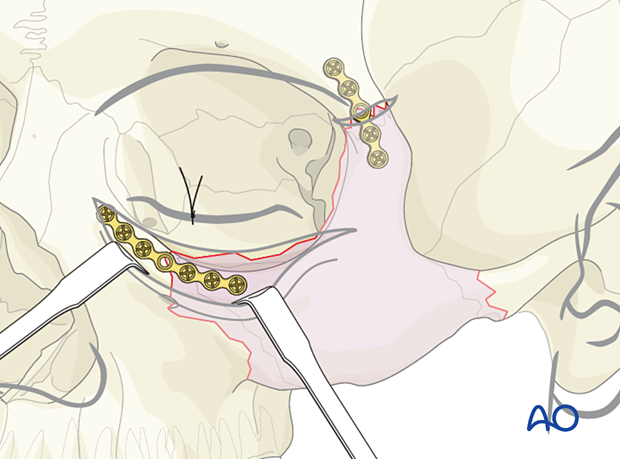
The fracture of the zygomaticomaxillary buttress is aligned.
A thick L-shaped plate is ideal for the fixation of this fracture.
The leg of the L-plate must be placed on the most lateral portion of the lateral maxillary buttress, where the bone is fairly thick.
The foot of the L-plate must be placed along the alveolar bone. Each screw must be placed carefully, to avoid the dental roots.
A common problem is failure to properly adapt the L-plate, resulting in screw placement into the thin wall of the anterior maxillary sinus.
Furthermore, it is not uncommon for the lateral maxillary buttress to be comminuted. In this instance, a longer span L-plate with multiple screw holes may be suitable.
We recommend that lower profile plates are used in the zygomaticofrontal area since the skin is very thin in this region and will get thinner over time, whereas a stronger plate is recommended for the zygomaticomaxillary buttress.
7. Aftercare
Patient vision is evaluated after awakening from anesthesia and then at appropriate intervals.
A swinging flashlight test may serve the same function in the unconscious or noncooperative patient. In some centers, an electrophysiological examination can be utilized if the appropriate equipment is available (VEP).
Postoperative positioning
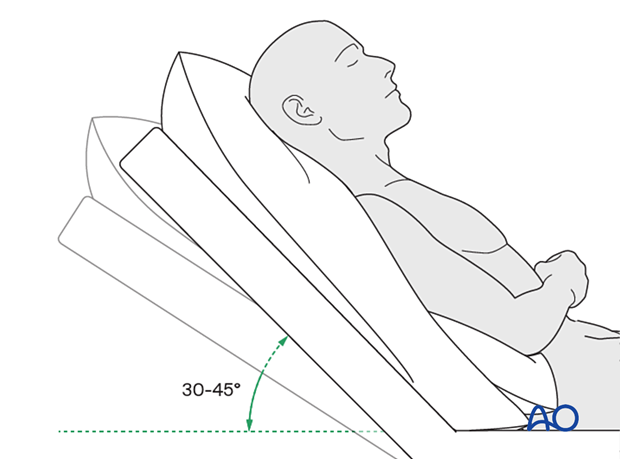
Keeping the patient’s head in a raised position both preoperatively and postoperatively may significantly reduce edema and pain.
Nose blowing
Nose blowing should not involve pressing on the sides of the nose to increase intranasal pressure. Finger pressure on the nose should not accompany nose blowing for at least two weeks following orbital fracture repair to minimize the chance of orbital emphysema.
Medication
The use of the following perioperative medication is controversial. There is little evidence to make strong recommendations for postoperative care.
- No aspirin or nonsteroidal anti-inflammatory drugs (NSAIDs) for seven days
- Analgesia as necessary
- Antibiotics (Many surgeons use perioperative antibiotics. There is no clear advantage beyond perioperative antibiotics, unless fracture repair has been delayed and there is maxillary sinus obstruction. Here the duration of treatment is dependent upon the circumstances.)
- Regular perioral and oral wound care must include disinfectant mouth rinse, lip care, etc.
Ophthalmological examination
Postoperative examination by an ophthalmologist may be requested if indicated. The following signs and symptoms are usually evaluated:
- Vision
- Extraocular motion (motility)
- Diplopia
- Globe position
- Perimetric examination
- Lid position
- If the patient complains of epiphora (tear overflow), the lacrimal duct must be checked
Postoperative imaging
Postoperative imaging should be performed within the first days after surgery. 3D imaging (CT, cone beam) is recommended to assess complex fracture reductions. An exception may be made for centers capable of intraoperative imaging.
Wound care
Ice packs may be effective in the short term to minimize edema.
Remove sutures from the skin after approximately five days.
Avoid sun exposure and tanning to skin incisions for several months.
Some surgeons prefer applying antibiotic-based ointment at the suture incision site till the removal of sutures.
Diet
Diet depends on the fracture pattern.
A soft diet can be taken as tolerated until there has been adequate healing of the maxillary vestibular incision.
Nasogastric feeding may be considered in cases with oral bone exposure and soft-tissue defects.
Patients in MMF will remain on a liquid diet until the MMF is released.
Clinical follow-up
Clinical follow-up depends on the complexity of the surgery and whether the patient has any postoperative problems.
With patients having fracture patterns including periorbital trauma, issues to consider are the following:
- Globe position
- Double vision
- Other vision problems
Other issues to consider are:
- Facial deformity (including asymmetry)
- Sensory nerve compromise
- Problems of scar formation
Eye movement exercises
Following orbital fractures, eye movement exercises should be considered.
Implant removal
Generally, orbital implant removal is not necessary except in the event of infection or exposure. Readmission may be indicated if the long-term stability of the orbital volume has not been maintained.
MMF
The duration and use of MMF are controversial and highly dependent on the patient and complexity of the trauma. In some cases where long-term MMF may be recommended, the surgeon may choose to leave the patient out of MMF immediately postoperatively because of concerns of edema, postoperative sedation, and airway. In these cases, the surgeon may decide to place the patient in MMF after resolving these considerations.
The need for and duration of MMF are very much dependent on the following:
- Fracture morphology
- Type and stability of fixation (including palatal splints)
- Dentition
- Coexistence of mandibular fractures
- Premorbid occlusion
Oral hygiene
Tooth brushing and mouth washes should be prescribed and used at least twice a day to help sanitize the mouth. Gently brushing the teeth occurs with a soft toothbrush (dipped in warm water to make the bristles softer).
Special considerations for orbital fractures
Travel in commercial airlines is permitted following orbital fractures. Commercial airlines pressurize their cabins. Mild pain on descent may be noticed. However, flying in military aircraft should be avoided for a minimum of six weeks.
No scuba diving should be permitted for at least six weeks.


