Intramedullary nailing
1. Introduction
Intramedullary nailing of tibial fractures can be performed through four surgical approaches. These include suprapatellar, medial and lateral parapatellar, and infrapatellar.
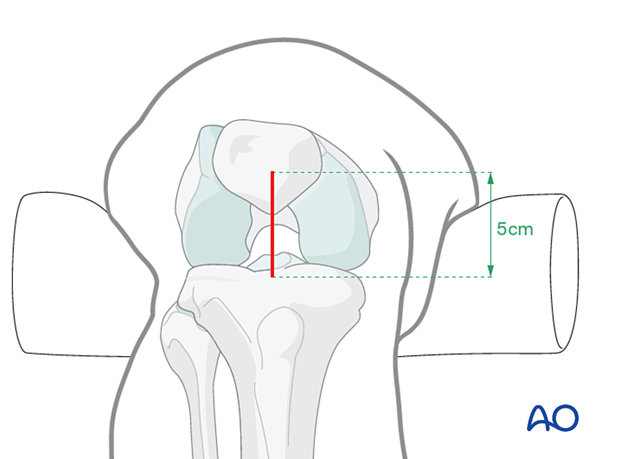
2. Suprapatellar intramedullary nailing
Suprapatellar nailing is done with the affected limb in a semi-extended position using special instrumentation. This technique is ideal for fractures involving any segment of the tibia and is particularly useful for managing fractures in the proximal and distal segments.
- Technique: Suprapatellar intramedullary nailing
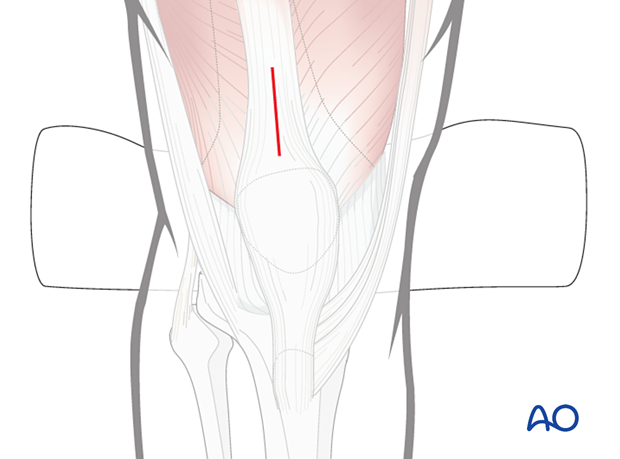
3. Medial parapatellar intramedullary nailing
Medial parapatellar nailing is done with the affected limb in a semi-extended or flexed position. This technique is ideal for diaphyseal fractures; managing proximal and distal segment fractures is challenging and may require additional surgical tactics to ensure that the tibia has appropriate length, alignment and rotation upon completion of the procedure.
- Technique: Medial parapatellar intramedullary nailing
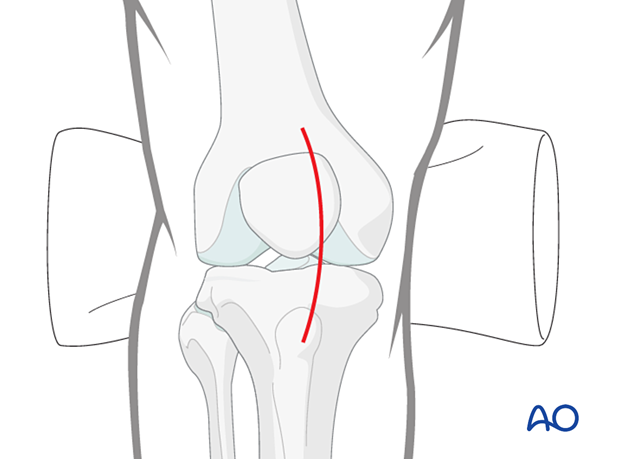
4. Lateral parapatellar intramedullary nailing
Lateral parapatellar nailing is done with the affected limb in a semi-extended position using special instrumentation. This technique is ideal for fractures involving any segment of the tibia and is particularly useful for managing fractures in the proximal and distal segments.
- Technique: Lateral parapatellar intramedullary nailing
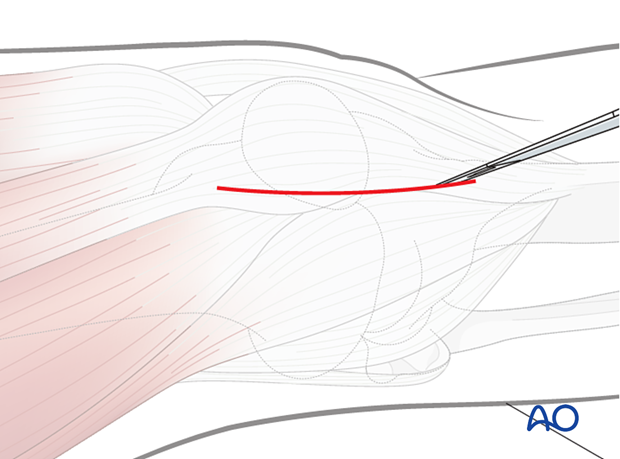
5. Infrapatellar intramedullary nailing
Infrapatellar nailing is done with the affected limb in a flexed position. The advantage of this approach is that it does not violate the knee joint. This technique is ideal for diaphyseal fractures; managing proximal and distal segment fractures is challenging and may require additional surgical tactics to ensure that the tibia has appropriate length, alignment and rotation upon completion of the procedure.
- Technique: Infrapatellar intramedullary nailing