

Observation
1. Indication
Observation is often indicated, especially if there is no change in the orbital shape, volume, or globe position and function.
If orbital roof fractures are found in conjunction with a cerebrospinal fluid leak, a dural tear, or any functional deformities, they may be addressed simultaneously.
Observation of orbital roof fractures depends on clinical evaluation and radiographic imaging. Secondary treatment can often be more challenging than addressing the fracture primarily.
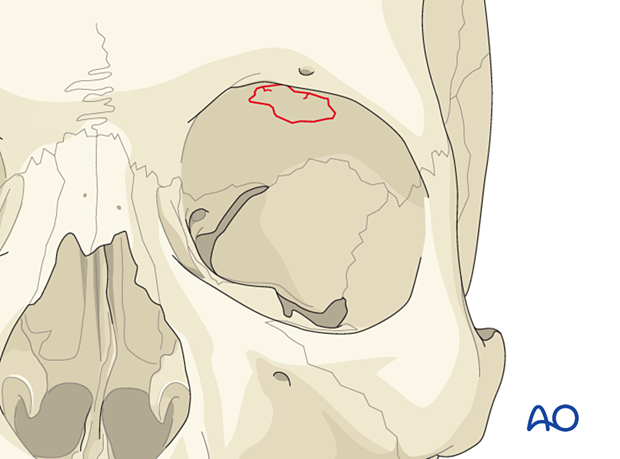
2. Follow-up
Orbital roof fractures with associated periorbital edema may present with proptosis and inferior displacement of the globe.
Whereas orbital floor fractures can cause enophthalmia, orbital roof fractures can cause exophthalmia and lower and anterior eye positional changes.
Ophthalmological and neurological examination is recommended.
If observation is chosen, early follow-up and serial imaging can be considered if functional or aesthetic problems persist. Regardless of fracture severity, mucocele formation is a possible complication when the fracture involves the frontal sinus. Long-term follow-up and repeat imaging are recommended.


