

Screw fixation
1. Principles
Compression of the articular surface
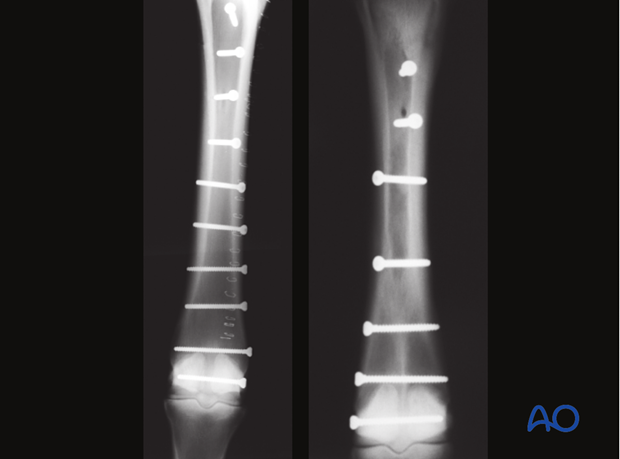
The major principles involved in lag screw fixation of these fractures are compression of the articular surface and compression across the spiraling fracture plane.
It is critical to consider alternative surgical treatments of medial condylar fractures that cannot be definitively seen to spiral. Fractures (especially in MTIII) that end in the mid-diaphysis are best treated with plates or possibly standing distal repair and cautious postoperative management (e.g. cross ties).
"Backward" fixation
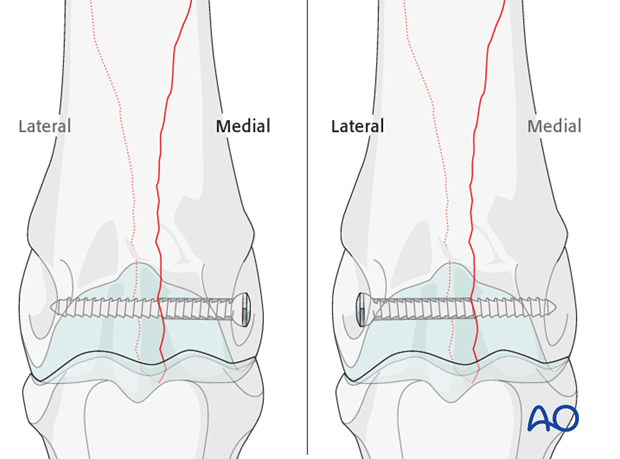
Although the glide hole is typically drilled through the smaller fragment and the thread hole across the larger fragment, this particular fracture is often repaired in the opposite manner. The major reason is that it is much safer and easier to approach the leg from the lateral side than the medial side during implant removal, which is routinely performed in the standing position. Fortunately medial condylar fractures tend to be very close to the midline so there is little difference between the width of the two fragments. The bone in this location is so strong, that 25 mm of thread engaged with a 4.5 mm cortex screw is already exceeding the strength of the screw. Although some term the lag screw technique “backward”, the strength of fixation is equally adequate.
Positioning
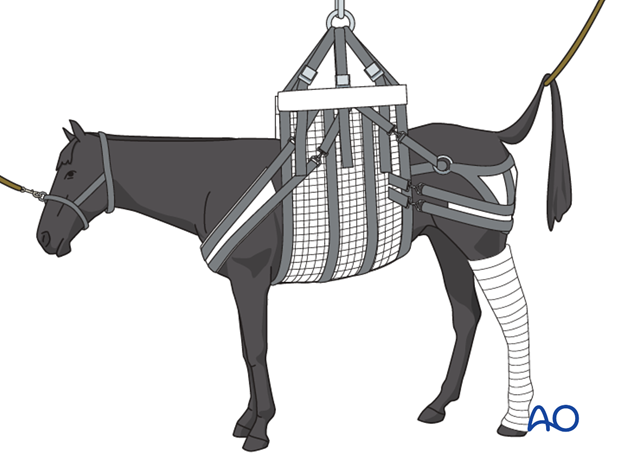
Induction for general anesthesia should be carefully controlled using a supporting tail rope and/or sling technique. This is particularly important with third metatarsal fractures.
The horse is usually placed in lateral recumbency with the affected limb uppermost, but some surgeons prefer dorsal recumbency.
2. Insertion of interfragmentary screws
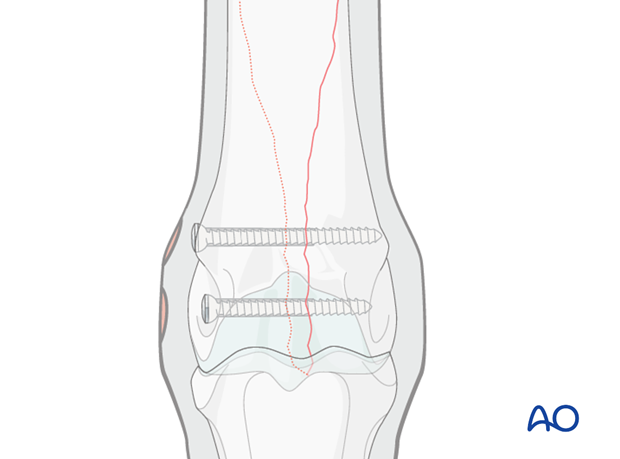
The distal two screws across the condyle are usually placed routinely through stab incisions as described for non-displaced condylar fractures. For a detailed description see Medial incomplete condylar fractures - Lag screw fixation.
3. Approach
Dorsolateral approach
If the fracture is repaired through an open exposure, a dorsolateral approach is indicated.
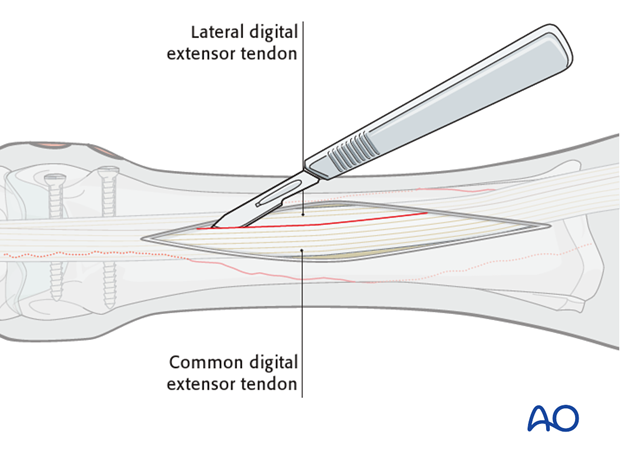
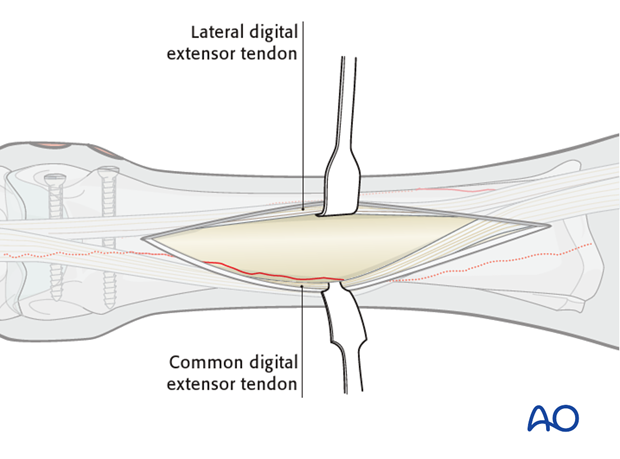
The edges of the incision and the periosteum are separated with Hohmann retractors enough to follow the spiraling fracture plane proximally.
The incision is lengthened proximally as needed to expose the bone and the fracture line.
4. Surgical technique
Screw insertion
4.5 mm cortex bone screws are placed in lag fashion perpendicular to the fracture plane that is been exposed. The screws should be approximately 3-5 cm apart and a considerable effort should be made to keep the screws in the center of each fragment.
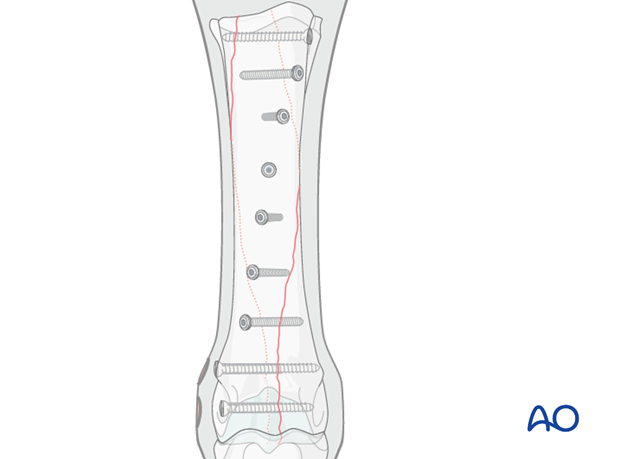
Screws should NOT be placed if the fracture plane cannot be identified. The arrangement of the screws will vary according to the specific configuration of the fracture.
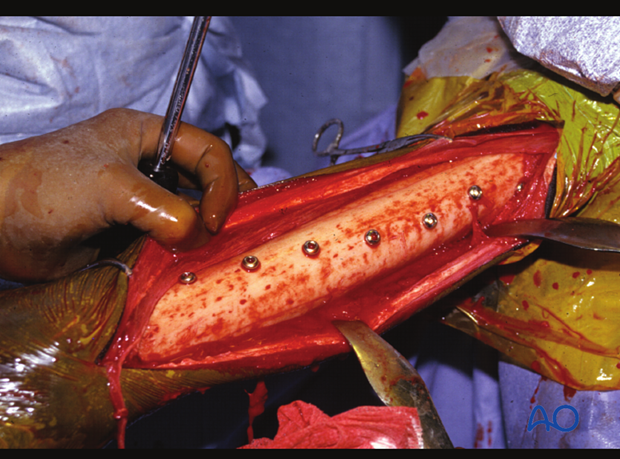
Pitfall: drilling into the splint bones
As the fracture plane spirals, some of the drill paths will be directed towards the splint bones. The surgeon should be cautious to avoid unnecessary injury and impingement on those structures.
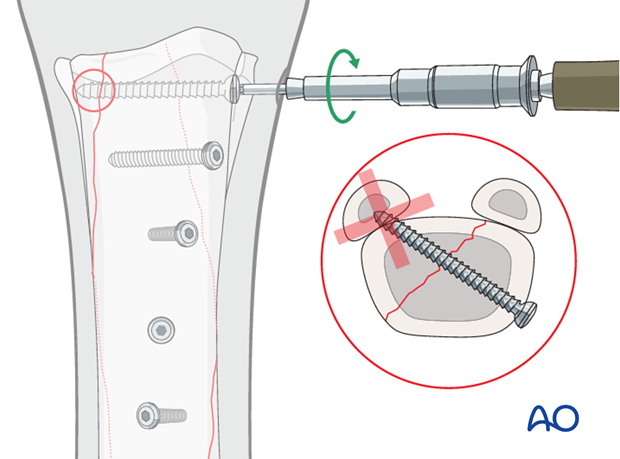
The completed fixation is confirmed radiographically.
5. Recovery from anesthesia
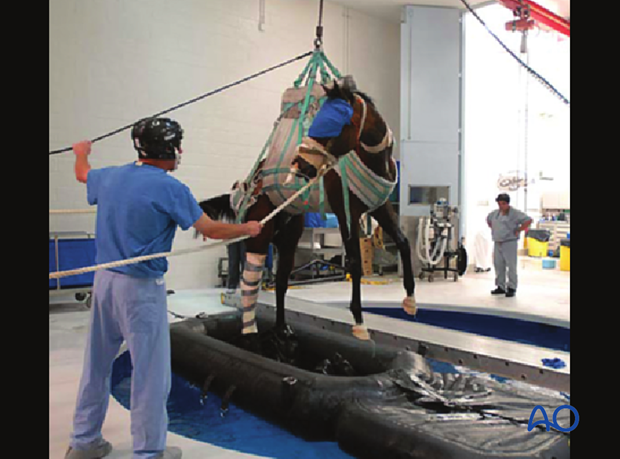
These are very high risk cases for recovery, especially in horses with hind limb fractures. Ideally, special recovery systems should be used such as a sling…
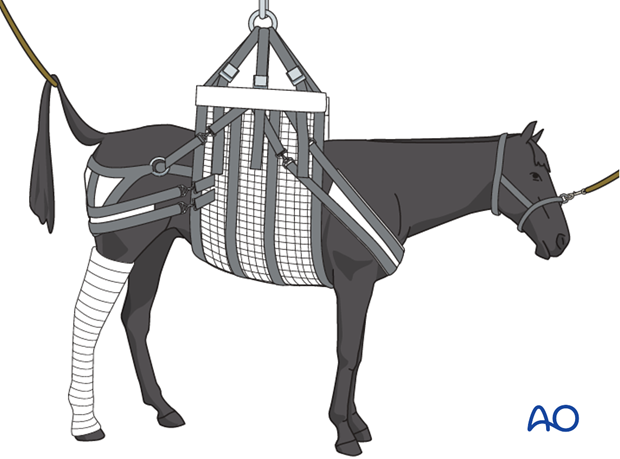
…or a pool. If none of these are available a full-limb cast should be applied during recovery. Half-limb casts do not fully protect horses from catastrophic failure through the diaphysis.
6. Implant removal
Time of removal and preparation
Removal of the diaphyseal and proximal metaphyseal screws is recommended if the horse is supposed to return to athletic function. Screw removal is generally performed about 3.5 - 4 months after surgery and is best done standing under sedation and local anesthesia. If general anesthesia is selected for some reason, use caution during the recovery process.
Localizing the screws
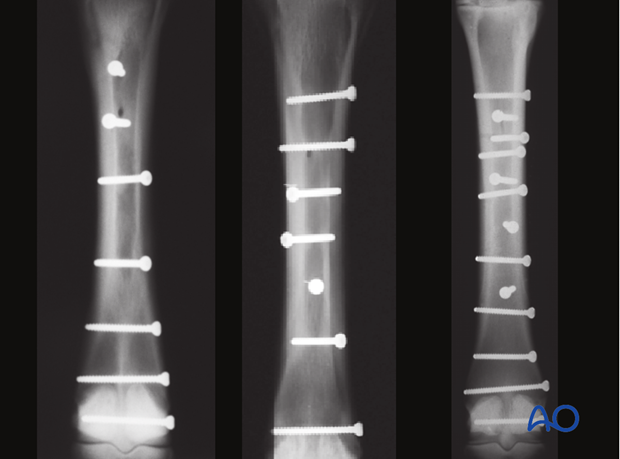
After sterile preparation of the limb, several stainless steel staples should be placed where each screw head is believed to be. Radiographs are then taken so that the exact location of each screw head can be identified. The critical radiographic view for each screw is the one that most closely approximates looking down the shaft of the screw.
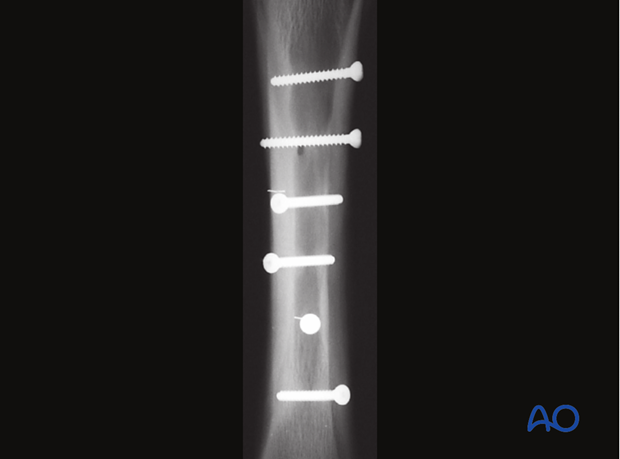
Screw removal
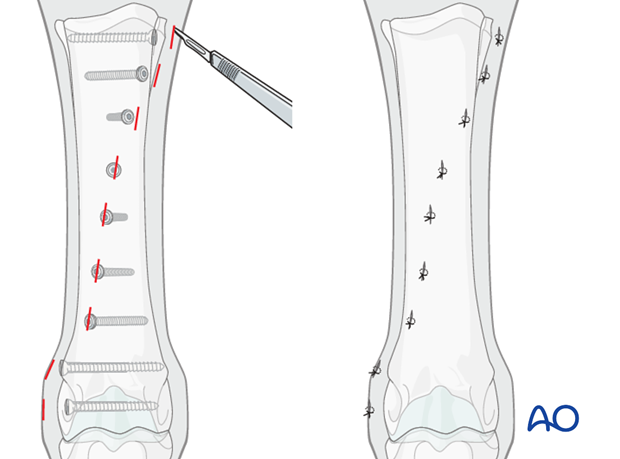
Stab incisions are prepared over each screw head and the screw driver fully inserted in the hexagonal heads, so they do not strip. The screws are removed and the stab incisions closed with simple skin sutures.
Aftercare
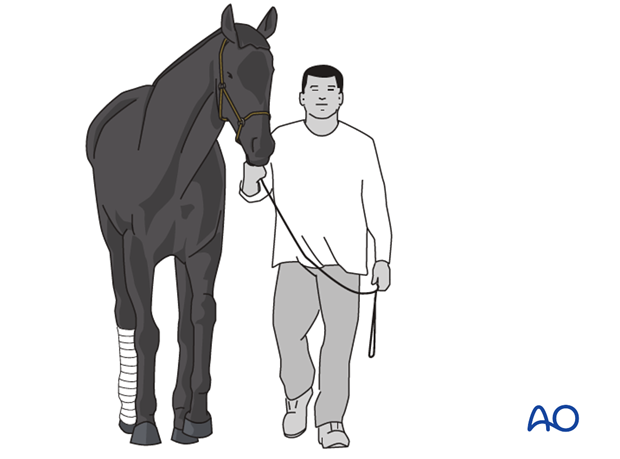
Horses receive stall rest and hand walking for 30 days followed by paddock exercise for at least another 30 days before returning to any type of training. A final set of radiographs is advised before full speed works.
7. Aftertreatment
Horses are usually in stall rest and hand-grazing only for at least 60 days followed by hand walking or machine walking exercises for an additional 60 days before allowing turnout in a very small paddock. Most horses get about a minimum of 6 months before returning to training.
Intra-articular medications depend on surgeons preference and the degree of articular damage seen.
Follow up radiography
Follow up radiographs are usually taken at 90 days postoperatively and again before returning to training.
Prognosis
The prognosis for medial condylar fractures is generally very good if catastrophic complications can be avoided. Medial fractures tend to have less preexisting joint pathology than lateral condylar fractures.
Implant removal
Removal of the diaphyseal and proximal metaphyseal screws is recommended if the horse is supposed to return to athletic function. Screw removal is generally performed about 3.5 - 4 months after surgery and is best done standing under sedation and local anesthesia. If general anesthesia is selected for some reason, use caution during the recovery process.


