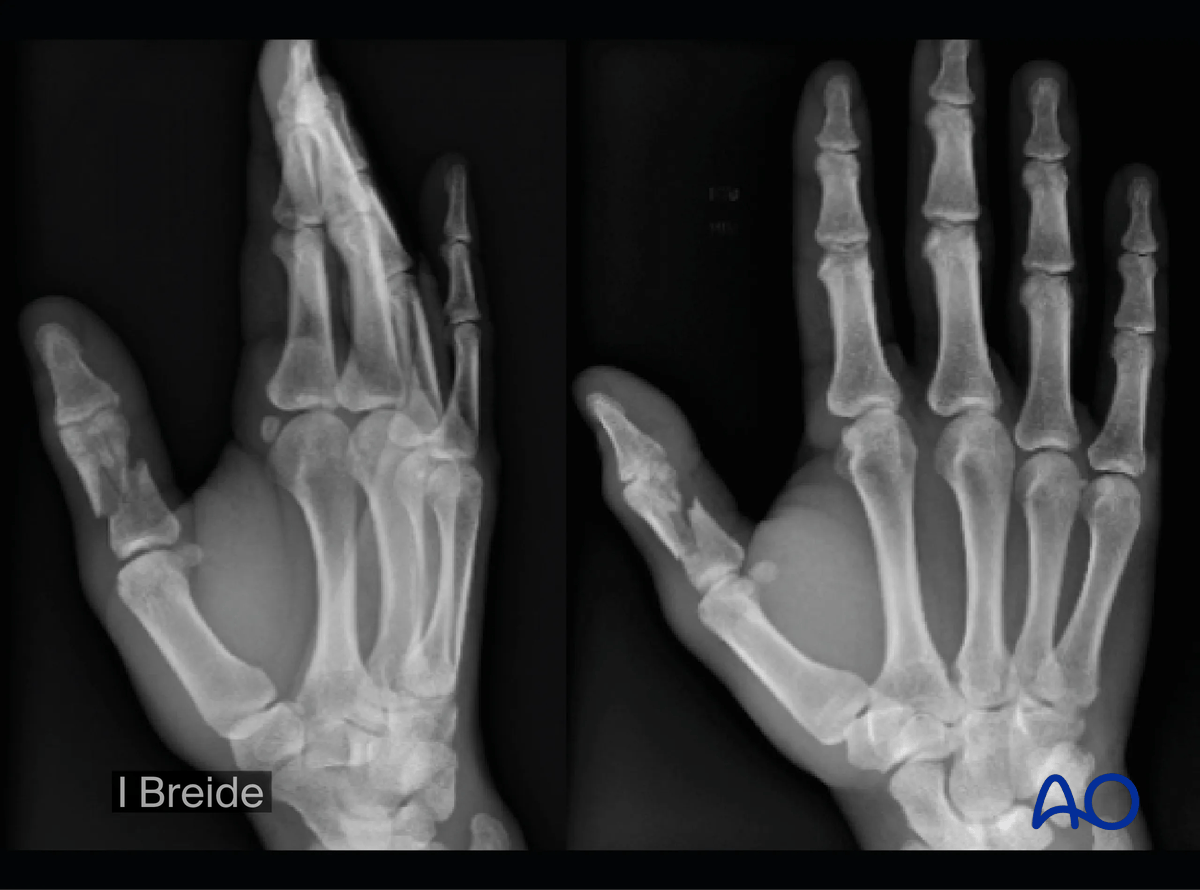
Multifragmentary extraarticular and diaphyseal fracture of the 1st proximal phalanx
Definition
Multifragmentary fractures of the base, shaft, and neck of the proximal phalanx of the thumb are classified as AO/OTA 78.1.1.1A, 2B and 2C, and 3A, respectively.
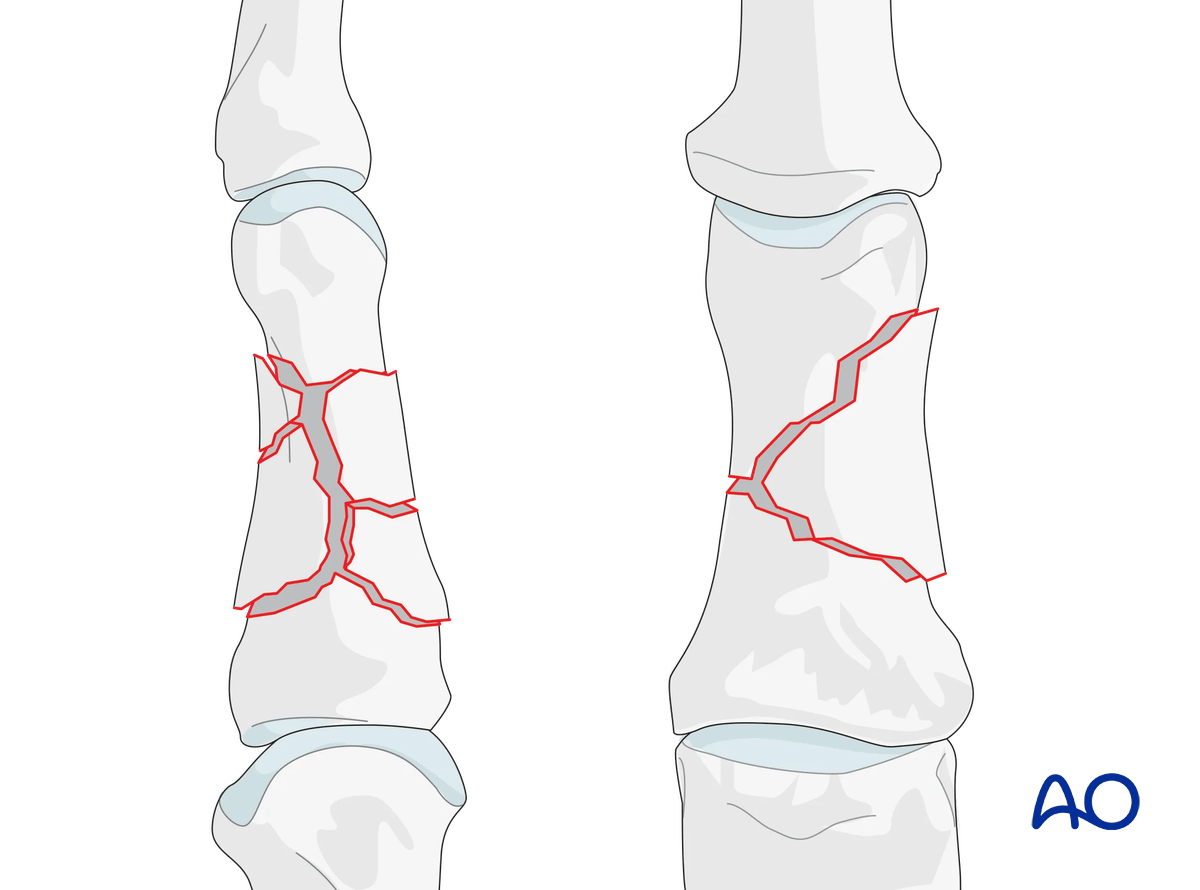
Further description
Multifragmentary fractures are rarely isolated injuries, as they usually result from high-energy trauma (crushing). Soft-tissue lesions are frequently associated with multifragmentary fractures and bear the potential risks of edema, fibrotic reactions, and eventual stiffness.
Even in the hand, which has a good blood supply, multifragmentary comminution is characterized by poor soft-tissue attachments to the fragments and, thereby, compromised fragmental vascularity. Delayed and nonunion are potential risks.
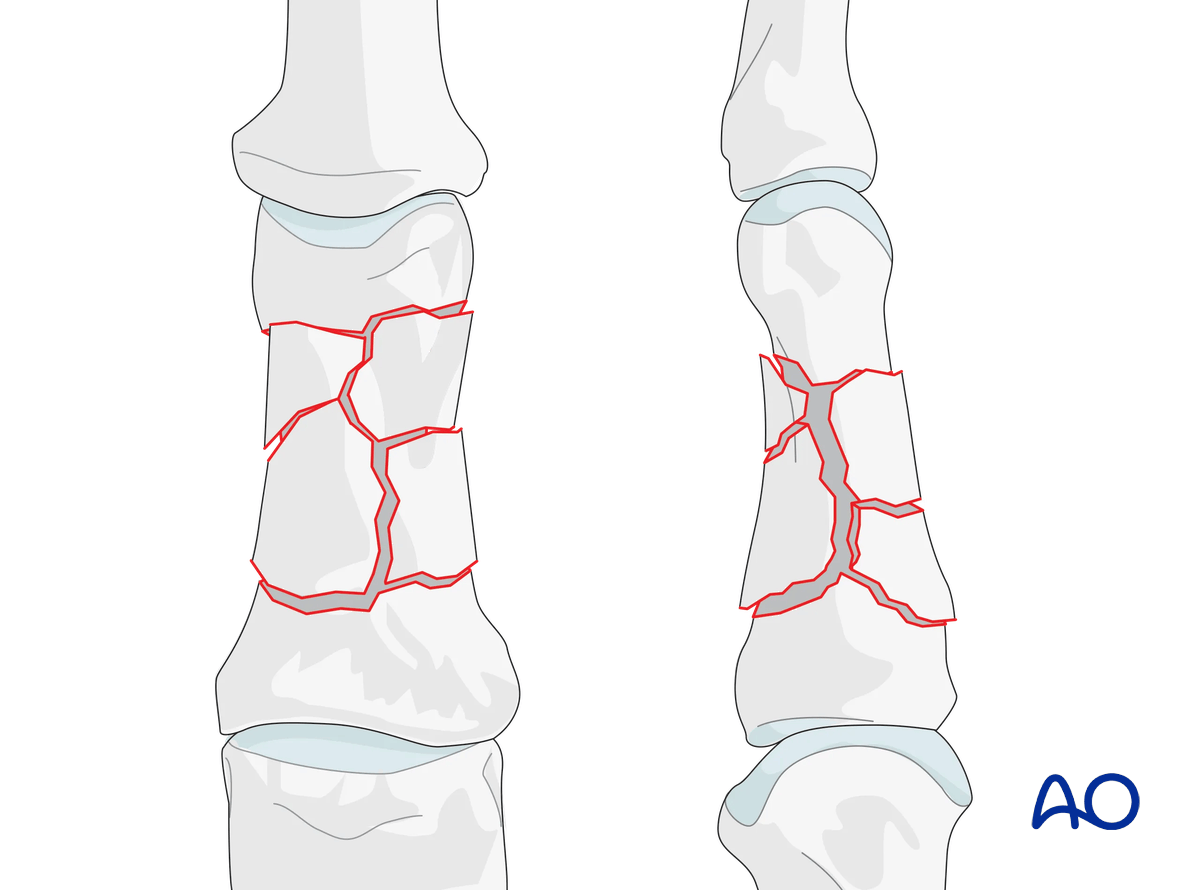
The degree and type of comminution depend on the forces and energy that acted on the thumb. In some cases, a large wedge fragment may result from the injury. In such cases, vascularity has not usually been significantly compromised.
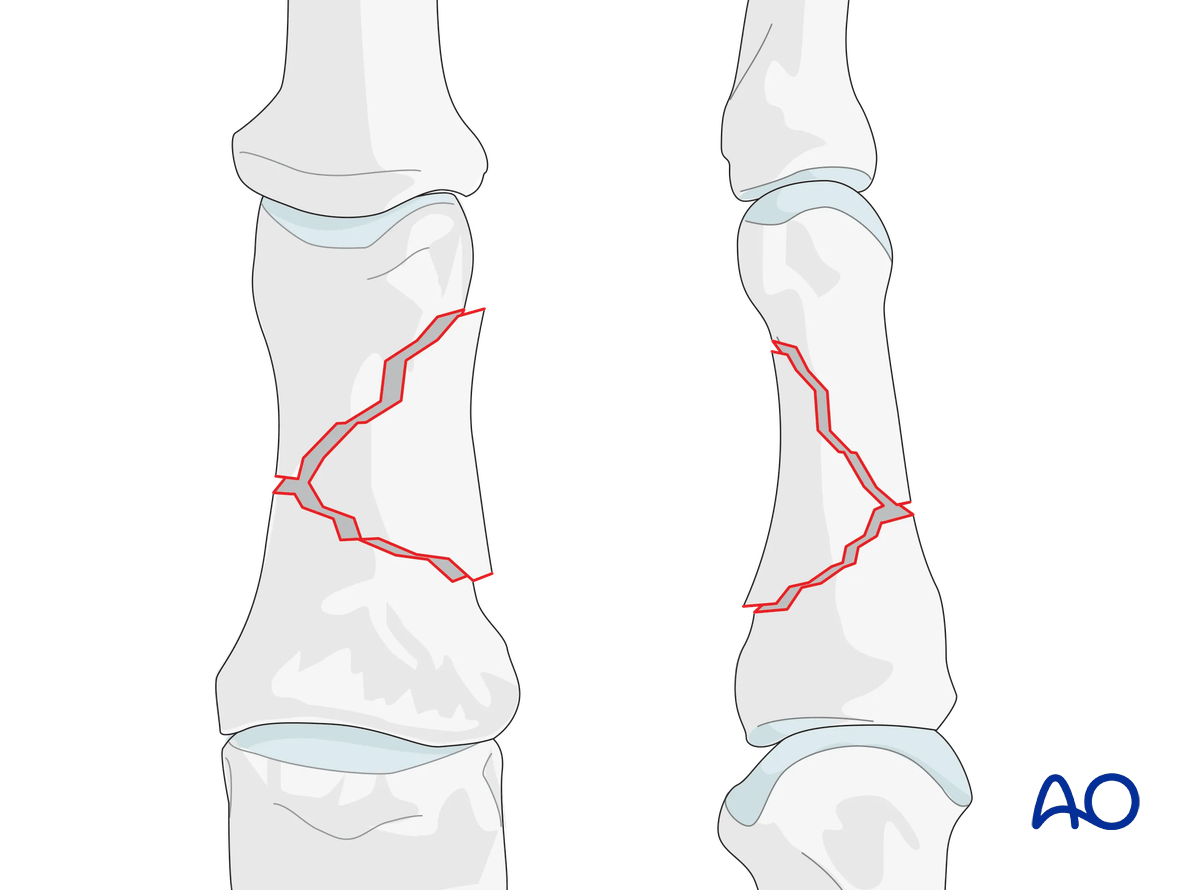
Z-deformity in proximal phalangeal fractures
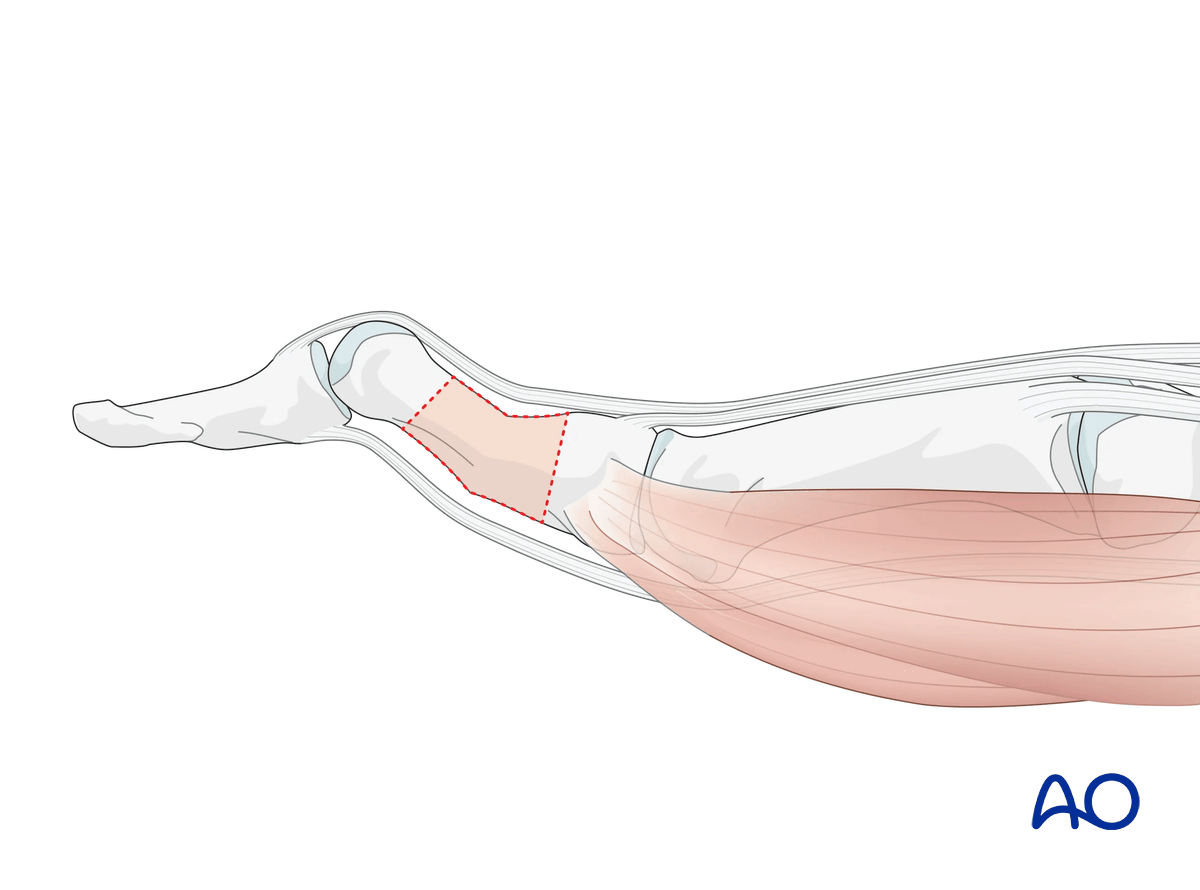
Axial malunion with angulation may lead to a Z-deformity over time with impact on grip and pinch functionality and painful hyperextension at the MCP joint and risk of arthrosis.
The angulation is caused by the pull of the thenar muscles on the proximal fragment leading to shortening of the proximal phalanx.
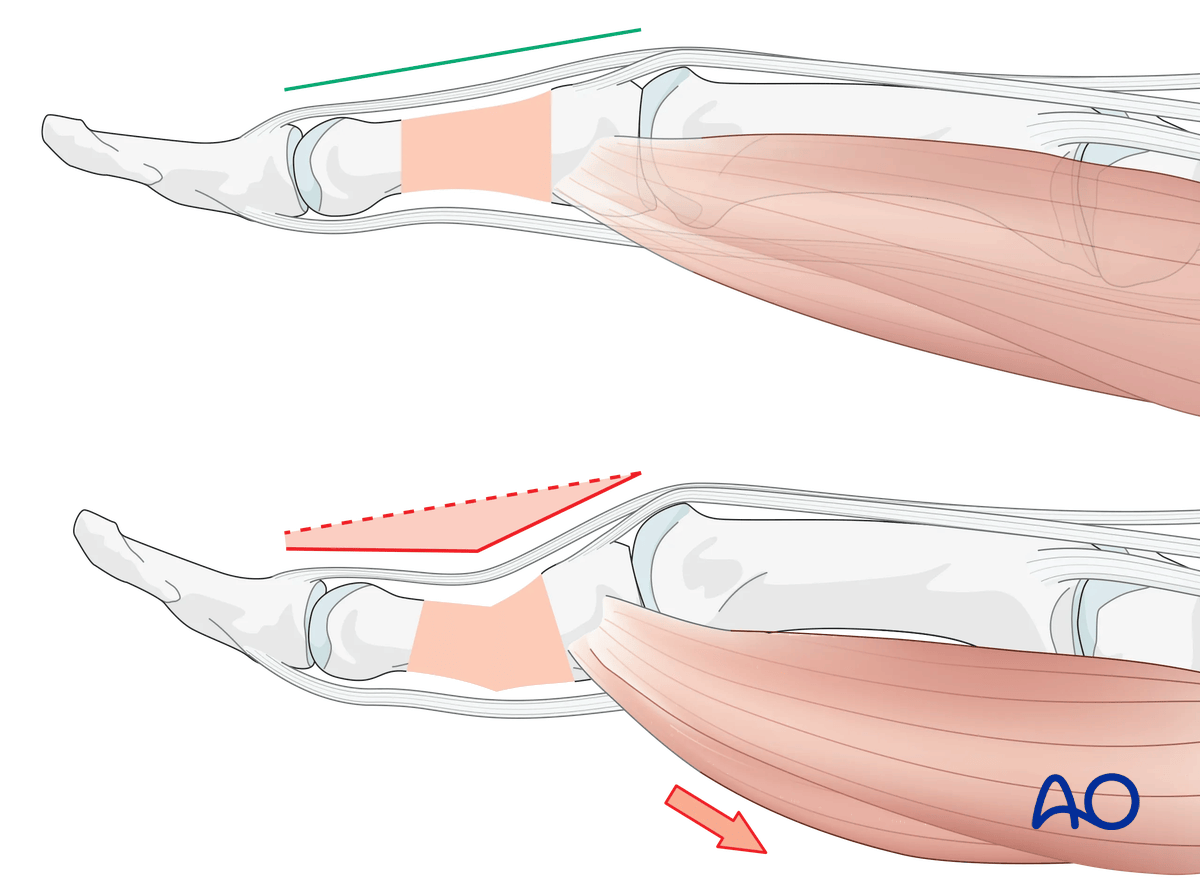
If this malalignment is not reduced and stabilized, compensatory MCP hyperextension and IP extension lag can result in Z-deformity.
Imaging
Dorsopalmar (PA) and lateral x-ray views should be taken.
See the chapter on patient assessment on how to take the x-ray views.