Authors of section

Author

Rémy Liechti

Reviewer

Inese Breide

Executive Editor

Simon Lambert

Open all credits

Extraarticular fracture of the proximal end segment (Winterstein) of the 1st metacarpal

Definition

Extraarticular fractures of the metacarpal base of the thumb, also known as Winterstein fracture, are classified as AO/OTA 77.1.1A.
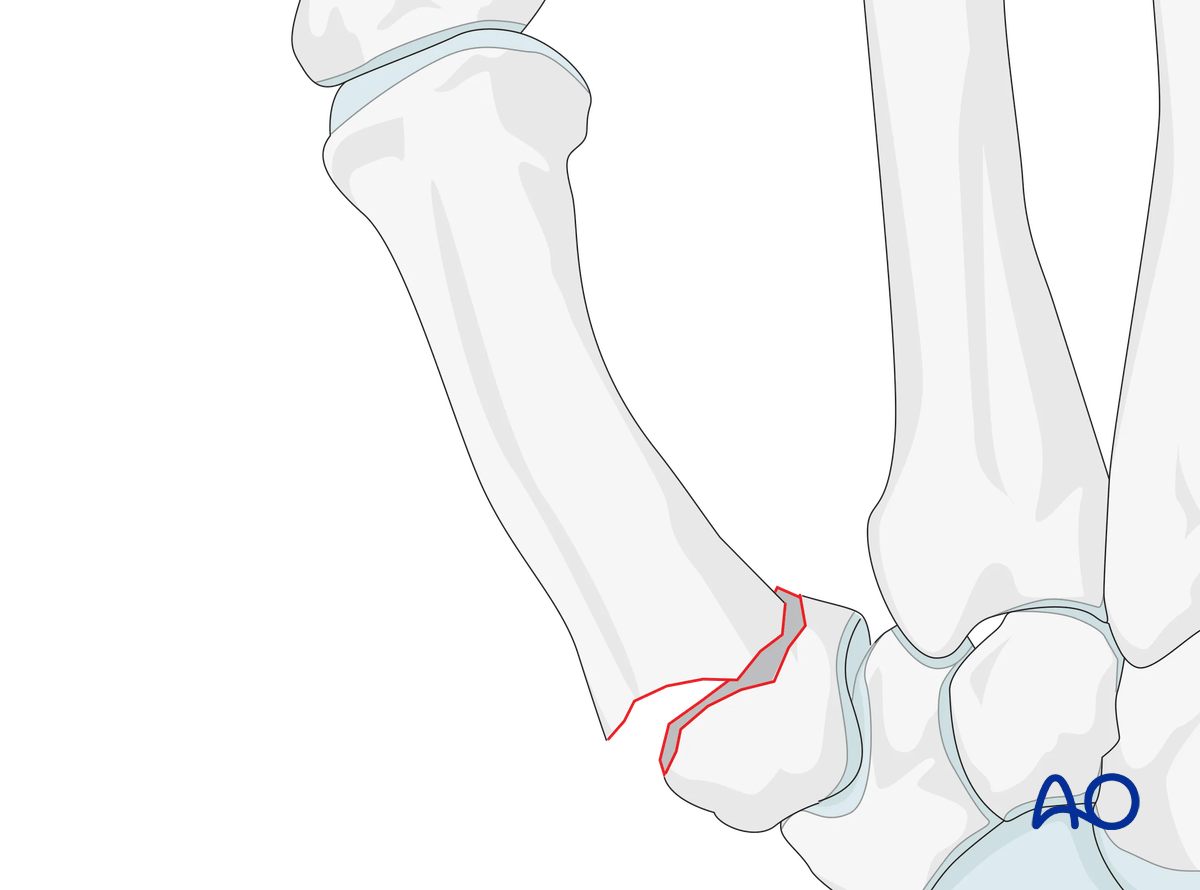
Extraarticular fracture of the metacarpal base of the thumb, also known as Winterstein fracture

Further characteristics

Displacement due to muscle forces

The pull of the thenar muscles results in palmar flexion of the distal fragment.
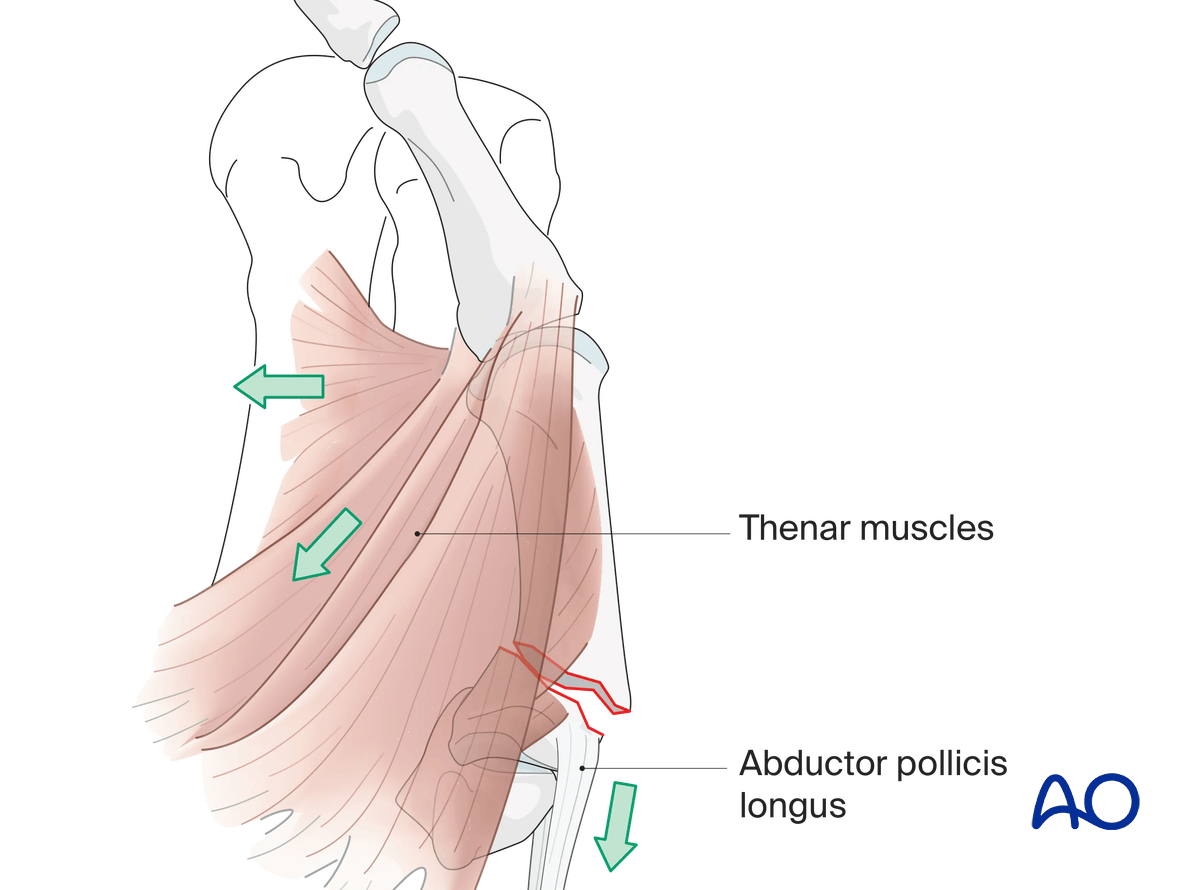
In an extraarticular fracture of the metacarpal base of the thumb, also known as Winterstein fracture, the pull of the thenar muscles results in palmar flexion of the distal fragment

If the flexion deformity exceeds 30°, thumb function may be impaired due to muscle imbalance and inability to abduct the thumb out of the palm for power, pinch, and pincer grip.
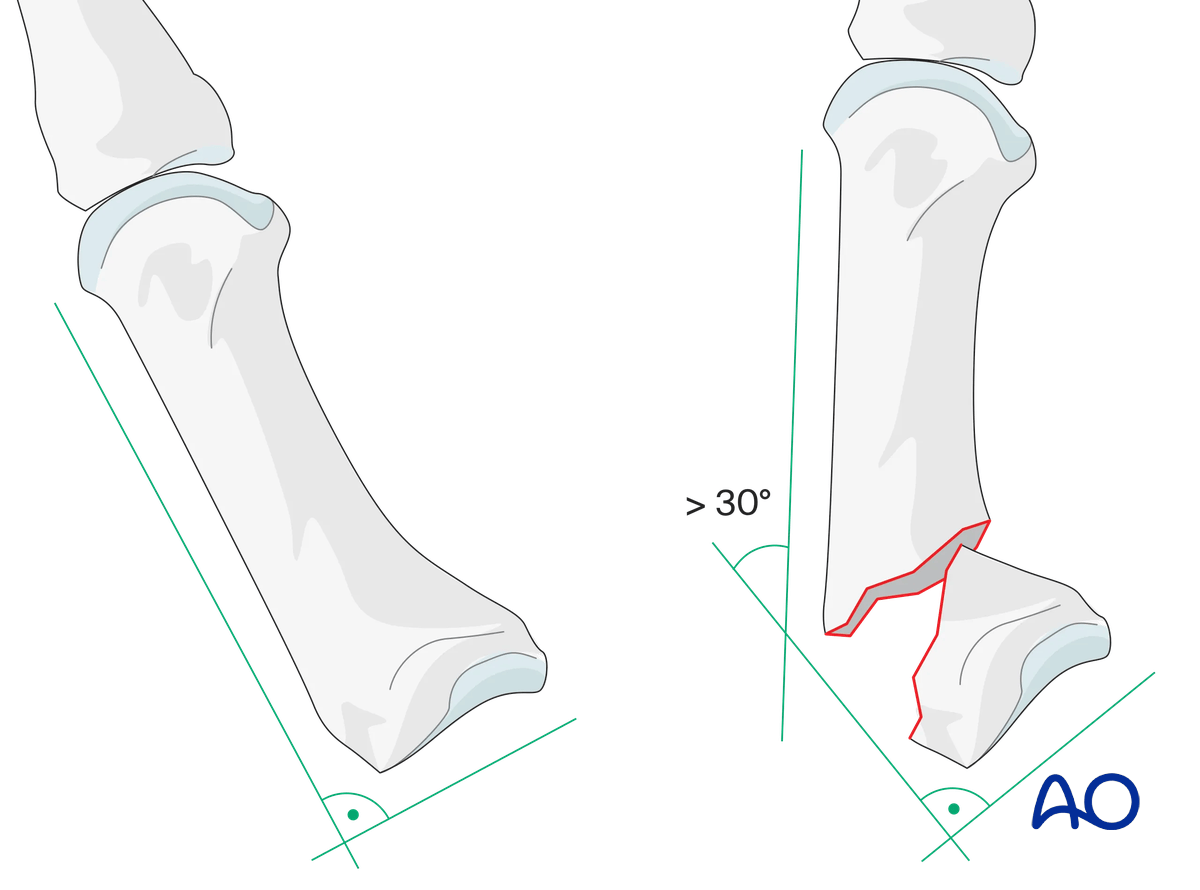
In an extraarticular fracture of the metacarpal base of the thumb, also known as Winterstein fracture, If the flexion deformity exceeds 30°, thumb function may be impaired due to muscle imbalance.

Instability due to palmar comminution

Fractures with palmar comminution are unstable.
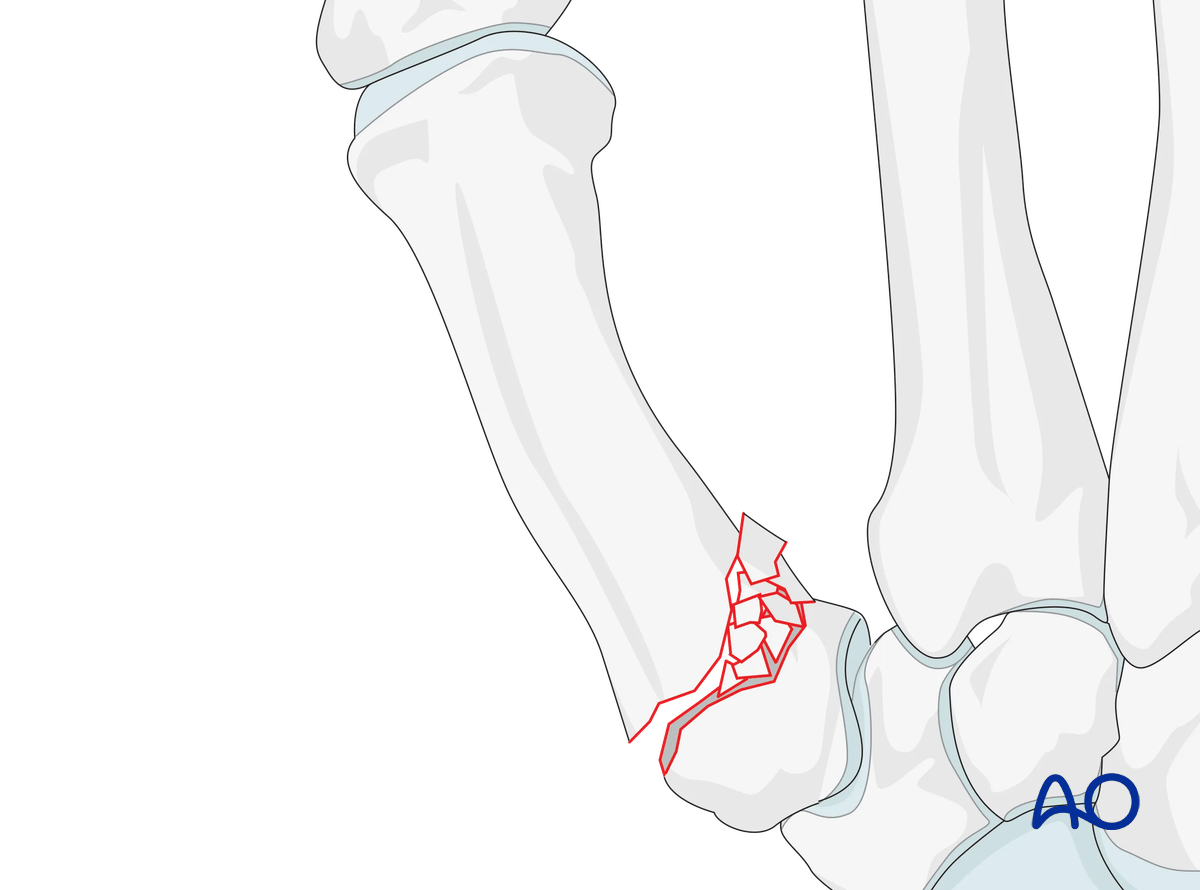
In an extraarticular fracture of the metacarpal base of the thumb, also known as Winterstein fracture, palmar comminution may result in instability

Imaging

True AP (Robert’s view) and true lateral (Bett’s view) x-rays should be taken.

See the chapter on patient assessment on how to take the x-ray views.
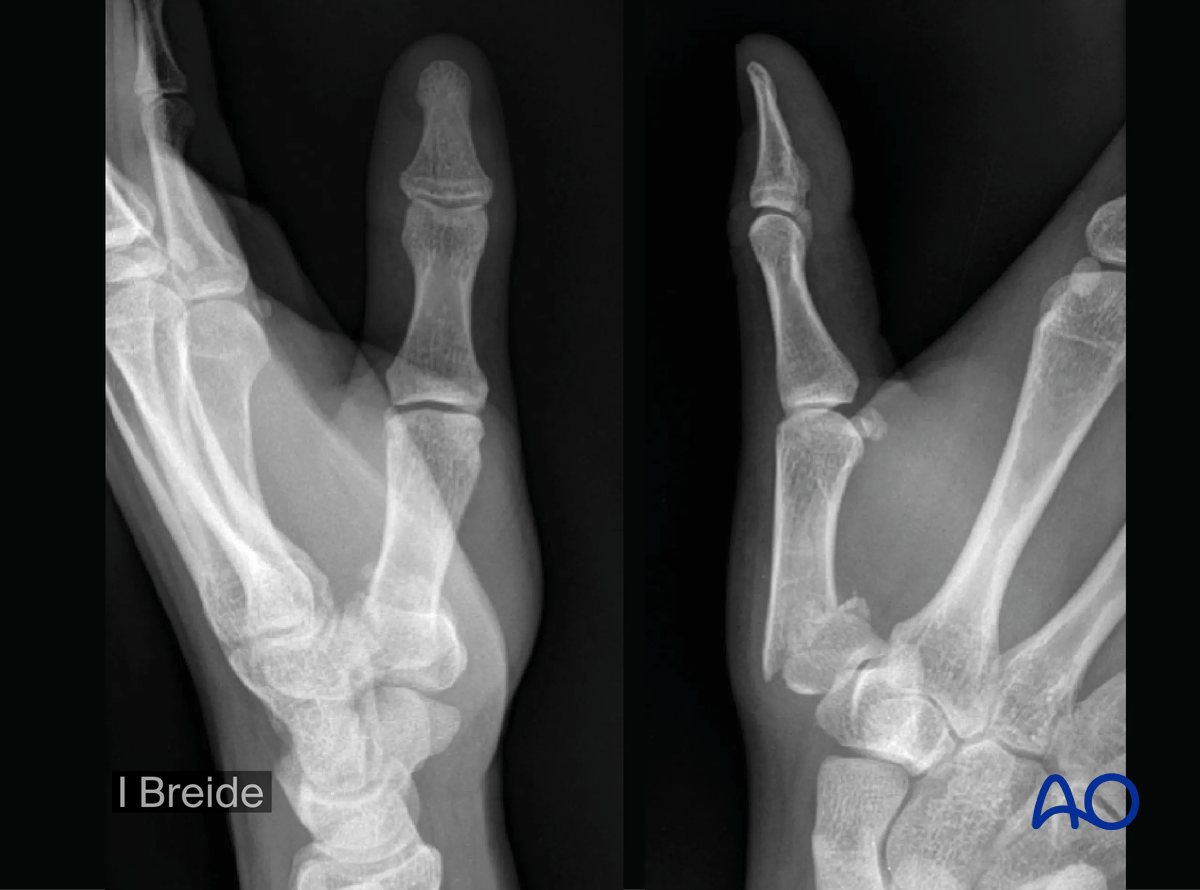
X-rays of an extraarticular fracture of the metacarpal base of the thumb, also known as Winterstein fracture,
Go to indication