

Simple transverse fracture of the diaphysis and extraarticular distal end segment of the 1st metacarpal
Definition
Simple transverse shaft and subcapital (distal end segment) fractures of the thumb metacarpal are classified as AO/OTA 77.1.2A and 77.1.3A, respectively.
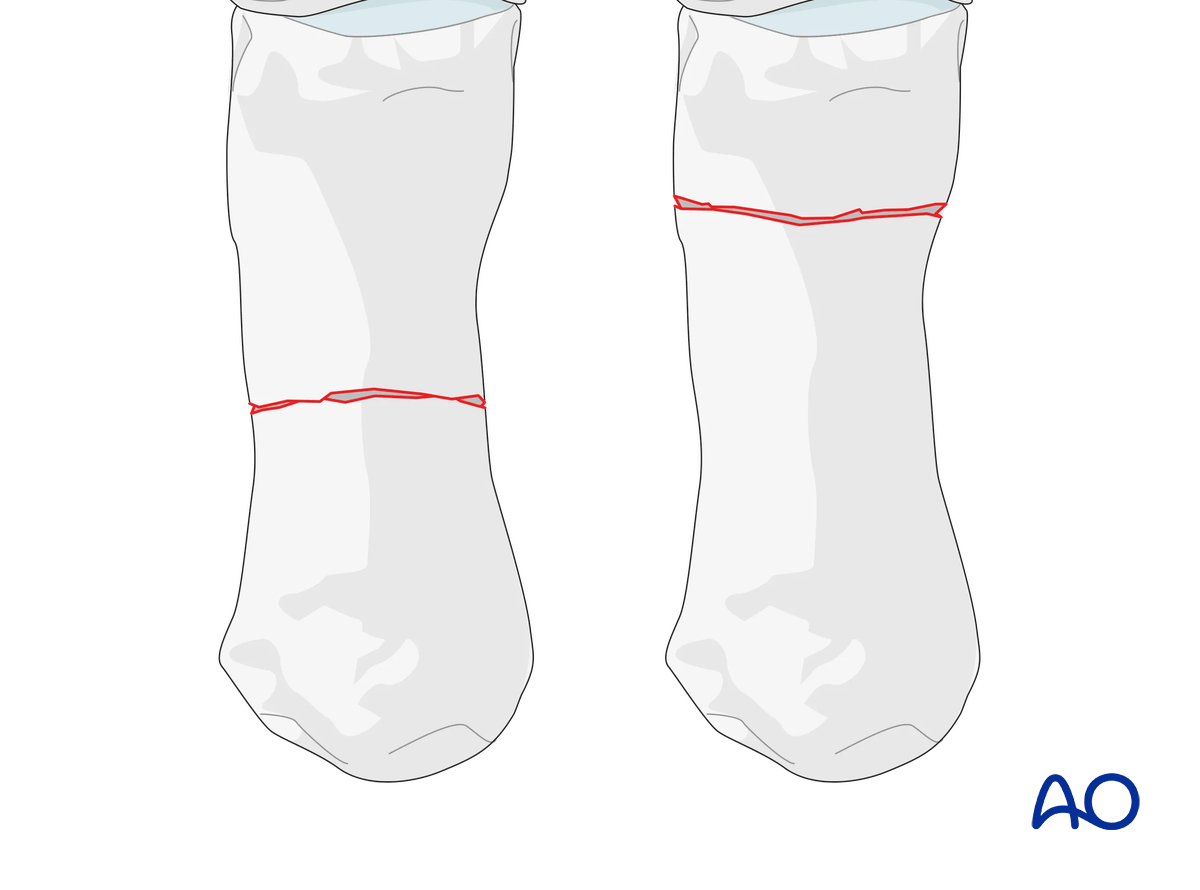
Further characteristics
The combined pull of the extrinsic and intrinsic thumb muscles causes a dorsal angular displacement of the diaphyseal and distal extraarticular fractures.
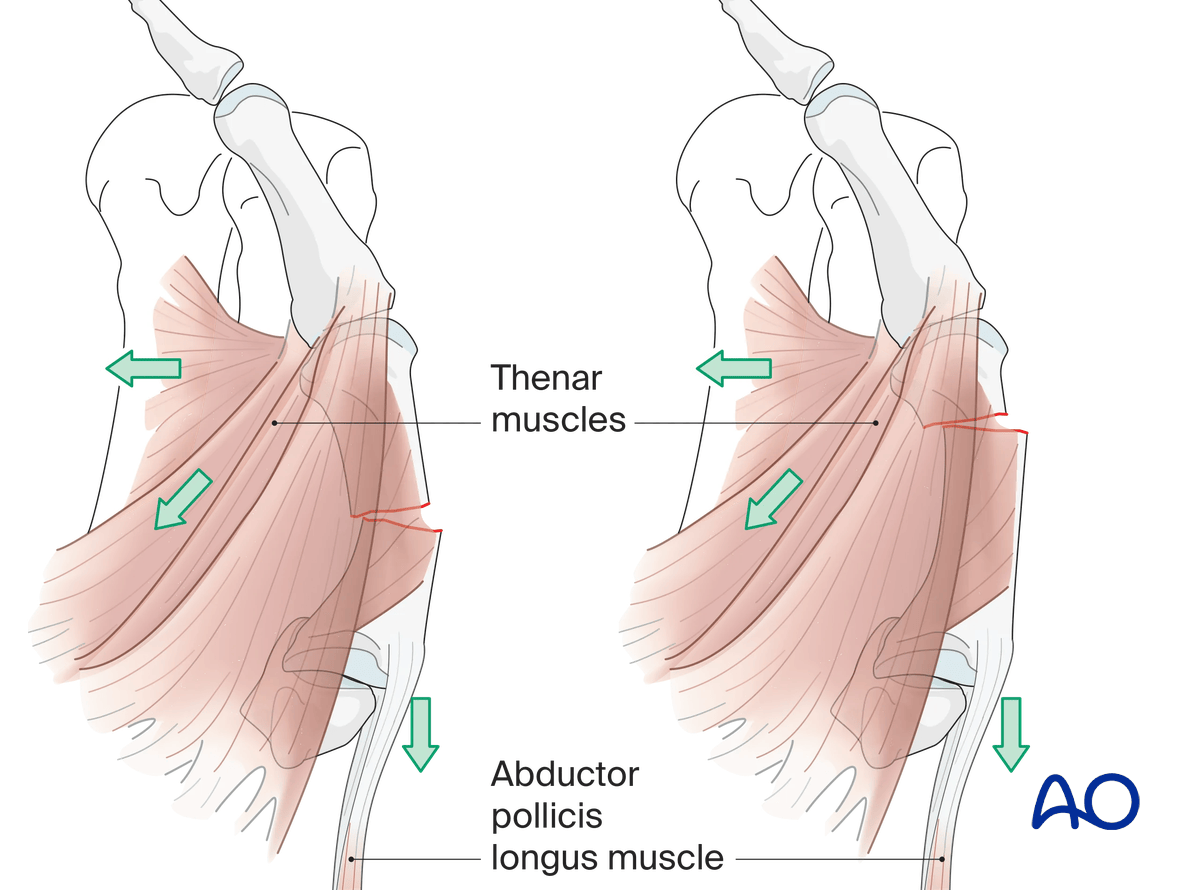
Swan neck deformity
If the reduction of a metacarpal fracture has not been achieved anatomically this can lead to a disbalance of the whole thumb function.
A delicate balance of the thumb is maintained by extrinsic and intrinsic flexor and extensor muscles.
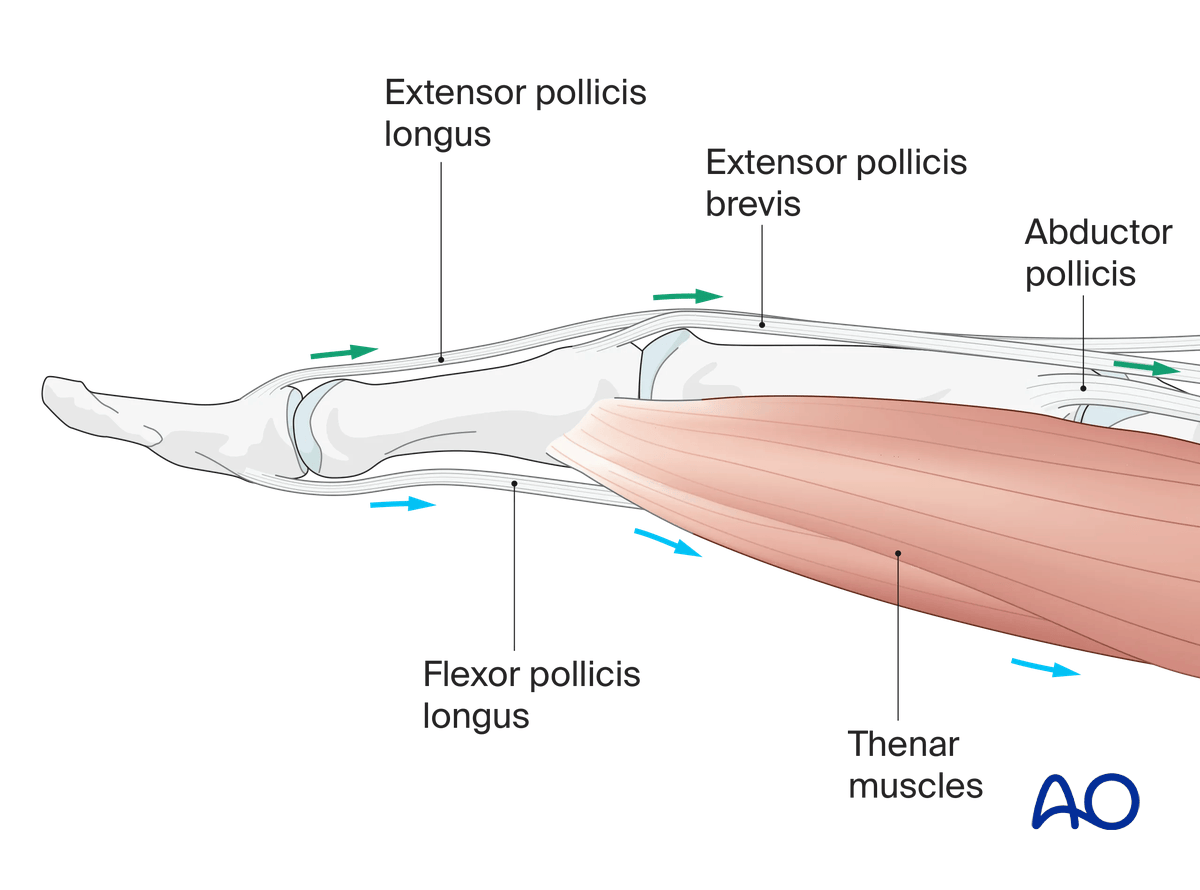
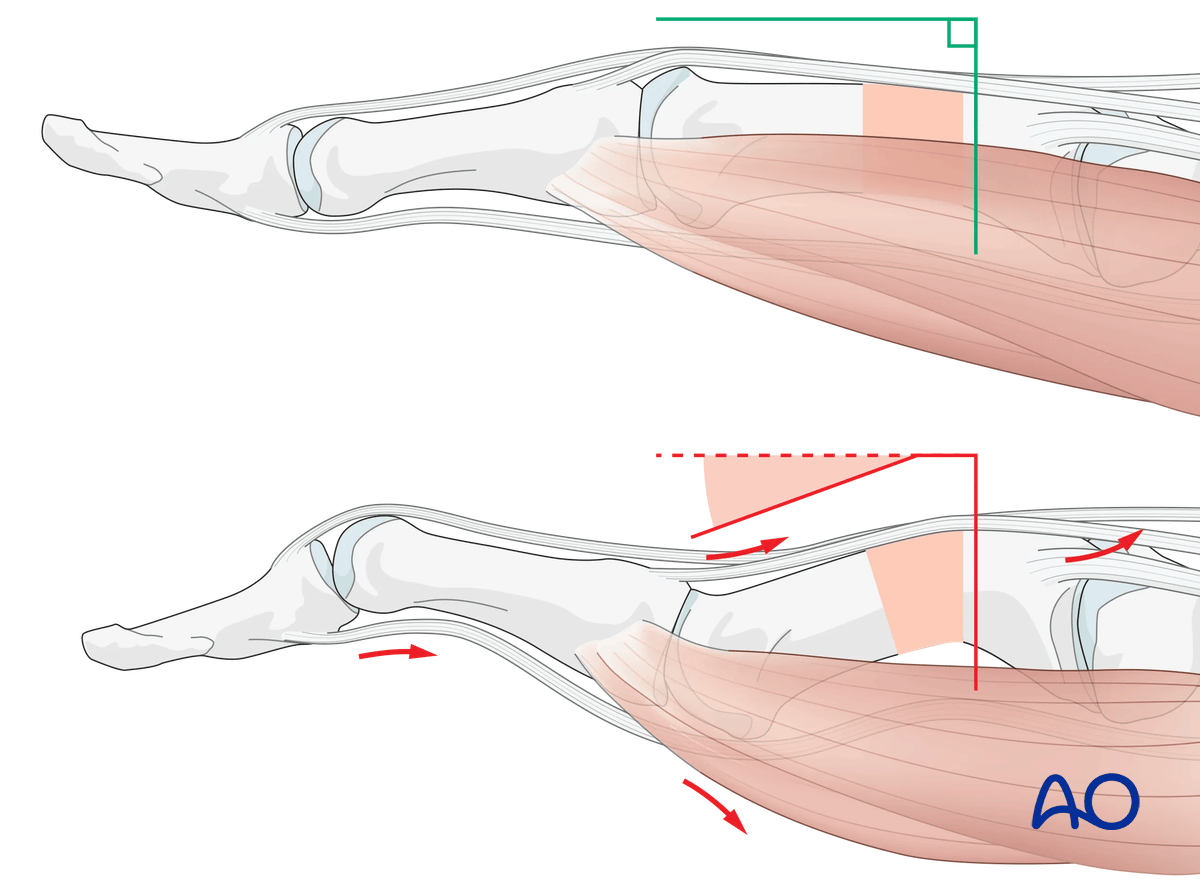
Axial malunion may therefore result in relevant disbalance leading, eg, to a Z-deformity (swan neck).
Rotational malalignment can be better tolerated.
The reduced first commissural angle may be compensated by the patient leading to painful hyperextension of the MCP joint with risk of arthrosis.
Imaging
Dorsopalmar (PA) and lateral x-rays should be taken.
See the chapter on patient assessment on how to take the x-ray views.


