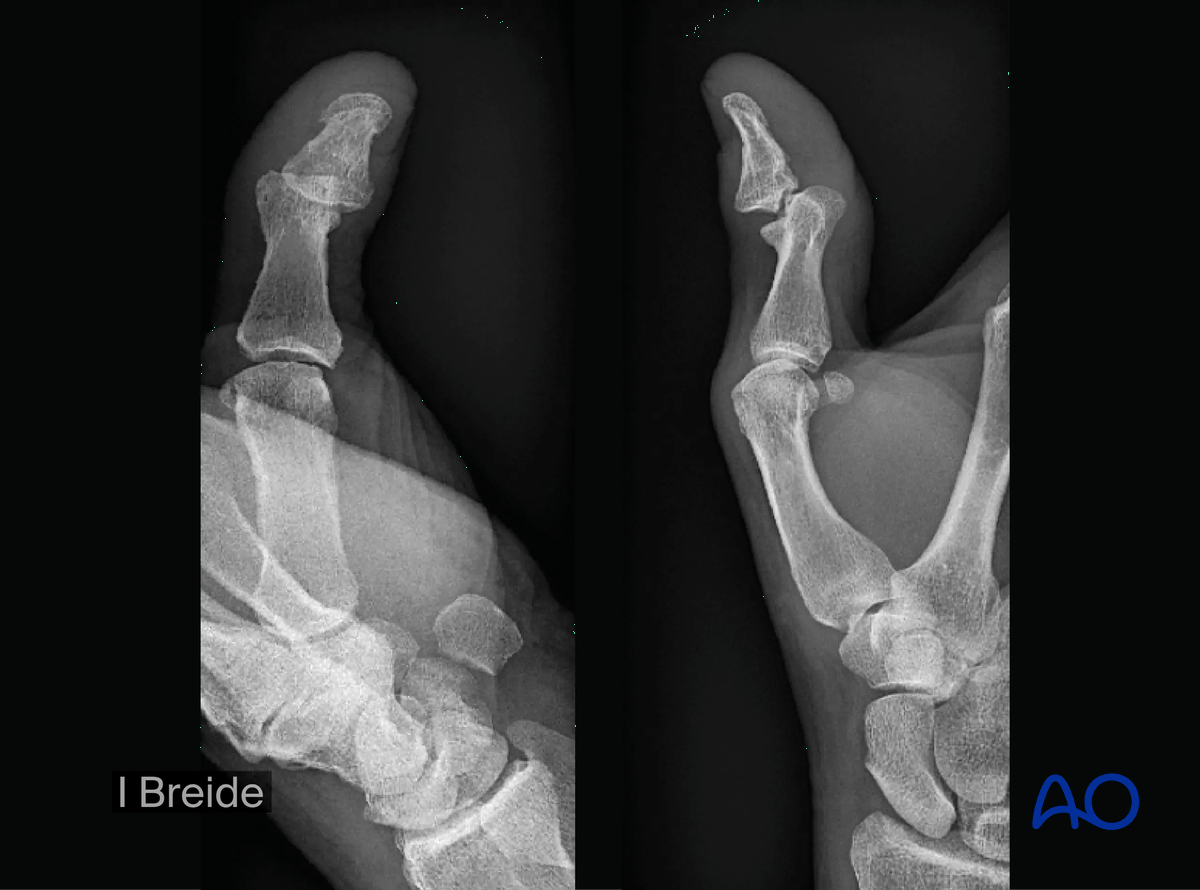
Dislocation of the interphalangeal joint
Definition
Dislocation of the interphalangeal (IP) joint of the thumb is classified as AO/OTA 70E2.1[5].
Further characteristics
Mechanism
Most of these injuries are caused by a longitudinal blow to the tip of the thumb.
Typically, hyperextension of the thumb causes dorsal or, rarely, palmar dislocation.
In both cases, disruptions of the volar plate will be present. Collateral ligaments most commonly are only partially disrupted and, after reduction, provide sufficient lateral stability.
Be sure that there is no flexor pollicis longus injury.
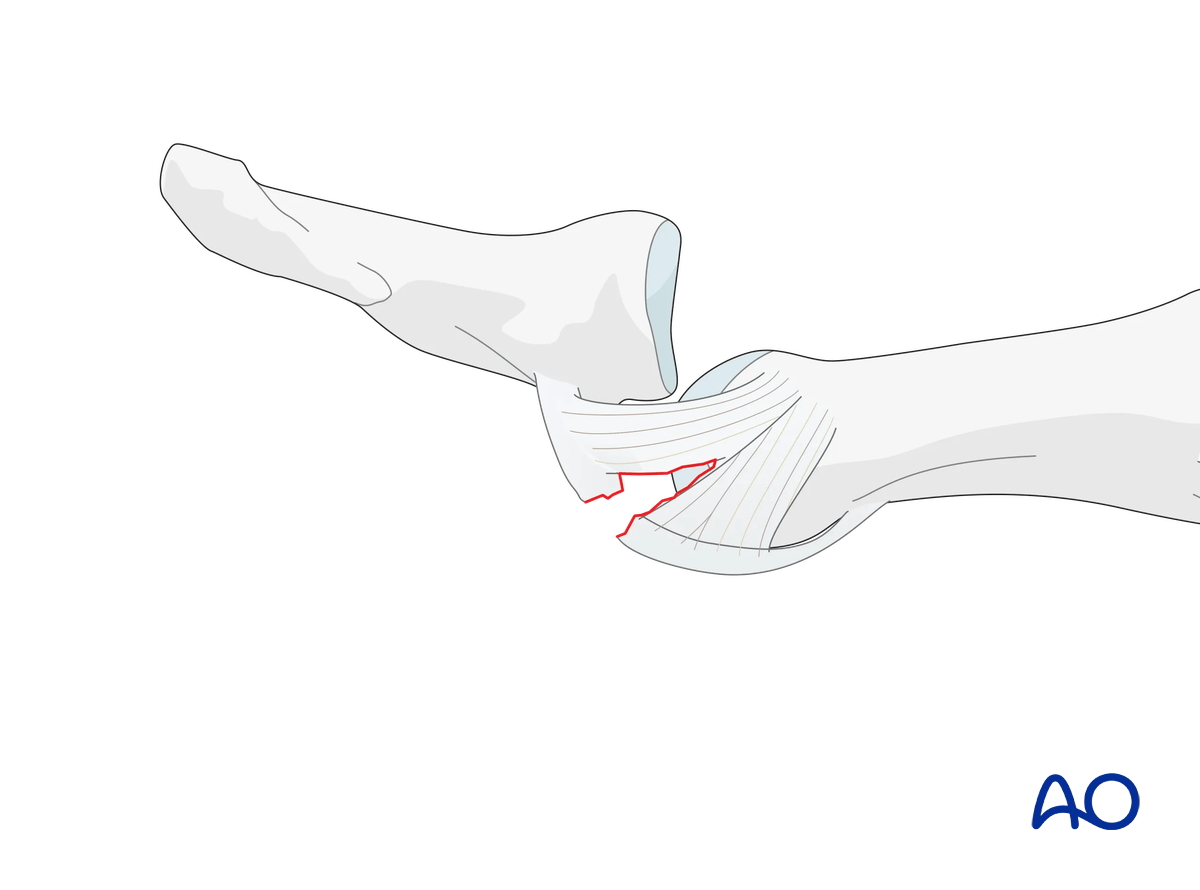
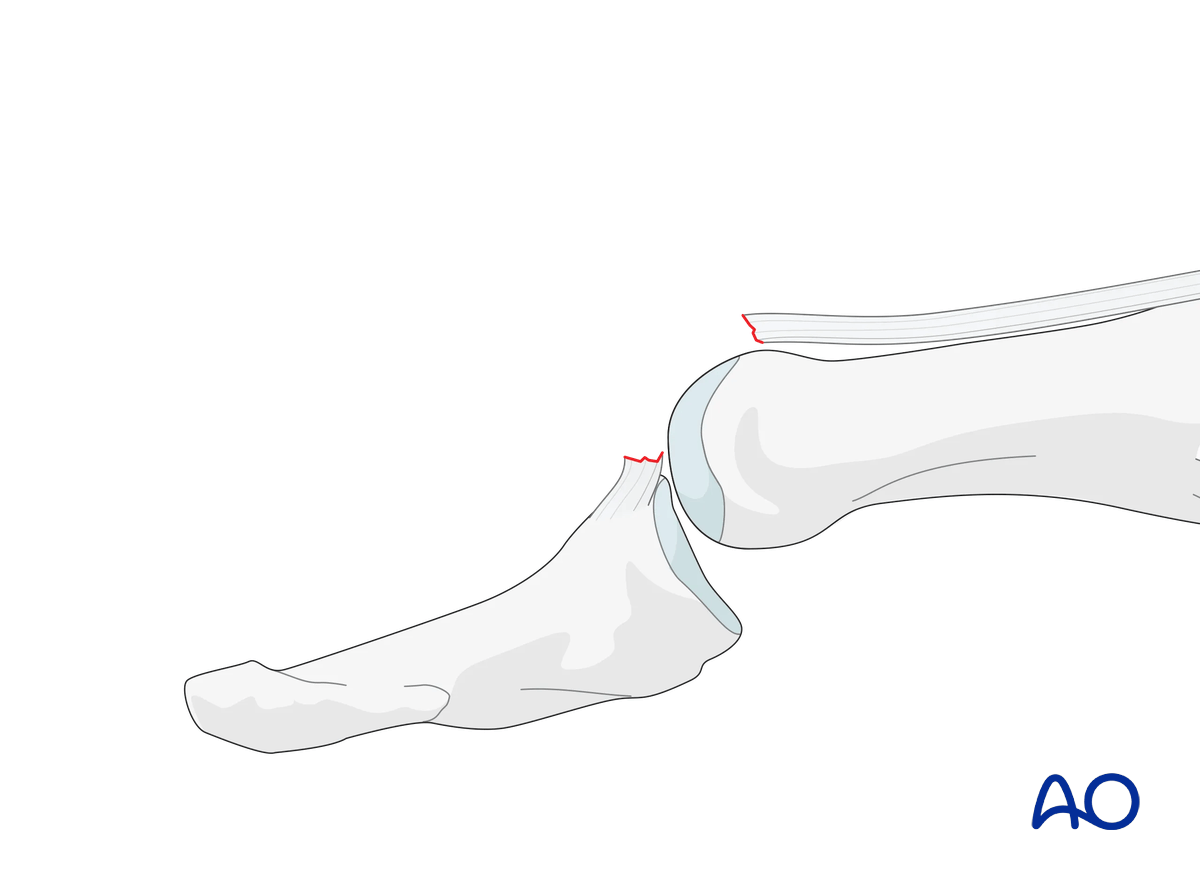
In palmar dislocations, there can be an additional terminal extensor tendon disinsertion or rupture.
Recognizing subluxation
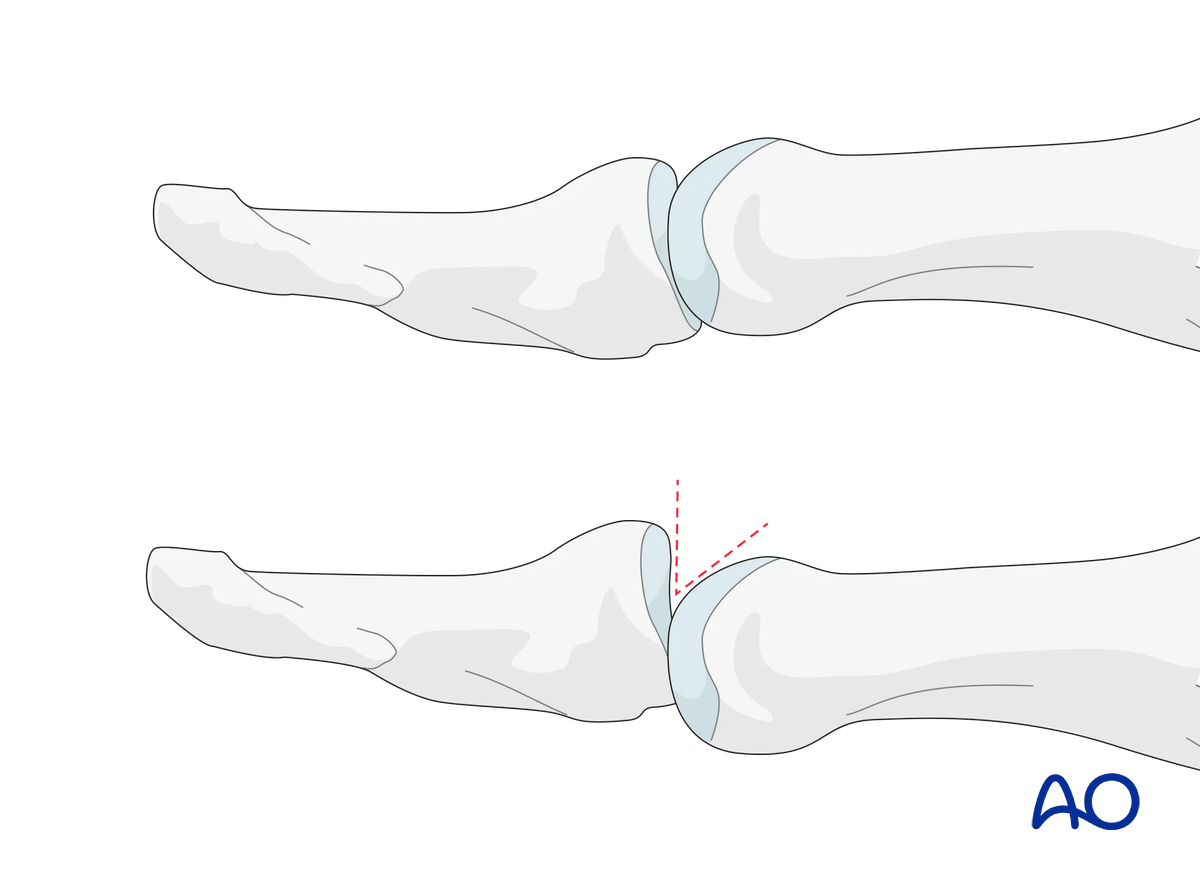
In the lateral view, the proximal and distal phalanges should be collinear. Any axial malalignment is a clear indication of subluxation.
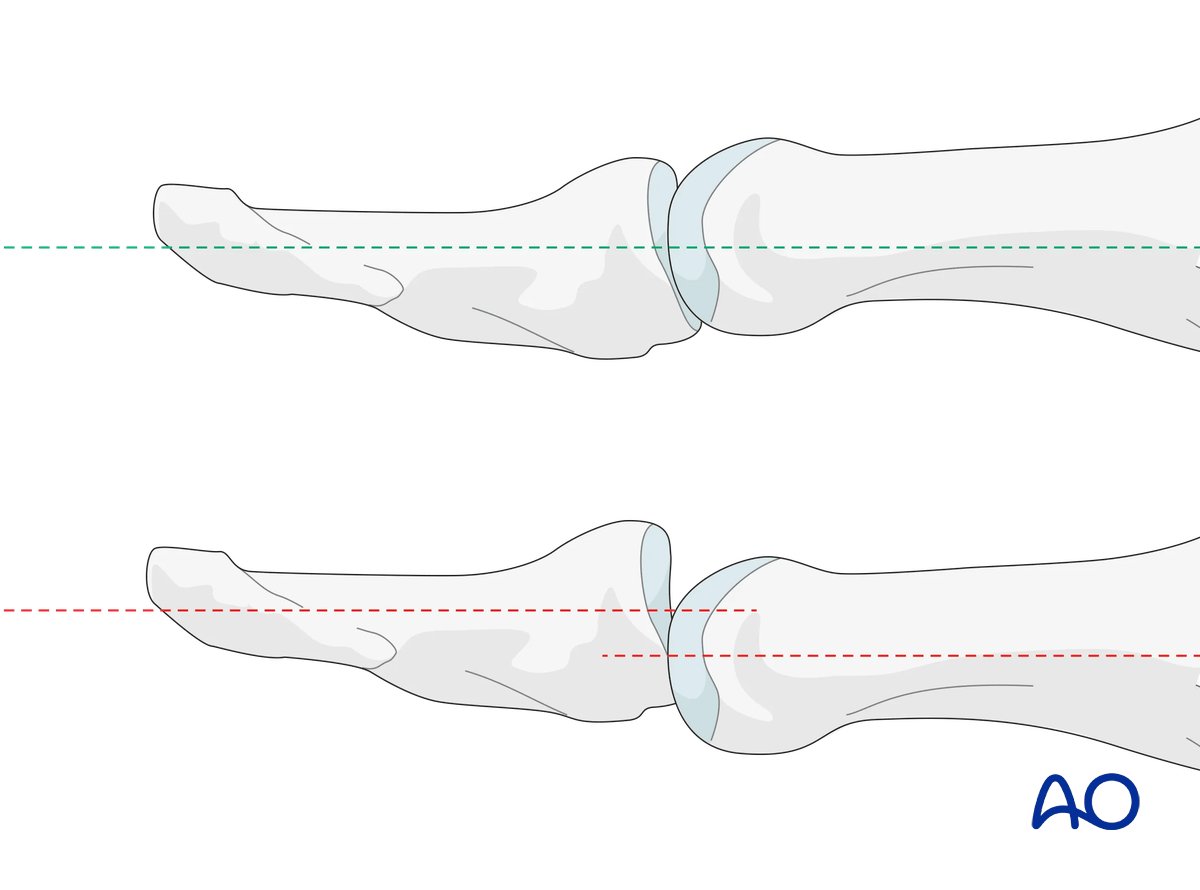
Another indication of subluxation is the presence of a so-called V-sign in the lateral x-ray.
Imaging
Dorsopalmar (PA) and lateral x-rays are necessary for diagnosis.
See the chapter on patient assessment on how to take the x-ray views.