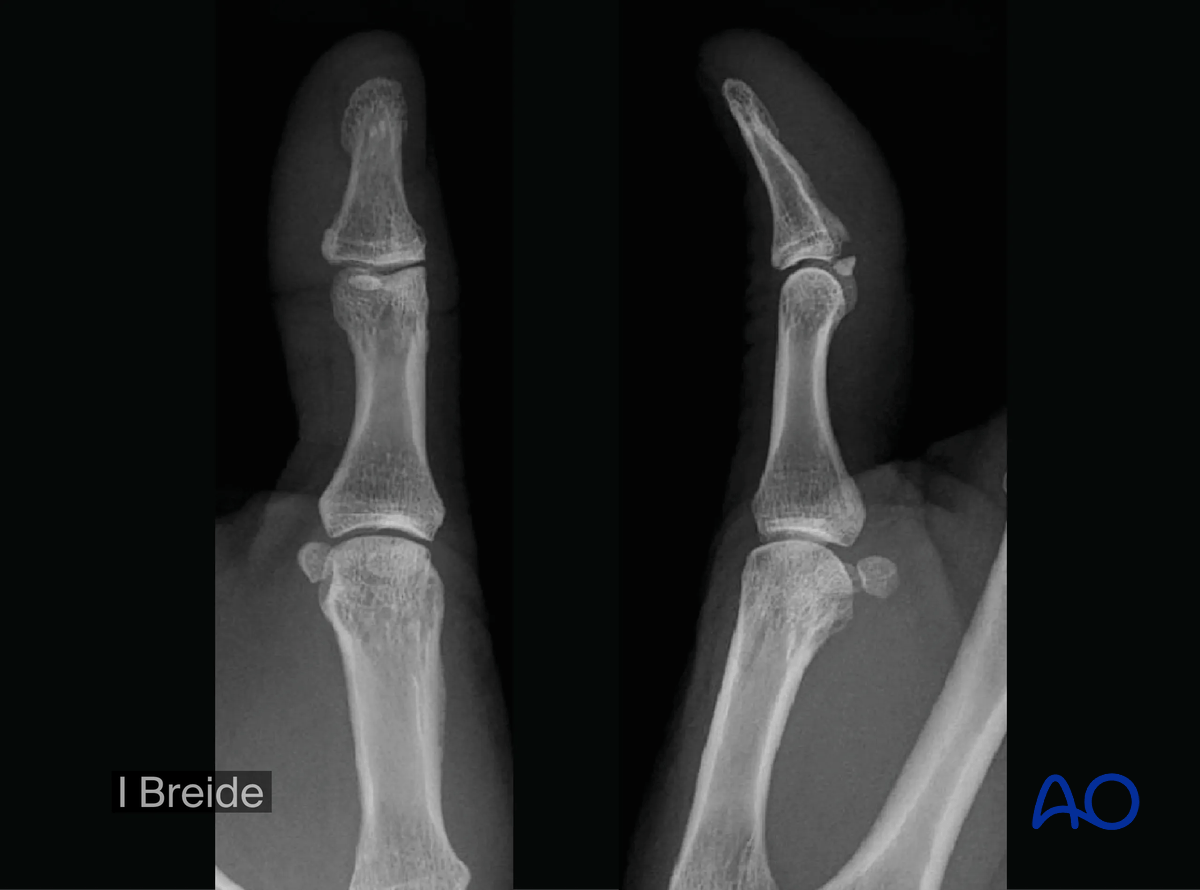
Palmar avulsion injury of the proximal end segment of the 1st distal phalanx
Description
Bony avulsions (partial articular) of the distal phalangeal base are classified as AO/OTA 78.1.3.1B.
Palmar avulsions of the distal phalangeal base are mostly caused by volar plate injuries. However, larger metaphyseal avulsions may indicate flexor tendon injuries (“jersey finger”).
The injuries can result in subluxation or total dislocation of the joint.
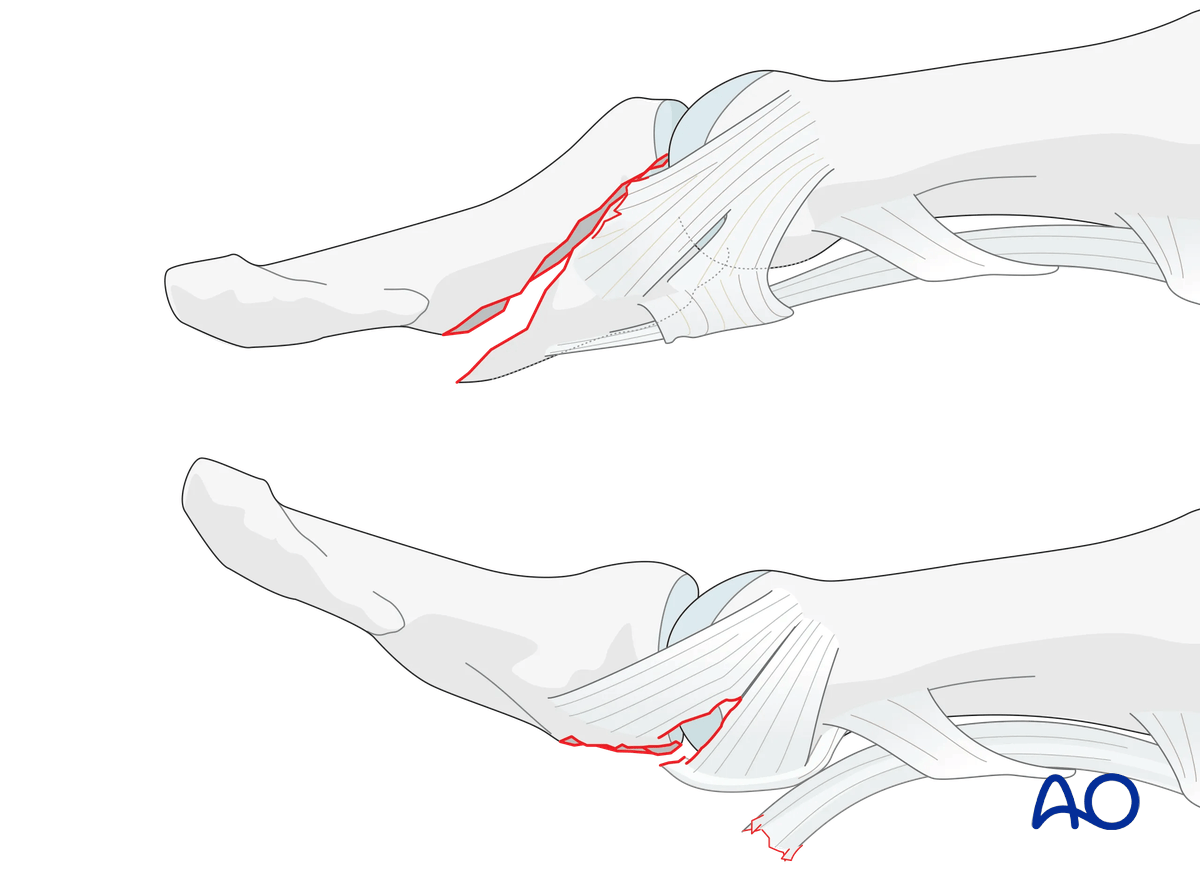
Further characteristics
An avulsion injury destroys the synergistic balance of the pull exerted by the flexor and extensor tendons. The continuity of the flexor tendon is lost. This results in an inability to flex the IP joint.
Avulsion fractures of the flexor pollicis longus tendon are uncommon but particularly disabling. Pinch and pincer grips are particularly weakened.
Check the ability to flex the IP joint.
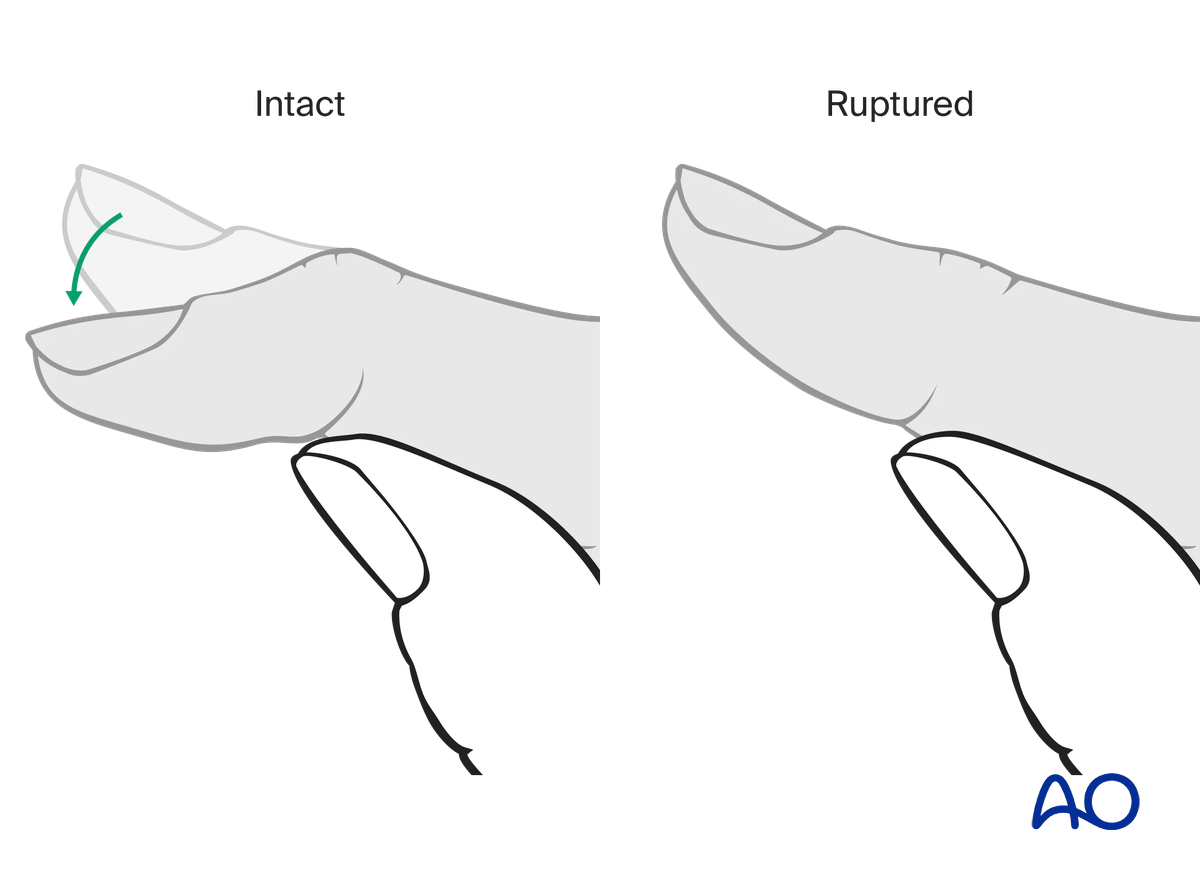
Mechanism of the injury
These injuries are commonly caused by sporting accidents.
Typically, hyperextension and a strong pull on the flexor tendon cause this fracture, as happens when the thumb gets caught while tackling a sporting adversary.
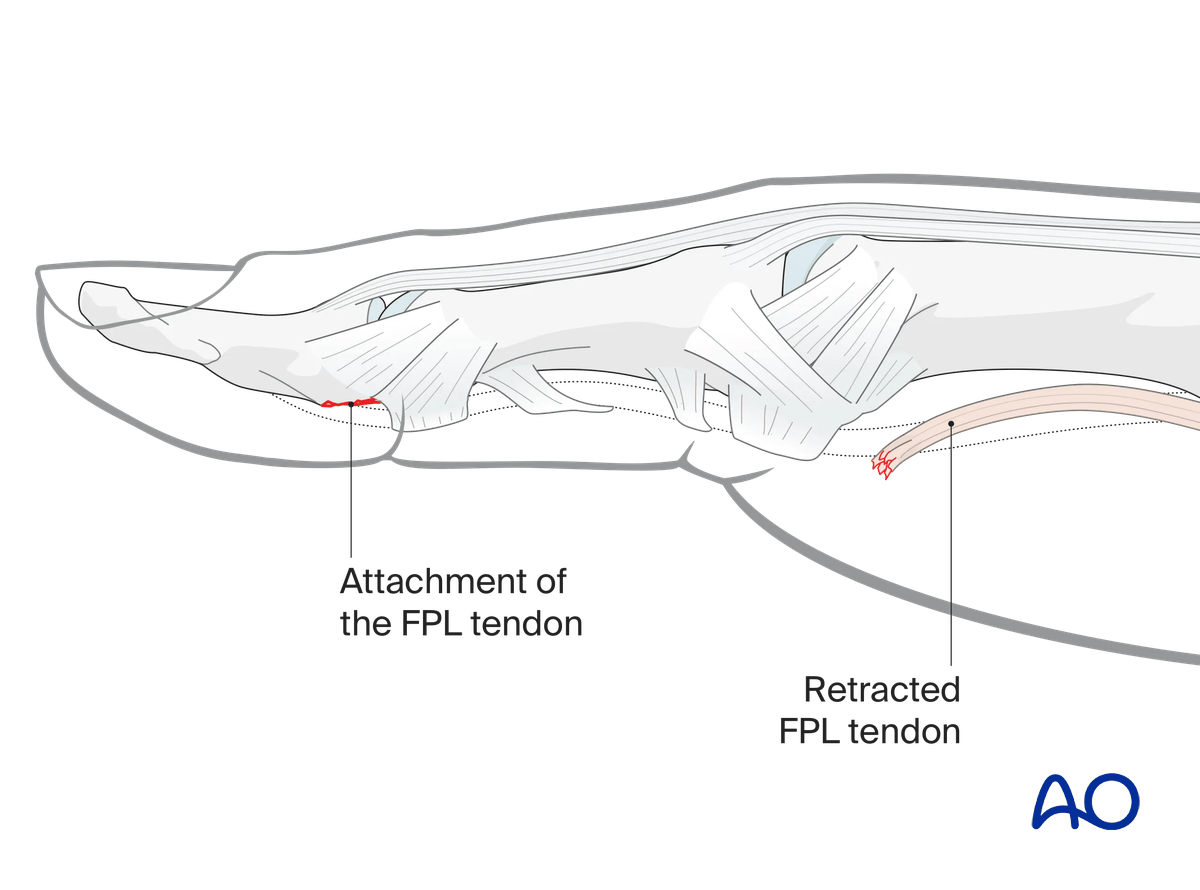
Tendon retraction
Tendon rupture at its insertion at the distal phalanx, without a bony fragmentThe tendon is retracted, often into the palm or even the carpal tunnel.
The FPL tendon must be repositioned and reinserted. This should be performed as soon as possible to avoid the formation of adhesions in the flexor tendon canal and muscle contracture which prevents a tension free tendon reinsertion.
An avulsed fragment remains minimally displaced because the volar plate attachment, the collateral ligament, and the A2 pulley remain largely intact.
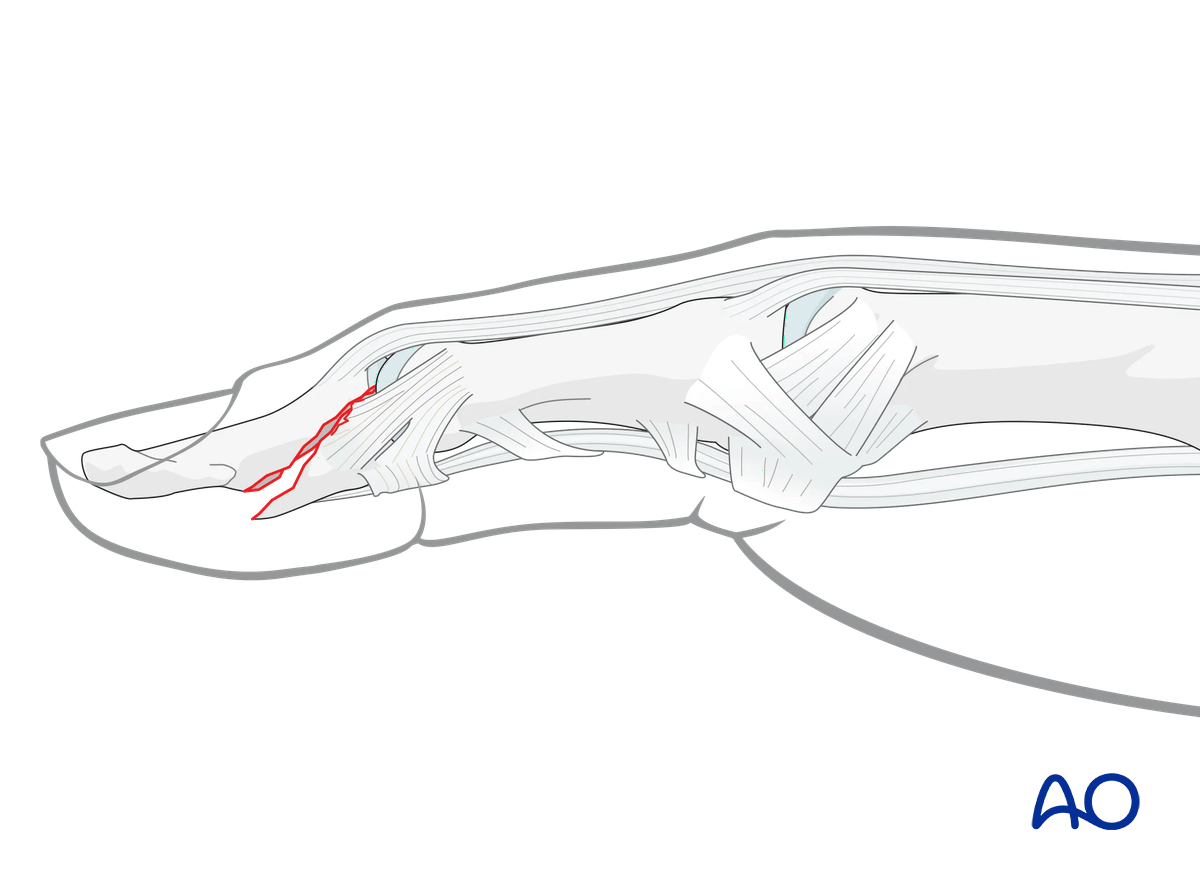
A small, avulsed fragment is usually not easy to see in an x-ray but may be palpated.
The tendon may be minimally displaced or retracted to the MCP joint (A1 pulley).
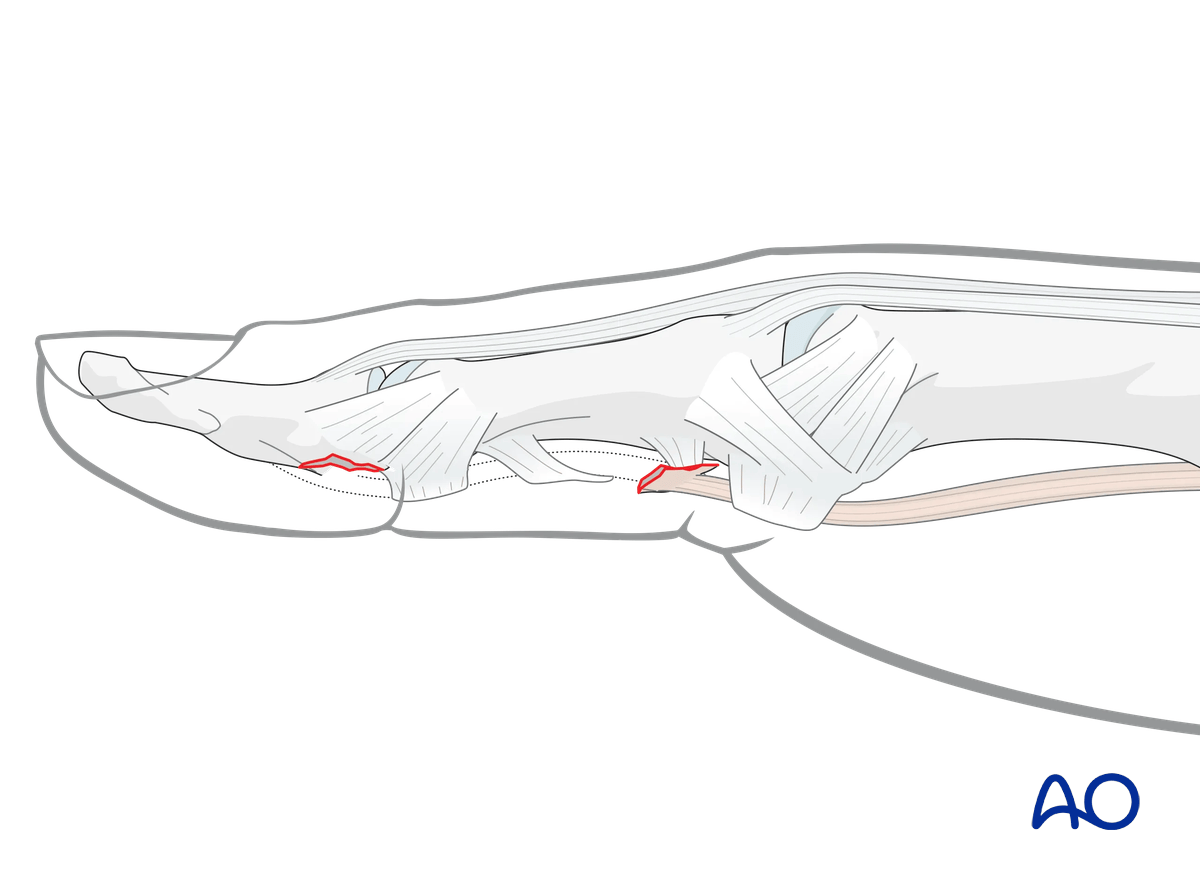
Imaging
Dorsopalmar (PA) and lateral x-rays are necessary for diagnosis.
See the chapter on patient assessment on how to take the x-ray views.