Talus: Trochlear ridge fractures
Fracture characteristics
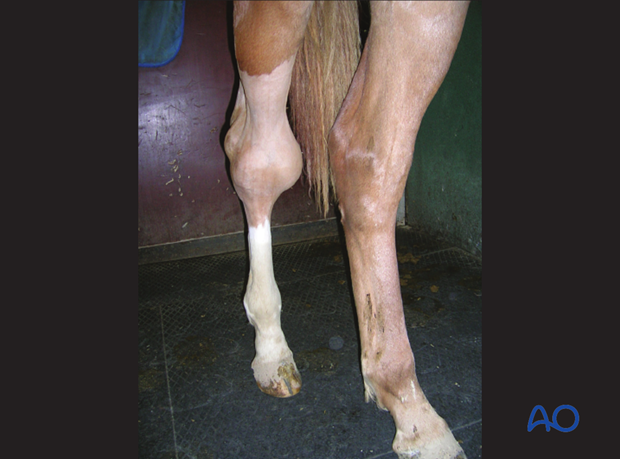
Trochlear ridge fractures of the talus usually occur after external impact trauma, from direct kicks by other horses or impact of the hock on rails, walls or doors. They are frequently open and they vary from simple fragmentation of small portions of the trochlear ridges to a complete split of the trochlear ridge.
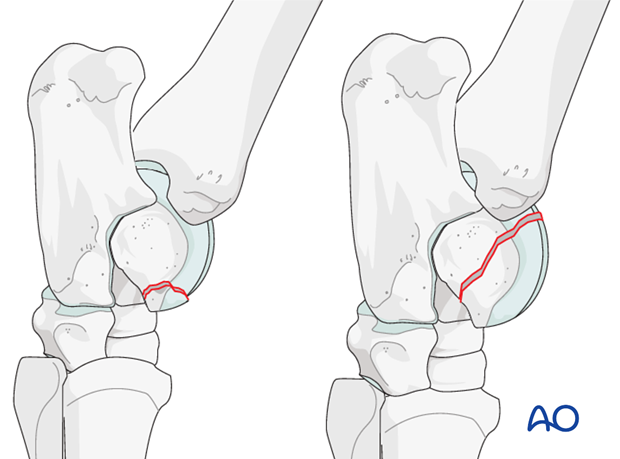
Small (left) and large (right) fracture of the distal lateral trochlear ridge.
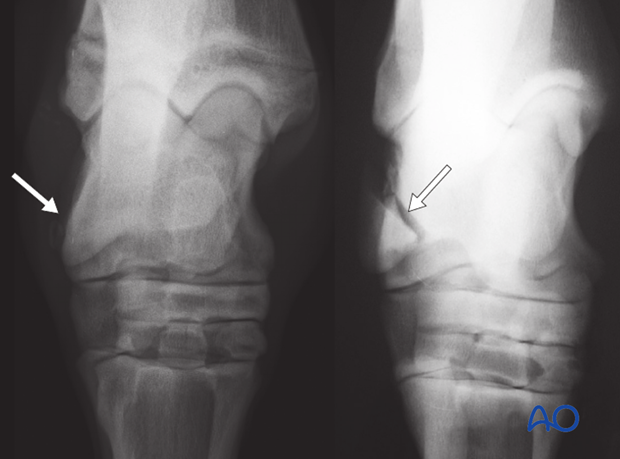
Fractures of the trochlear ridges (left) need to be differentiated from osteochondritis dissecans fragments (right).
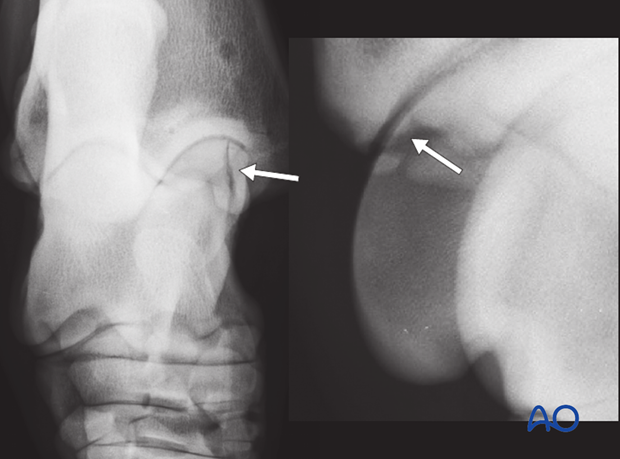
Fractures of the talus
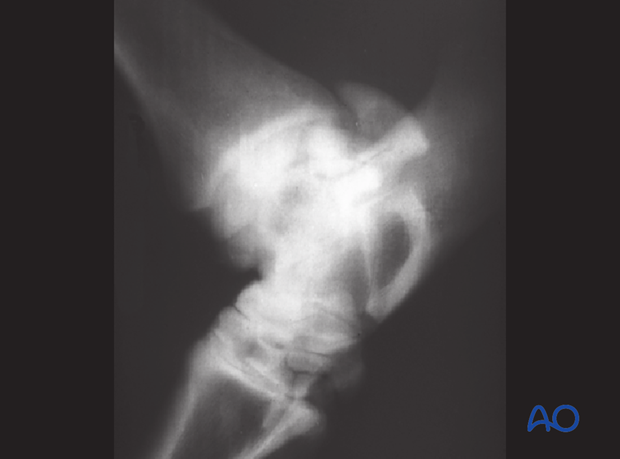
Talar fractures can occur after an external trauma or after twisting or shearing of the tarsus. They vary from simple fragmentation of small portions of the trochlear ridges...,
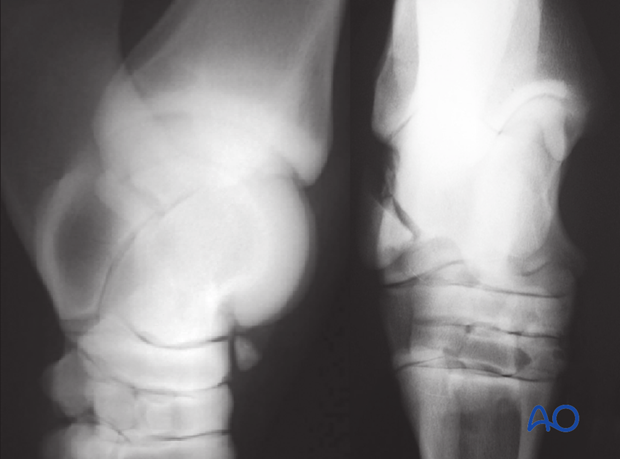
... fractures of the body of the talus...
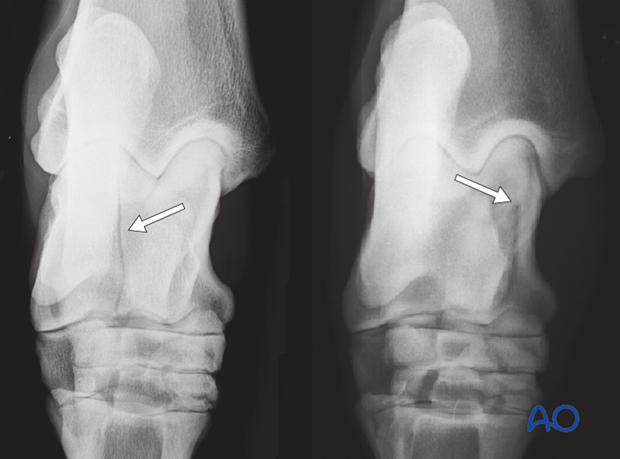
... to completely disruptive multifragment fractures of the entire body of the talus.
Clinical signs and imaging
Clinical signs can vary considerably, but very often horses show an acute severe weight bearing lameness (Grade III to V). Significant effusion of the talocrural joint is seen with most fractures of the talus. Fissures can be difficult to find radiographically. Therefore, several projections with different angles including flexed and skyline projections of the tarsus are necessary.
CT imaging is very useful to detect fissure lines and help to understand the configuration of the fracture.