Screw fixation
1. Preparation and approach
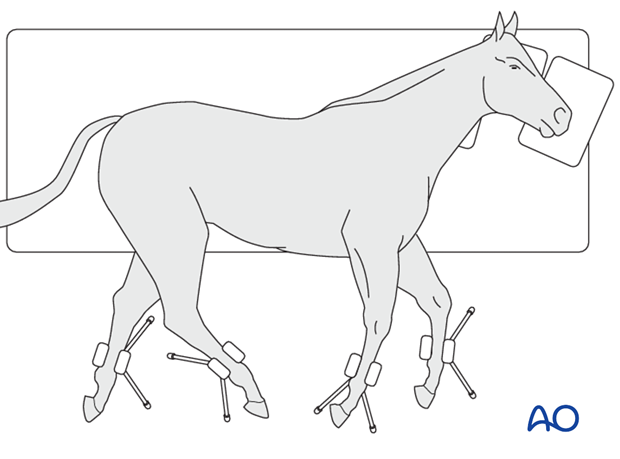
This procedure is performed with the patient placed in lateral recumbency and through stab incisions.
2. Stab incision
Planning the screw position
The optimal screw position is chosen based on the fracture configuration seen on radiographs.
Screw position is determined with the help of needles. One needle is placed into the distal intertarsal joint, one into the tarso-metatarsal joint and one at the intended screw position.
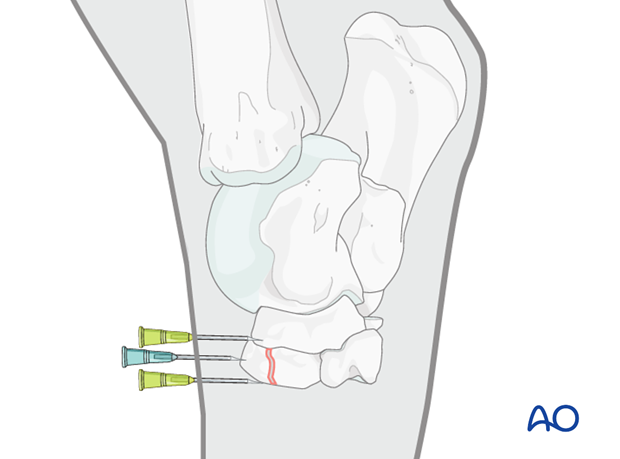
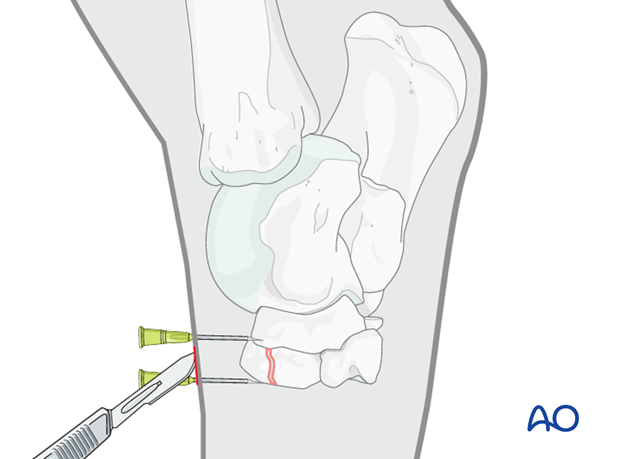
A stab incision is placed over the planned screw position on the dorsal aspect of the third tarsal bone.
3. Surgical technique
Drilling the glide hole
A 4.5 mm glide hole is drilled perpendicular to the fracture plane just crossing the fracture plane. Care is taken not to penerate the parent portion of the bone too deeply with the glide hole.
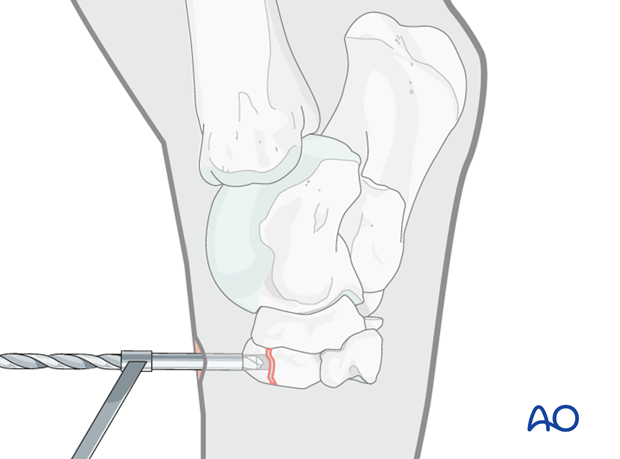
Preparing the thread hole
The 3.2 mm insert drill bit is inserted into the glide hole and the thread hole drilled into the parent portion of the bone. This frequently results in a blind hole. Therefore utmost care must be applied during the different steps of screw insertion to prevent stripping of the treads during tapping and impacting of the screw in the blind end preventing interfragmentary compression.
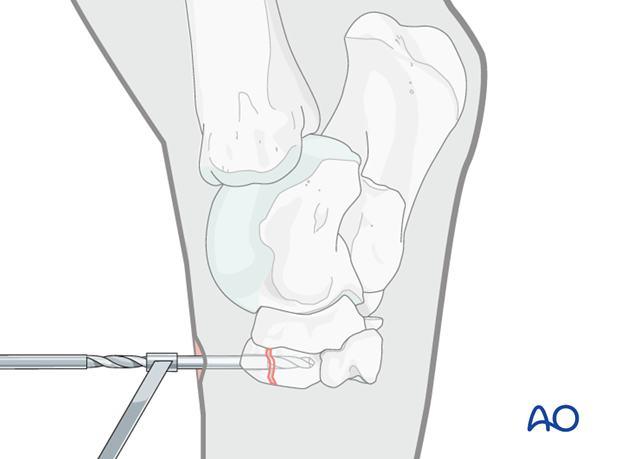
Countersinking
A countersink depression is prepared to accept the screw head.
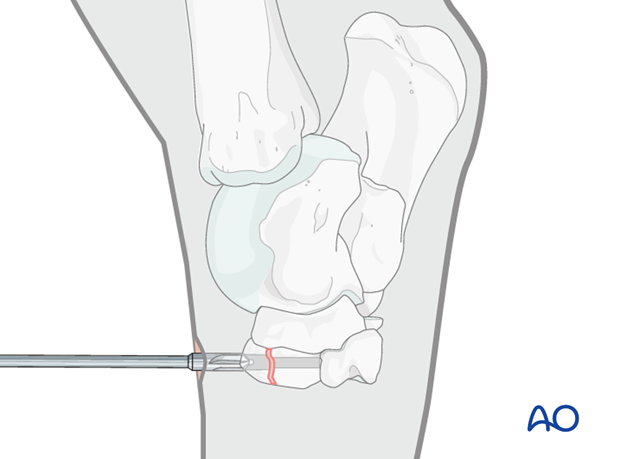
Determining screw length
The depth gauge is introduced to determine the required screw length.
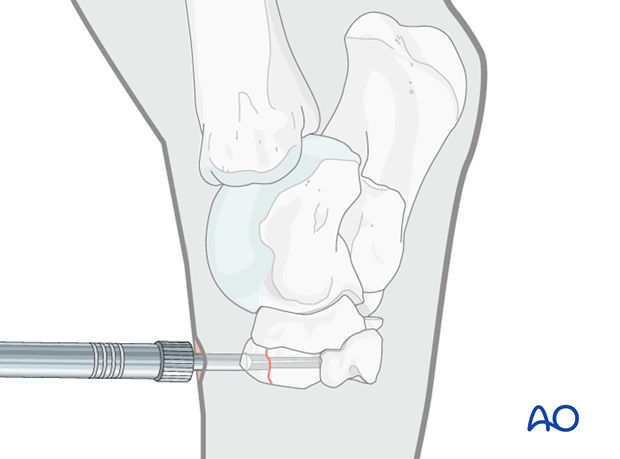
Screw insertion
The hole is tapped and a 4.5 mm cortex screw of predetermined length is inserted and solidly tightened.
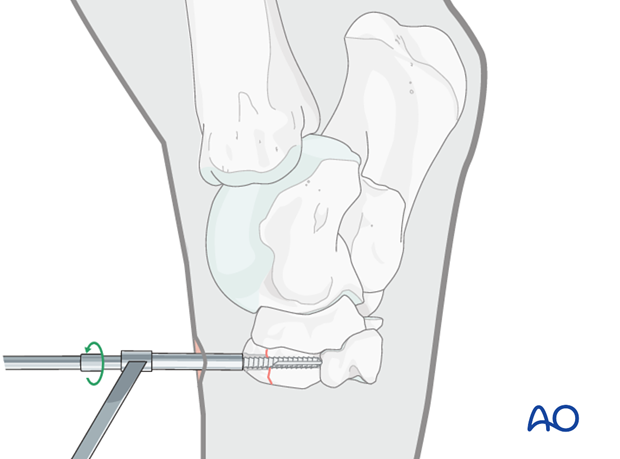
Correct screw placement is confirmed using the C-arm before the stab incision is closed in two layers.
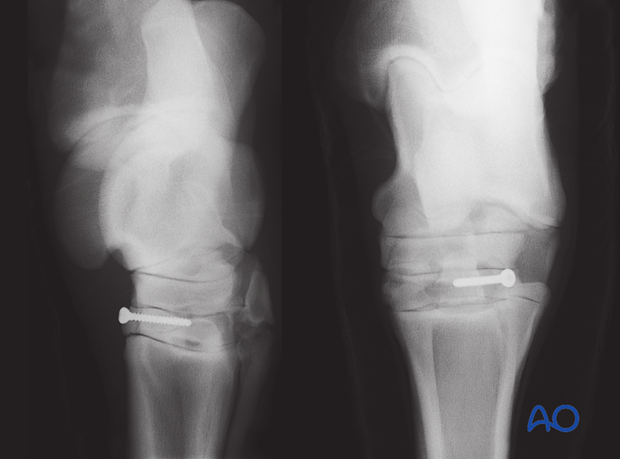
4. Aftertreatment
Recovery
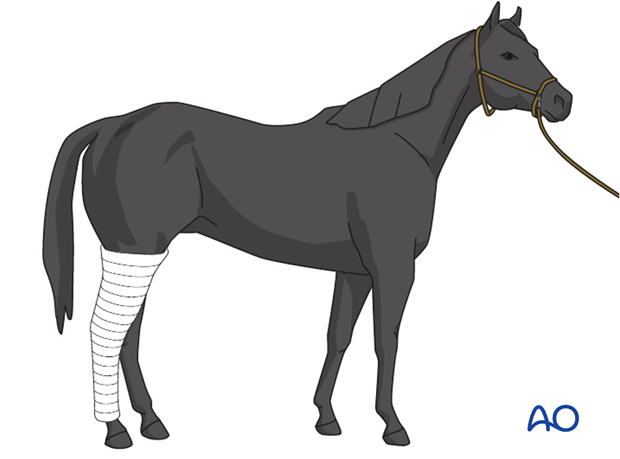
A support bandage that includes the entire tarsal region is applied and the horse is recovered from anaesthesia with manual assistance.
Aftercare
The limb is bandaged for 15 days. The horse is confined to a box stall for 2 months, and subsequently put on a small paddock for another 2 months. The sutures are removed 10 days postoperatively.