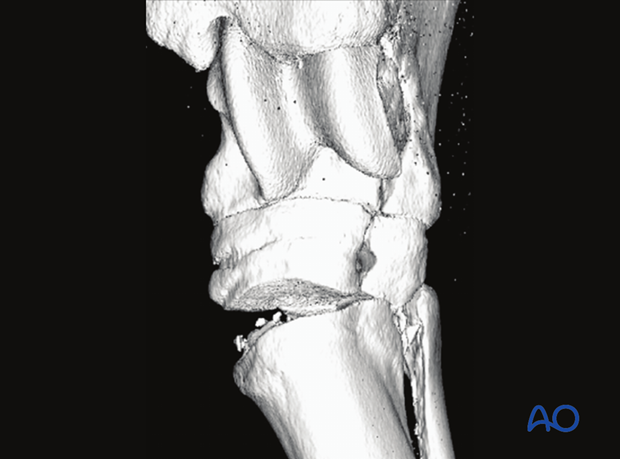
Tarsal bones: Fractures of the 1st, 2nd and 4th tarsal
Fracture characteristics
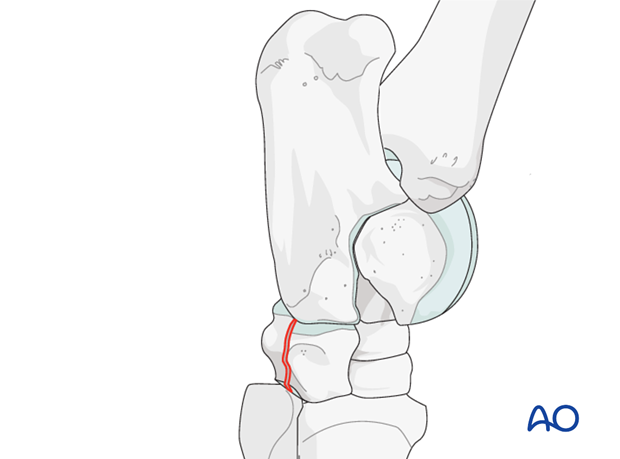
Fractures of the combined first and second as well as the of the fourth tarsal bone without other fractures are extremely rare. Fractures of these bones often involve combined injuries of other bones like the second, third or fourth metatarsal bone.
Clinical examination
Common clinical findings include heat over the affected joint, signs of pain on palpation of the dorsal aspect of the tarsal region and lameness. Lameness caused by a fractured first, second or fourth tarsal bone varies from severe to moderate in the acute phase, but diminishes to become moderate or mild one or two weeks later. It is usually first noticed during or after fast work or racing.
Flexion of the hind limb will elicit a positive reaction in horses with first, second or fourth tarsal bone fractures, but the test is not specific for tarsal lameness. However, with a tarsal fracture, a marked response to tarsal flexion persists for an extended period of time.
Imaging
Imaging
The diagnosis of a first, second or fourth tarsal bone fracture is generally difficult because soft-tissue swelling may be minimal, and lateromedial and dorsoplantar radiographic views may not reveal an obvious fracture line.
Therefore, multiple oblique radiographic views are recommended to improve the detection of fracture lines.
The radiograph shows a fracture of the first and second tarsal bone.