

Screws with transphyseal bridge
1. Preparation and approach
This procedure is performed with the patient in lateral recumbency, through an incision in the proximal metaphyseal spike.
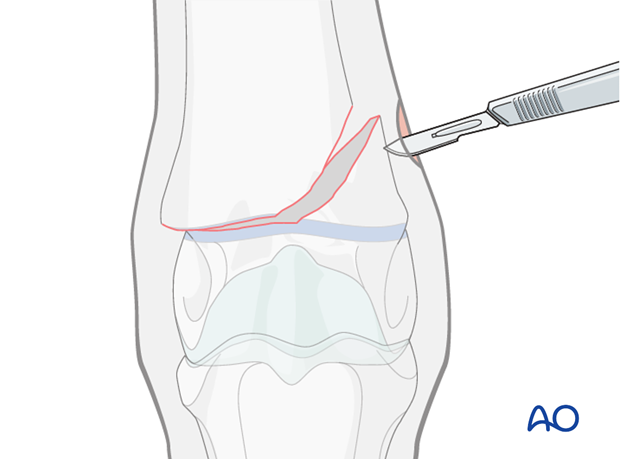
2. Reduction
When reduction is achieved large pointed reduction clamps are used to maintain reduction.
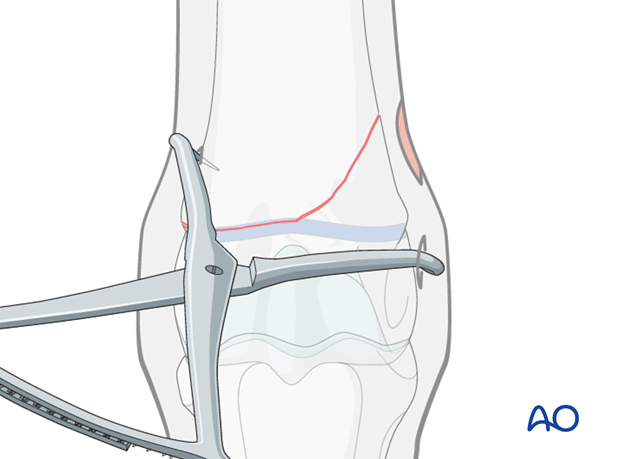
3. Fixation
Placement of screws in lag fashion
If possible, two 4.5 mm cortex screws are placed in lag fashion through the metaphyseal spike into the parent bone.
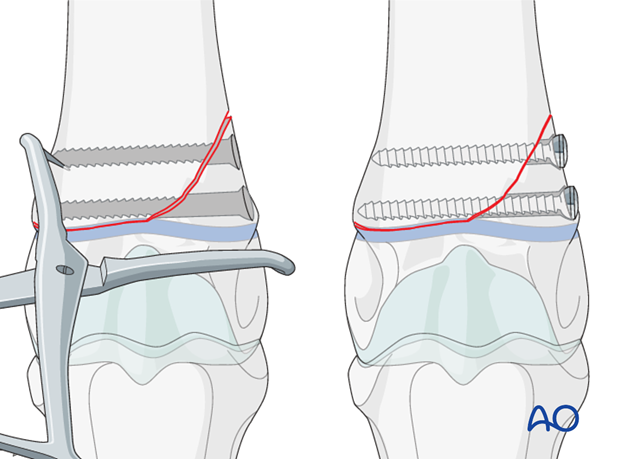
Creation of a transphyseal bridge
Because the physeal component of the fracture is still potentially unstable, it is advisable to place a transphyseal bridge with screws and wire.
Single 4.5 mm cortex screws are placed proximal and distal to the physis on the side opposite the metaphyseal spike.
A 1.25 mm diameter cerclage wire is placed in figure-8 fashion around the screw heads and tightened proximally, using routine technique.
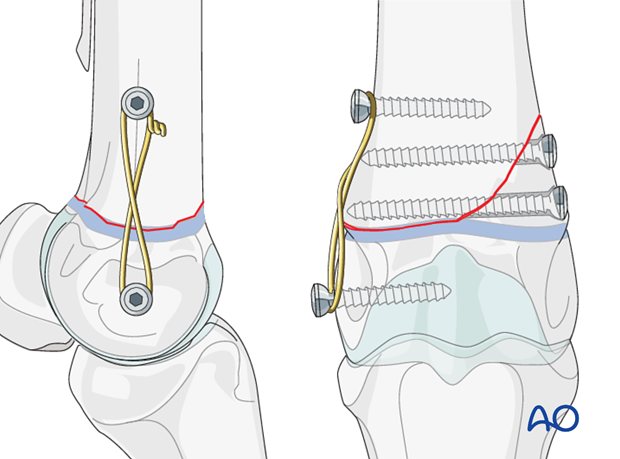
Another alternative is to intentionally insert a longer than needed cortex screw through the top hole, followed by incorporation of the figure-8 cerclage wire around the threaded screw extending from the bone.
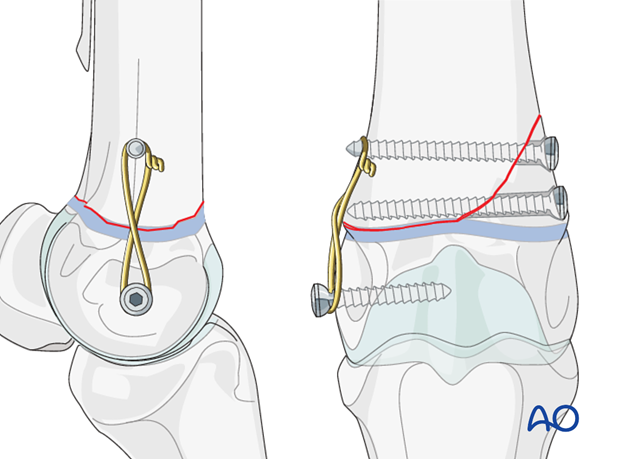
Insertion of an epiphyseal and a metaphyseal cortex screw laterally and medially, followed by application of a figure-8 cerclage wire using growth retradation technique with or without an additional interfragmentars cortex screw is yet an alternate technique showing promising results.
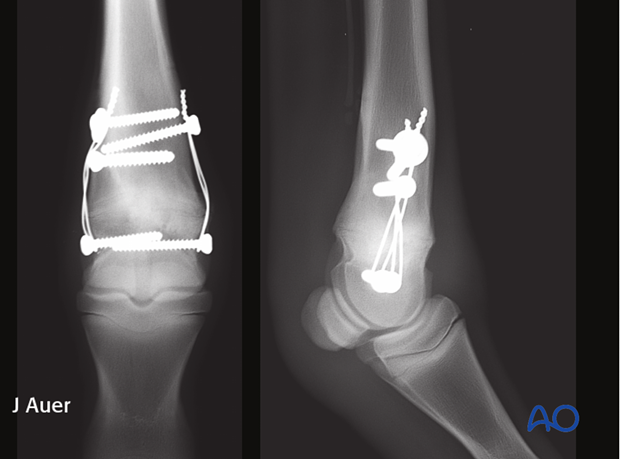
4. Aftercare
Closure of the incisions is routine and simple bandaging is typically all that is necessary. If there is concern about stability, splints can be added to the bandage.
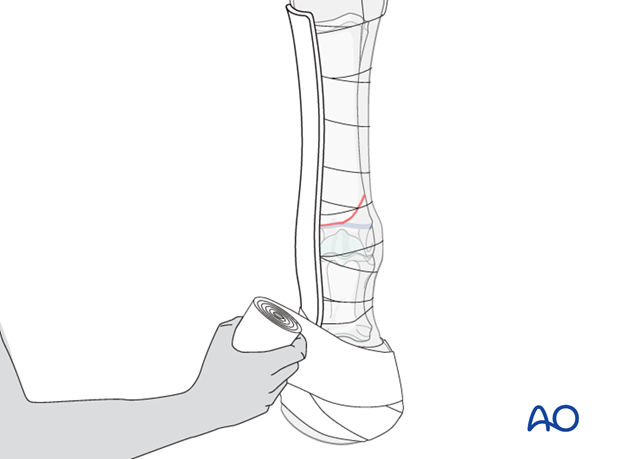
Foals are maintained in strict stall rest. The bandage should be changed at least every 3-4 days. Radiographs should be taken at approximately 2 week intervals.
If any angular deformity begins to develop, it may be necessary to remove the transphyseal bridge before the lag screws are removed.
Implants are completely removed when fracture healing is radiographically evident. This is usually less than two months.


