

Minimally invasive fixation
1. Introduction
Minimal invasive fracture fixation is becoming more and more popular among equine surgeons. A prerequisite is profound knowledge of the anatomic situation and the internal fixation techniques. Intraoperative availability of an image intensifier is strongly encouraged.
Minimal invasive fracture fixation is almost exclusively performed with locking compression plates and locking head screws.
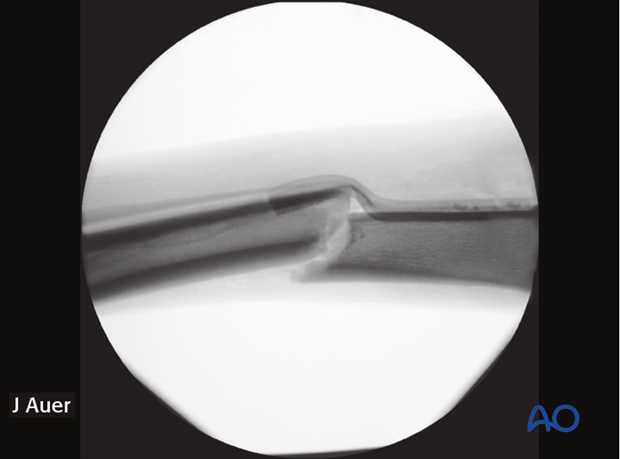
2. Preparation and approach
This procedure is performed with the patient in dorsal recumbency or in lateral recumbency, through a minimally invasive approach.
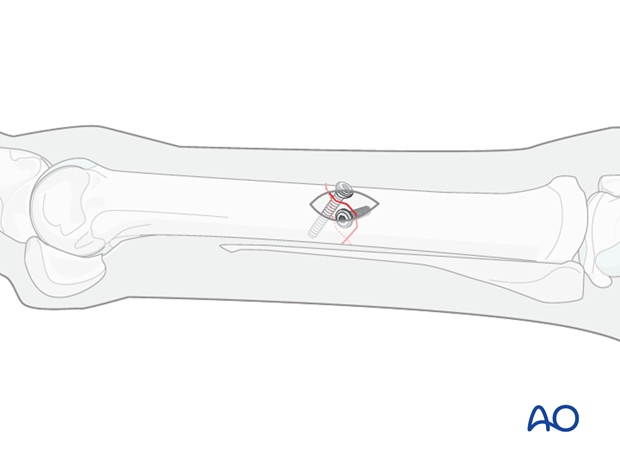
3. Minimal invasive fixation
The subcutaneous tissues are separated from the periosteum with the help of a long periosteal elevator or a similar instrument in distal and proximal direction along the entire bone where the plate will be applied.
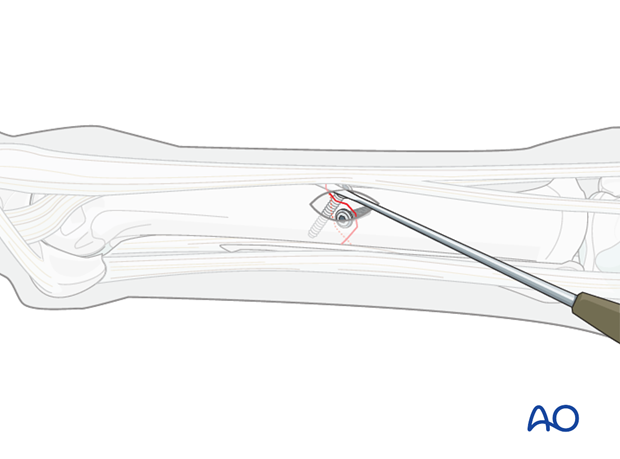
At the distal end of the bone another small incision is prepared to allow insertion of the pre-contoured plate in proximal direction.
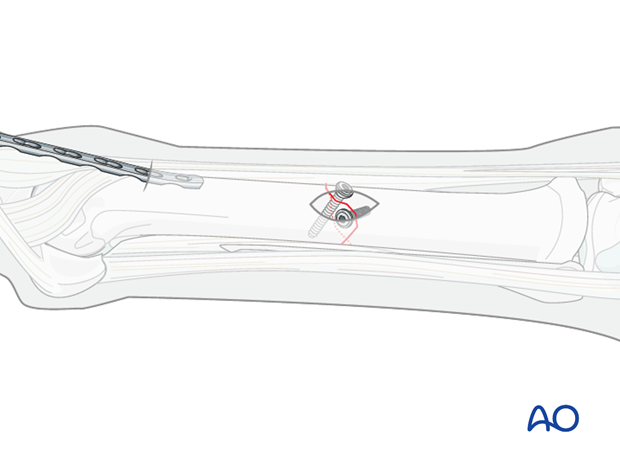
Plate insertion is supervised with the help of the image intensifier.
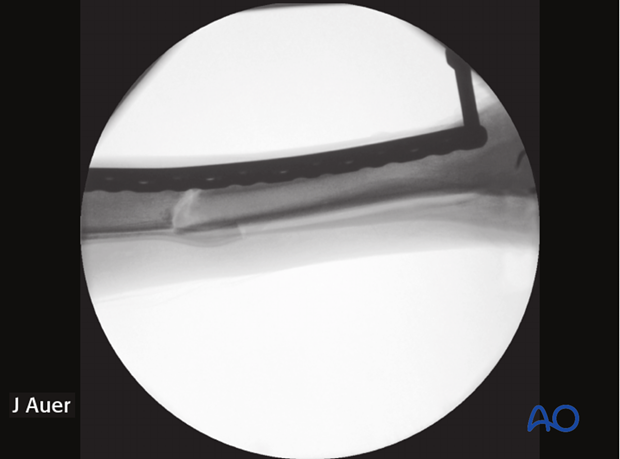
The first screw is inserted through a distal hole.
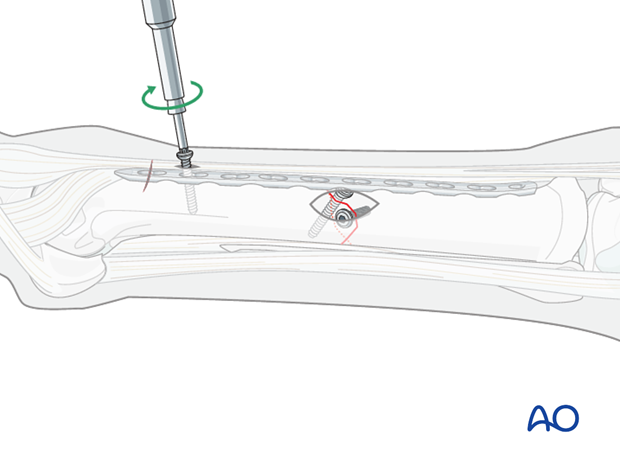
An additional small skin incision is performed at the proximal end of the plate followed by insertion in neutral position of another screw near the end of the plate.
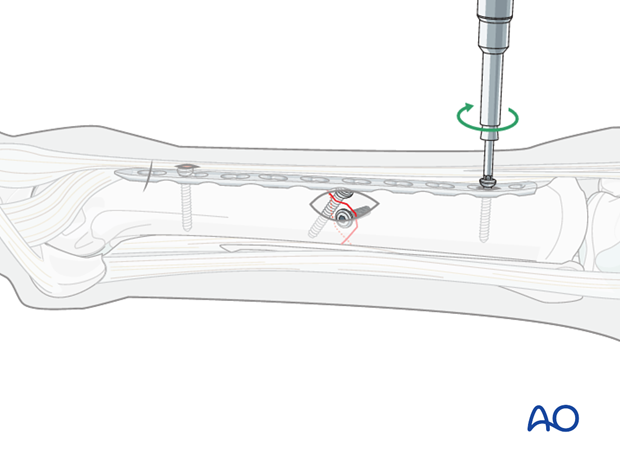
If possible additional screws are inserted through the plate at the fracture site.
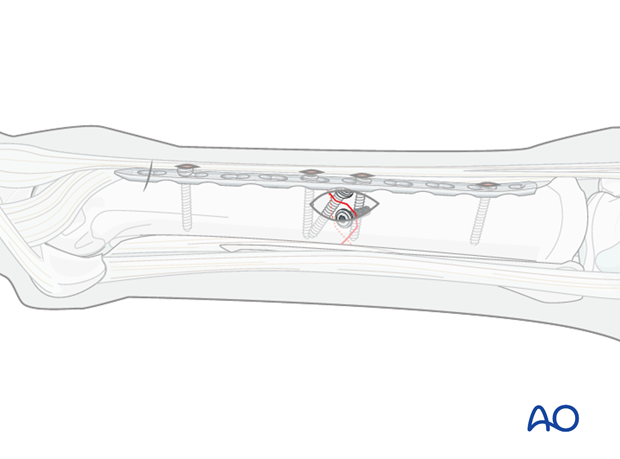
Next the second plate is applied at the planned location using identical technique.
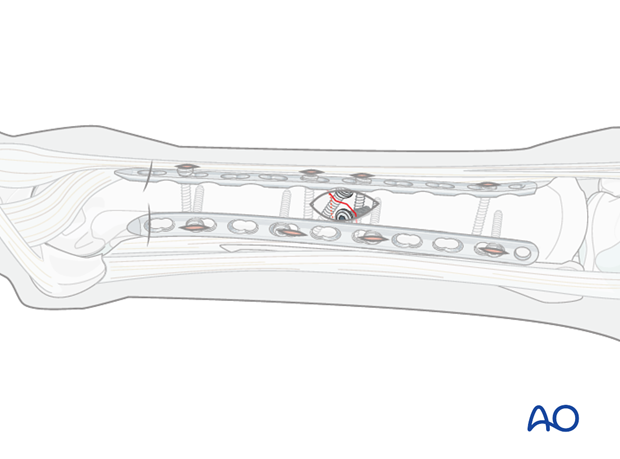
The stab incision for insertion of the remaining screws are best performed through an identical plate placed directly over the implanted plate on the surface of the bone.
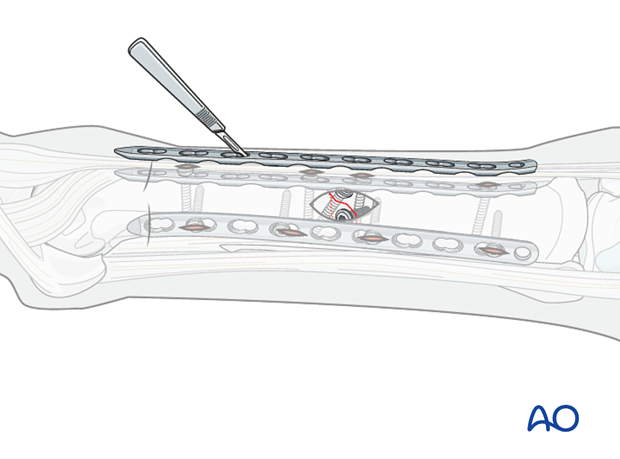
The remaining screws are inserted one by one taking care not to contact any of the previously inserted screws.
Final tightening of all screws is performed by hand.
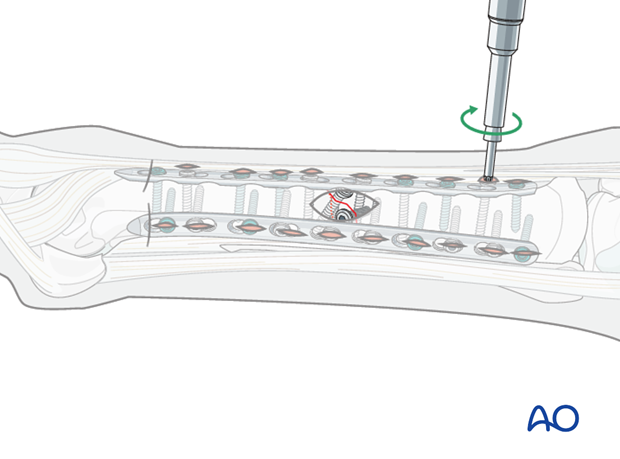
4. Closure
All incisions are closed with simple interrupted skin sutures.
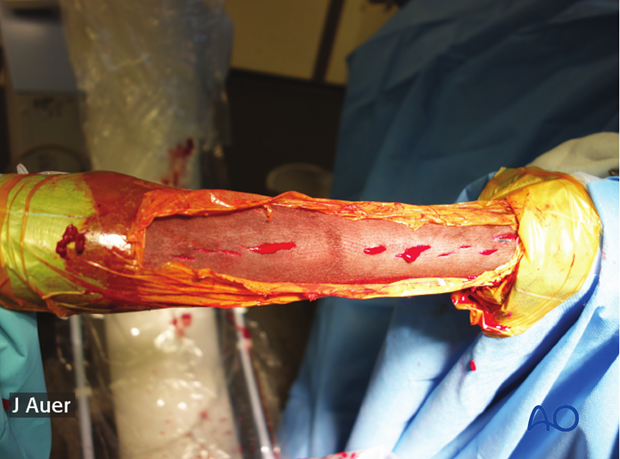
5. Regional intravenous perfusion
At the end of the procedure it is advisable to perform regional intravenous perfusion with broad spectrum antibiotic of the surgeon’s choice.
A tourniquet is applied at the distal third of the radius/tibia followed by insertion of an indwelling catheter into the corresponding vein distal to the tourniquet (Cephalic vein in the forelimb, saphenous vein in the hind limb).
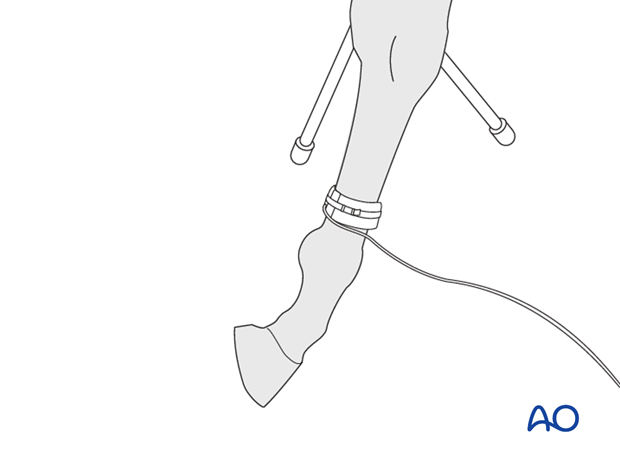
About 40 ml of blood is withdrawn from the vein followed by by slow injection of the same amount if antibiotic.
The antibiotic is maintained in the fracture region for 20 to 30 minutes.
6. Recovery from anesthesia
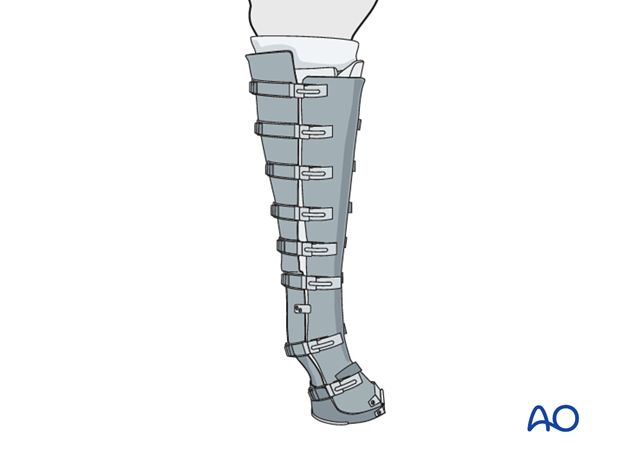
If the fracture was repaired with two plates the limb is covered by a tight full-limb bandage and recovered from anesthesia.
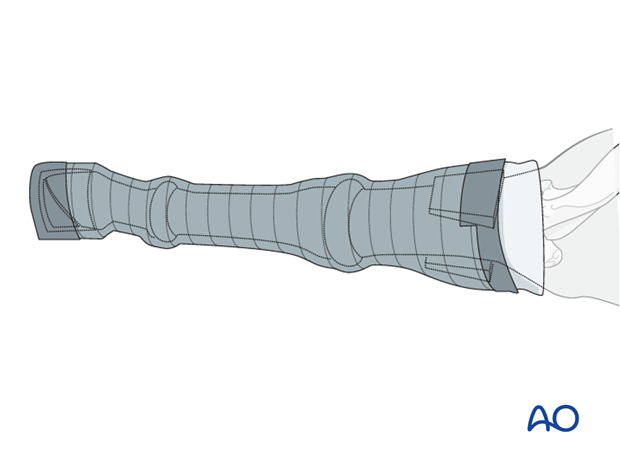
In selected cases a full-limb splint is added to the bandage for recovery.
7. Aftercare
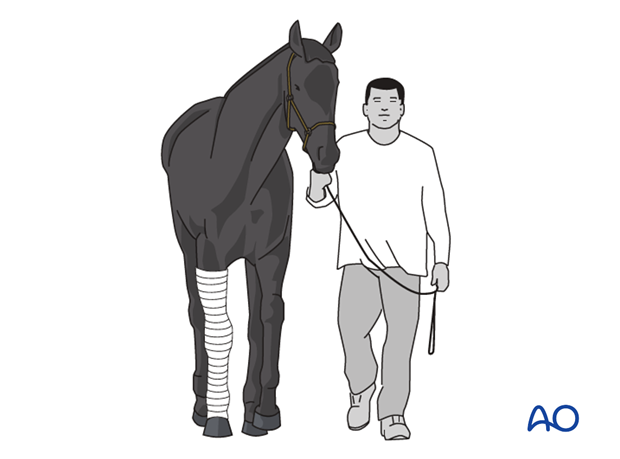
The patient is kept in a box stall for one month with some hand grazing after two weeks.
The bandage is maintained for 2-3 weeks and changes at 4-day intervals.
At the end of the first month the patient is allowed some exercise in a small paddock for one additional month.
Follow up radiographs are taken 2 months postoperatively. The remaining postoperative period is managed dependent upon the result of the follow up radiographs.
Implant removal
More information about implant removal can be found here.


