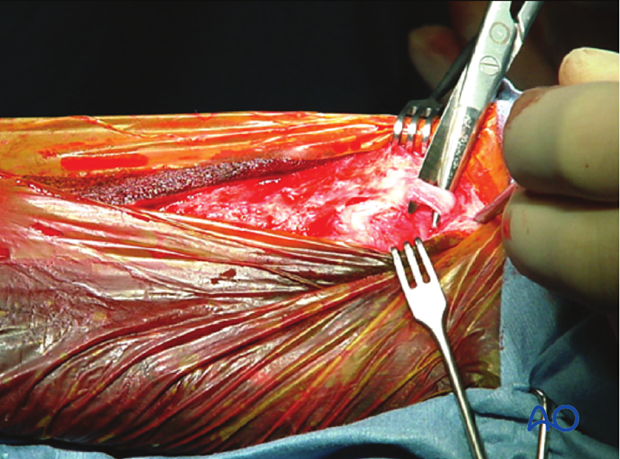
Approaches to the splint bones
1. Introduction
Depending on the fracture location and the treatment option chosen, the approach to the splint bone varies. See a summary of the most common approaches.
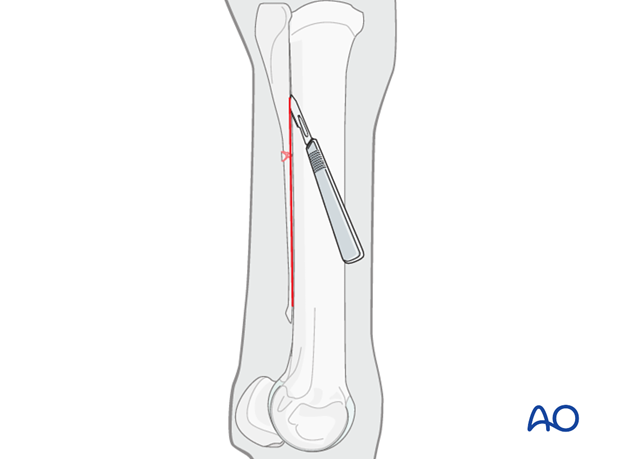
2. Approach for plate fixation of a proximal splint bone fracture
A longitudinal skin incision of 8-10 cm length is performed directly over the lateral/medial aspect of the proximal splint bone.
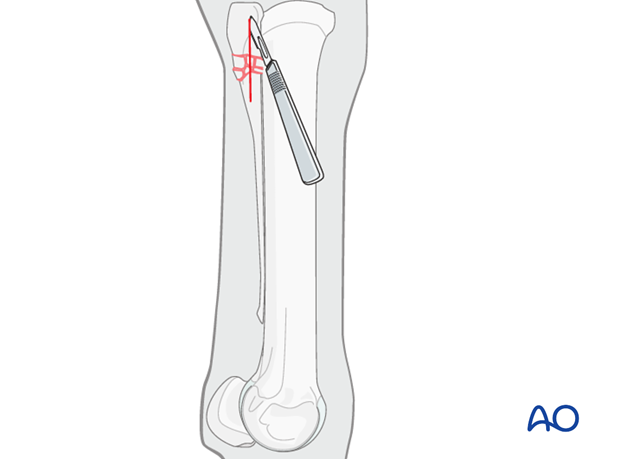
The fibers of the collateral ligament, which inserts on the proximal splint bone need to be split to allow plate and/or screw placement to the abaxial or palmar/plantar surface of the proximal splint bone. Dissection has to be extended to free up the palmaro/plantaro-lateral/medial aspect of the splint bone respectively.
3. Approach for total resection of a splint bone
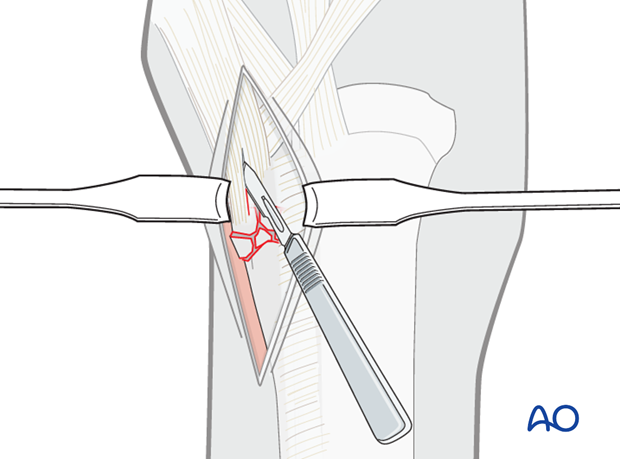
A straight incision is placed along the entire length of the splint bone.
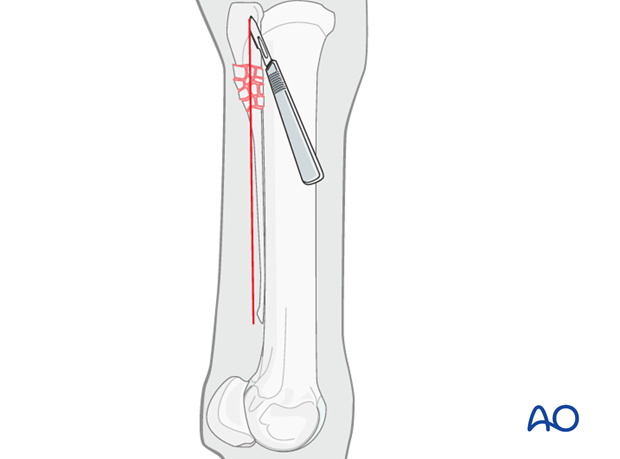
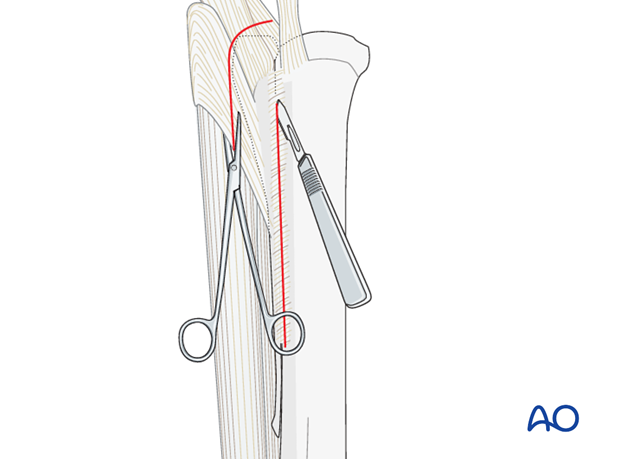
All the attachments to the splint bone are transected including the intermetacarpal/-tarsal ligament, the metacarpal/-tarsal fascia and the collateral ligaments of the carpus/tarsus.
4. Approach for wound débridement of a proximal splint bone fracture
The skin is elliptically circumcised. The contaminated skin edges are removed.
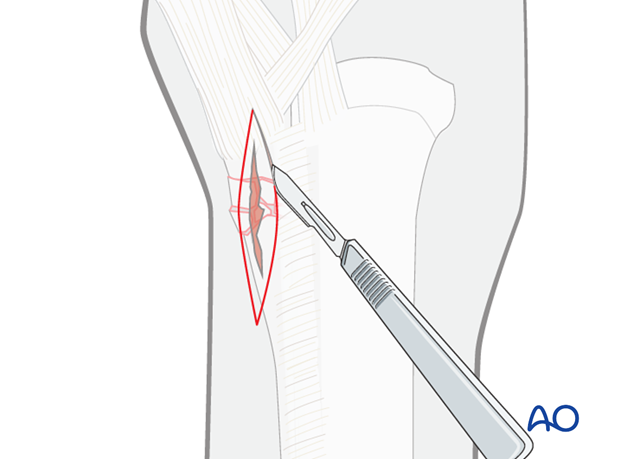
5. Approach for resection of a distal splint bone fragment
A straight longitudinal skin incision is made over the affected splint bone. The subcutaneous tissues and fascia are incised sharply down to the periosteum.
In distal fractures, the incision is performed only over the distal fragment and the ligament at the distal end of the splint bone is transected.