

12-C3 Humeral diaphyseal fractures with complex non-reducible wedges
General considerations
12-C3 fractures are diaphyseal humeral fractures with complex non-reducible wedges.
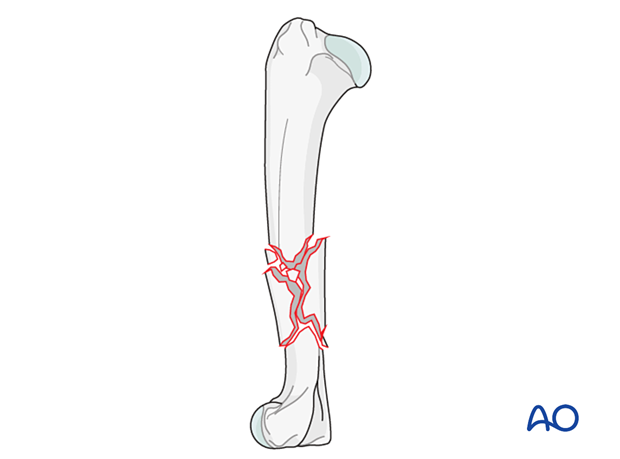
These fractures are common and often occur in the mid to distal shaft area of the humerus.
Note: 12-C3 fractures are very unstable.
Etiology
12-C3 fractures result from higher falls, car accidents, and gunshot trauma.
Clinical signs
Clinical signs observed for 12-C3 fractures are:
- Non-weight bearing lameness
- High instability in the humerus with crepitus and pain
- Severe swelling of the whole leg
Imaging
Craniocaudal and lateral radiographs are needed. High-quality radiographs are essential and should be examined for additional fissures.
Possible fracture expansion to the distal metaphyseal area and joint must be identified.


Associated injuries
Thoracic trauma is very common, and, therefore, radiographs of the thorax should be taken.
Radial nerve injury is common but, in most cases, temporary.
Vascular trauma with blood loss and swelling of the leg is frequent.


