

12-B1 Humeral diaphyseal fracture with one reducible wedge
General considerations
12-B1 fractures are diaphyseal humeral fractures with one reducible wedge.
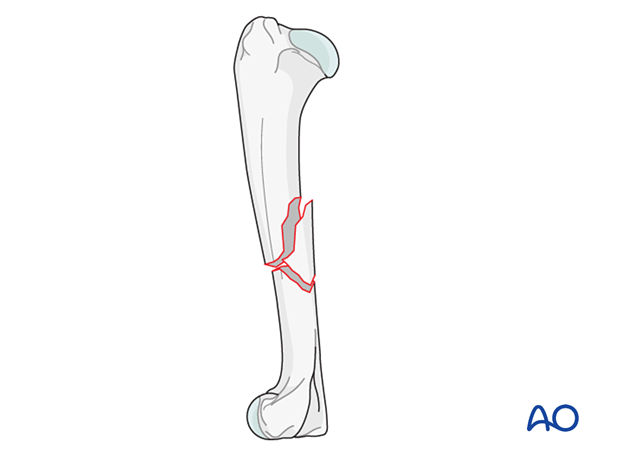
These are common fractures, mainly occurring in the midshaft area.
Etiology
12-B1 fractures generally result from falls or car accidents.
Clinical signs
Clinical signs observed for 12-B1 fractures are:
- Non-weight bearing lameness with the distal leg abducted and the carpus flexed
- Instability in the humerus with crepitus and pain
Imaging
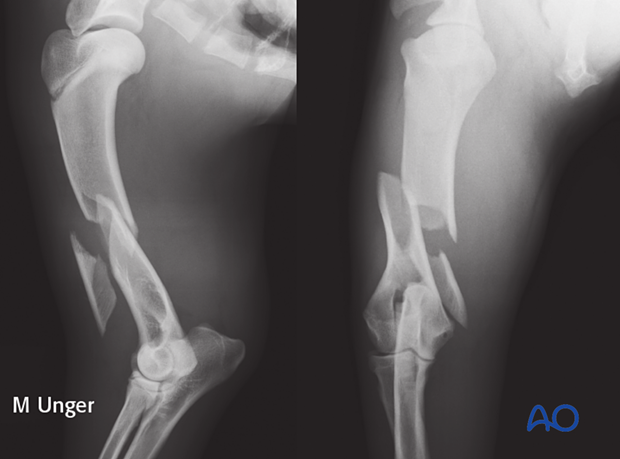
Craniocaudal and lateral radiographs are needed. High-quality radiographs are essential and should be examined for additional fissures.
Associated injuries
Thoracic trauma is common, and, therefore, radiographs of the thorax should be taken.
Radial nerve injury is common, but in most cases, temporary.


