

12-A2 Simple oblique fracture of the humeral diaphysis
General considerations
12-A2 fractures are simple oblique fractures of the diaphyseal humerus.
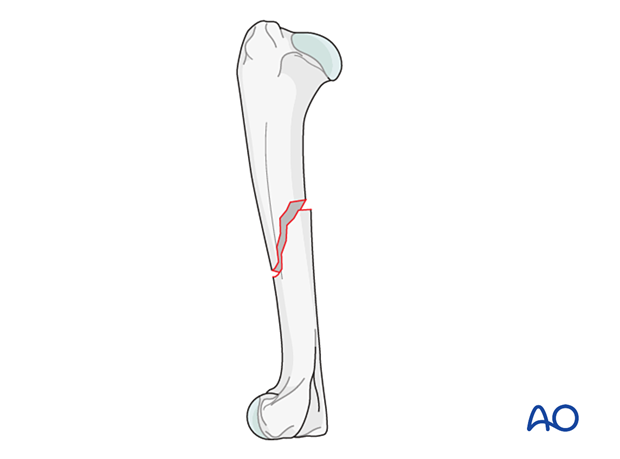
These are common fractures mainly occurring in the midshaft area.
Etiology
12-A2 fractures generally result from falls or car accidents.
Clinical signs
Clinical signs observed for 12-A2 fractures are:
- Non-weight bearing lameness with the distal leg abducted and the carpus flexed
- Instability in the humerus with crepitus and pain
Imaging
Craniocaudal and lateral radiographs are needed. High-quality radiographs are essential and should be examined for additional fissures.
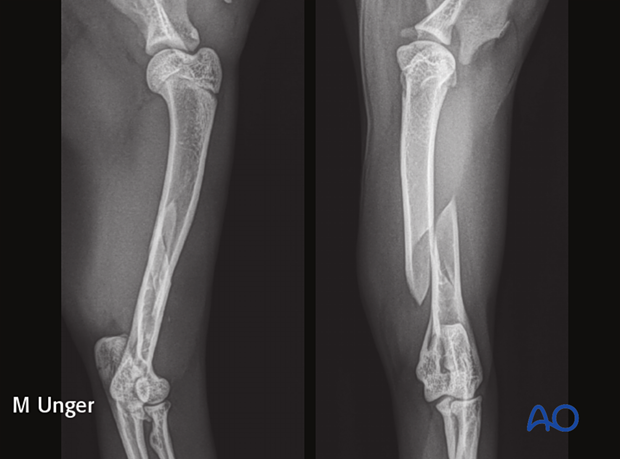
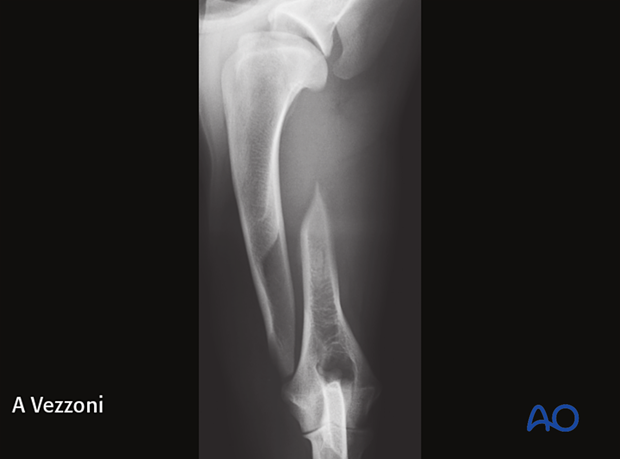
Example of a 12-A2 fracture.
Associated injuries
Thoracic trauma is common, and, therefore, radiographs of the thorax should be taken.
Radial nerve injury is common but, in most cases, temporary.


