

Nonoperative treatment
1. Introduction
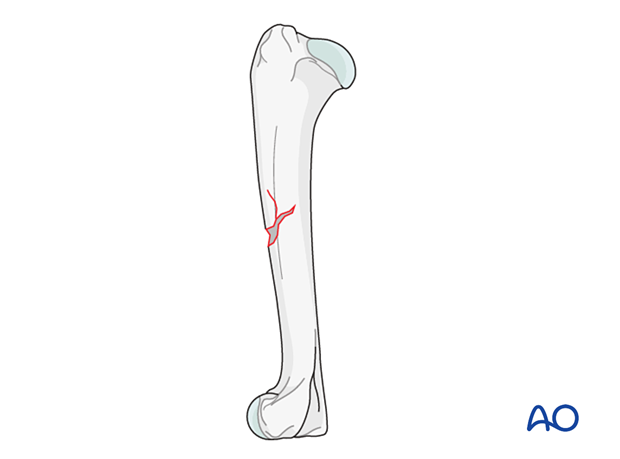
Nonoperative treatment should only be used for incomplete fractures (12-A1) in young animals.
2. Cage rest
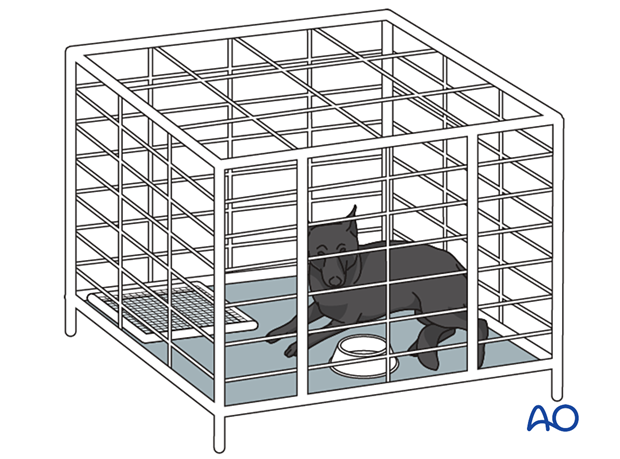
For skeletally immature animals, cage rest is the preferred method for immobilization.
Regular check-ups ensure that the incomplete fracture does not turn into a complete fracture.
3. Spica splint
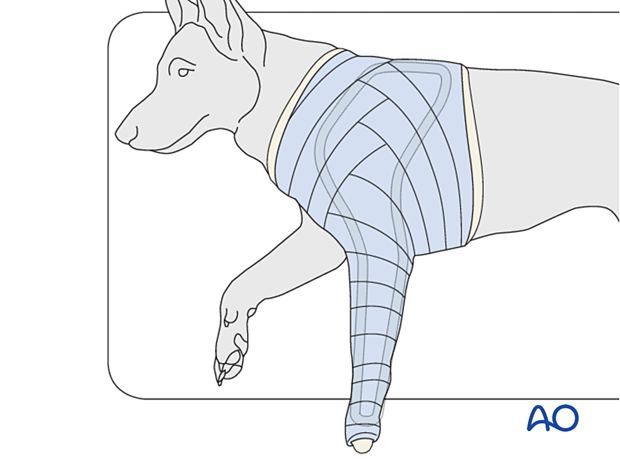
A complete padded bandage is applied to the injured leg from the toes to the shoulder. The bandage should incorporate the thorax but leave the healthy leg free.
A splint made of several layers of cast material is molded over the lateral and dorsal sides of the leg. The pressure points over the bones must be well padded to avoid decubitus ulcers.
Note: Spica splints should be used with caution. In young animals, immobilization of joints for a prolonged time can lead to loss of joint function. The complication rate is high.
4. Aftercare for spica splints
An Elizabethan collar is applied to avoid self-injuring.
Regular check-ups of the spica splint are necessary to ensure that the splint does not dislodge or lead to pressure or circulation problems.


