

Bridging plate
1. Introduction
A bridging plate can be used active dogs and cats that cannot be confined. A locking plate is preferred because it is more tolerant of slight inaccuracies in plate contouring.
2. Preparation and approach
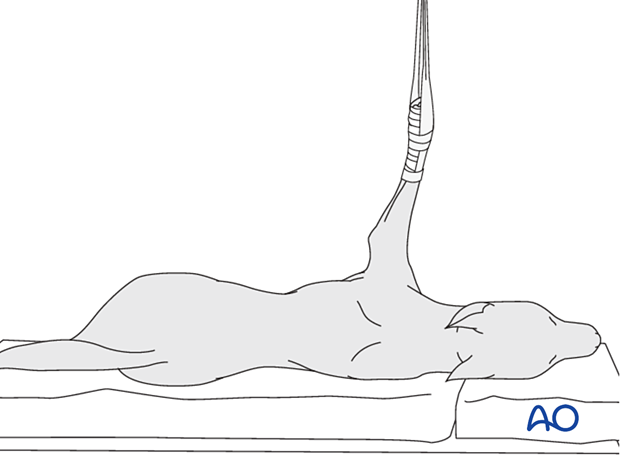
A lateral approach with the patient positioned in lateral recumbency with the affected leg up is preferred for proximal fractures.
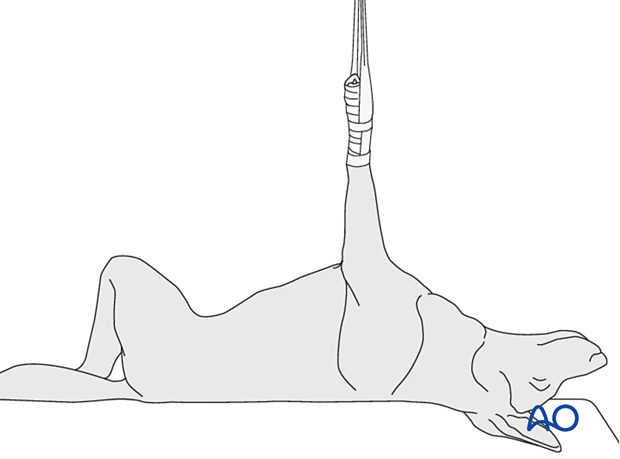
A medial approach with the patient positioned in dorsal recumbency is preferred for distal fractures.
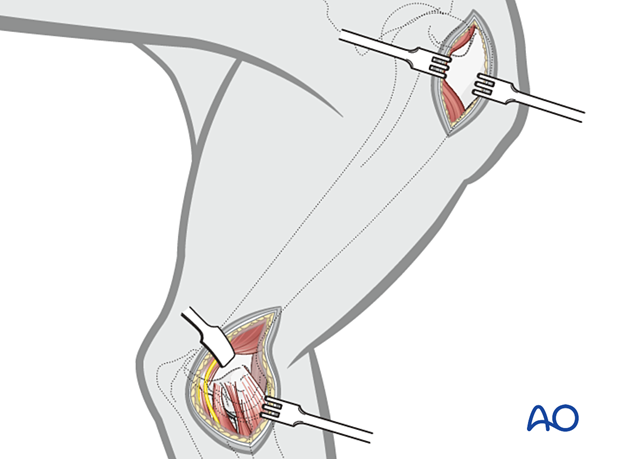
A minimally invasive approach is used for this technique.
3. Fixation
Plate selection
A locking plate is preferred to a plate with cortical screws.
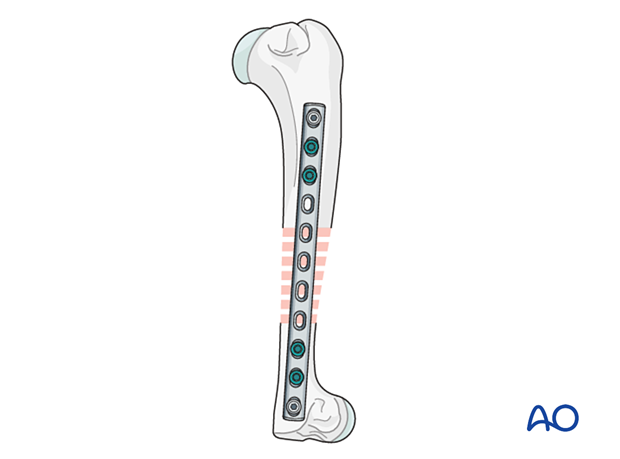
The plate is contoured to the shape of the bone. The plate's length should allow the placement of at least three screws proximal and distal of the incomplete fracture. Precise contouring is not as important when using a locking plate.
Read more about plate preparation.
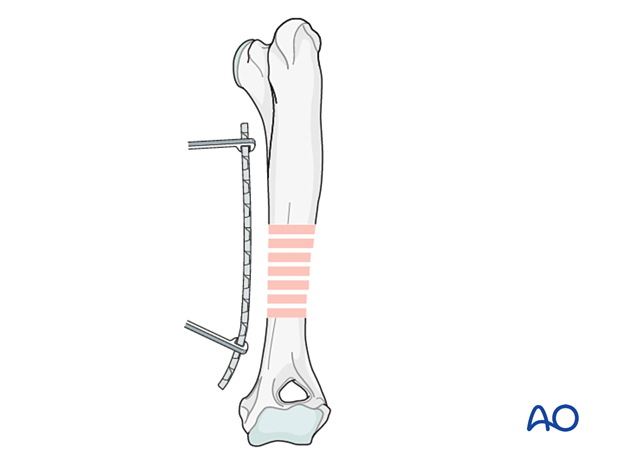
Plate application
After contouring the plate, it is fixed with three screws proximal and three screws distal to the incomplete fracture.
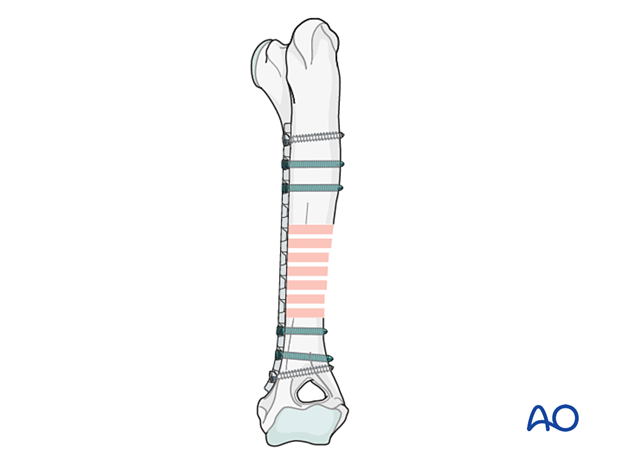
4. Aftercare
Phase 1: 1–3 days after surgery
The aim is to reduce edema, inflammation, and pain.
Integrative medical therapies, anti-inflammatory medication, and analgesics are recommended.
Phase 2: 4–10 days after surgery
The aim is to resolve hematoma and edema, control pain, and prevent muscle contracture.
Anti-inflammatory and analgesic medications usually are not needed after 3–5 days.
Phase 3: > 10 days after surgery
10-14 days after surgery, the sutures are removed.
Radiographic assessment is performed after 4–6 weeks.


