

Sternal recumbency
1. Sternal recumbency position
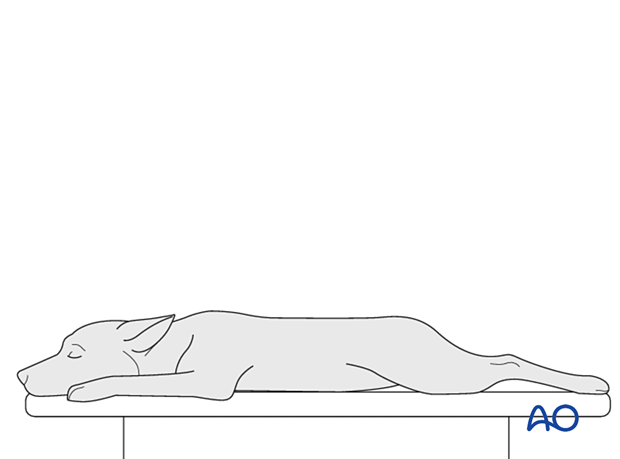
A sternal recumbency position can be used as an alternative to dorsal recumbency for a cranial approach in distal radial fractures. Positioning the patient depends on surgeon’s preference.
Preparing the entire leg, including the foot in the surgical field helps in assessing the alignment.
2. Positioning of the patient
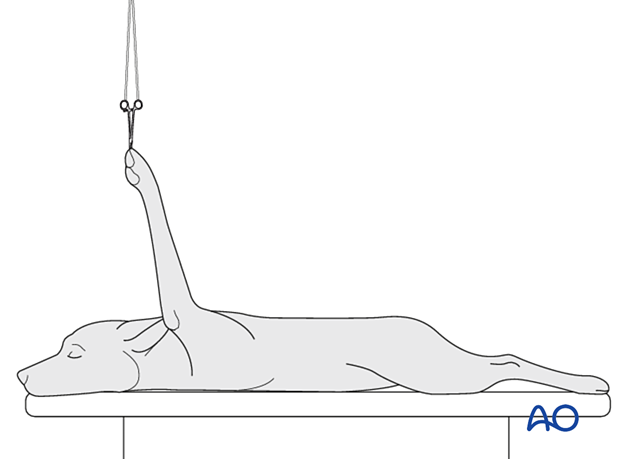
The patient is placed on the surgery table in sternal recumbency with the affected limb pulled cranially. The injured limb is placed hanging.
This position exposes the cranial part of the radius and allows the limb to be draped completely, including the foot.
3. Preparation of the injured limb for surgery
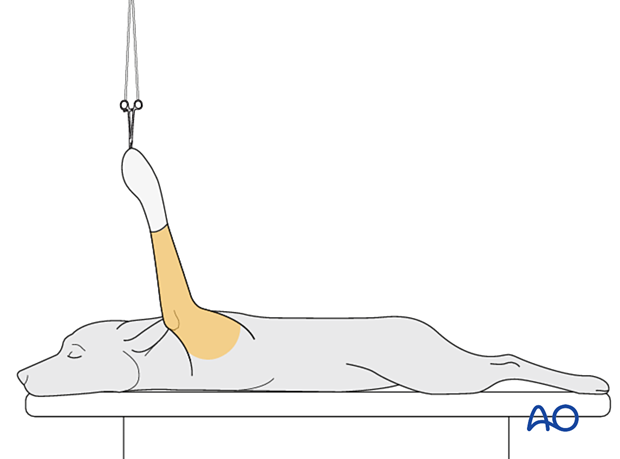
Preparation of the limb is done outside of the surgical suite. The entire limb is clipped circumferentially, from the medial humerus to the entire foot. The clipped hair is vacuumed.
A general scrub is done before bringing the patient into the operating room.
In the operating room, the patient is positioned in sternal recumbency and the affected limb is pulled cranially into a hanging limb position. The limb is prepared for aseptic surgery by performing the final sterile surgical scrub.
4. Draping
Corner drapes are placed around the surgical site and secured with towel clamps.
An assistant releases the distal limb from the hung position while the surgeon grabs and covers the entire antebrachium with an adhesive incisional drape to prevent the surgeon from contacting the skin during the operation.
To improve the adhesion of the incisional drape, the skin should be dried with a sterile towel and a sterile adhesive spray should be applied over the entire surface to be covered.
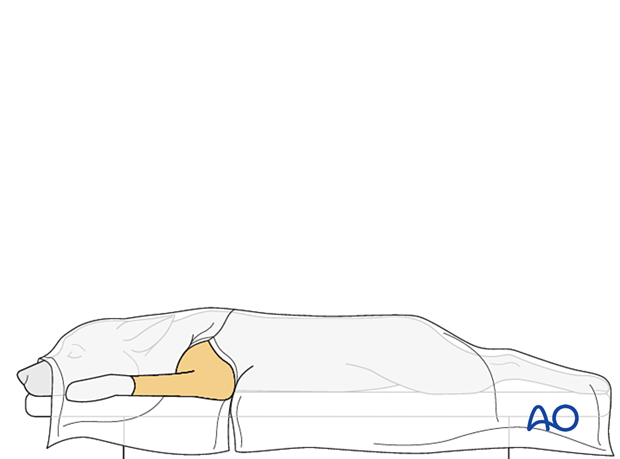
An extremity or laparotomy drape covering the entire surgery table is recommended on top of the corner drapes.
After draping, the limb is repositioned on the surgical table. This helps keep the bones in the correct position when applying the plate cranially.
5. Operating room setup
If a minimally invasive osteosynthesis approach is used or an articular fracture is treated, the use of a C-arm may be helpful.


