

Anatomical differences between dogs and cats
Anatomical differences
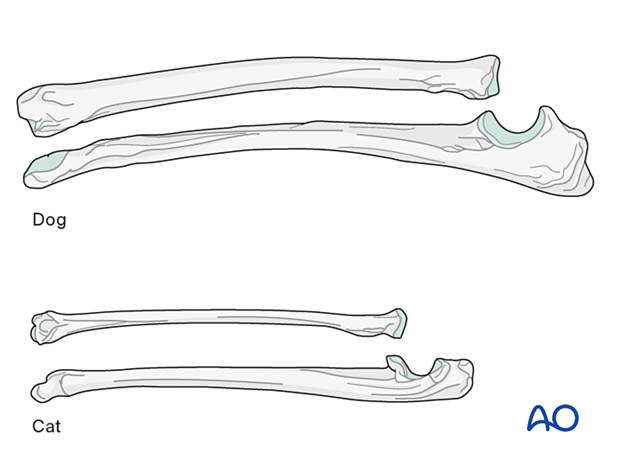
The long axis of the radius is straight in cats. In dogs, the shape of the radius depends on the breed. Cats have external torsion of the cranial surface of the proximal radius.
In cats, the ulna is thicker than the radius. Additionally, the strong interosseous ligament is missing in cats, allowing for more pronounced pronation and supination movement.
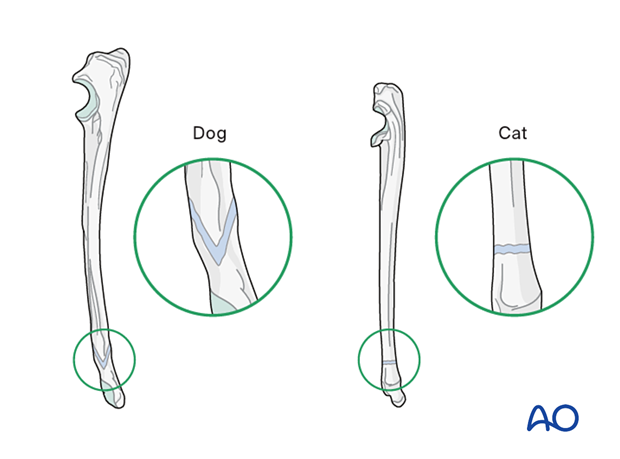
The shape of the distal ulnar growth plate is different in cats and dogs. The growth plate is cone-shaped in dogs and straight in cats.
This likely explains the observation that Salter-Harris type V (crush) injuries are rarely if ever seen in the cat.
Further considerations
Cats have a low incidence of deformities after trauma to the distal radius and ulna.
In dogs, however, deformities are more common.
Pitfall: Cats use a lot of pronation and supination. Consequently, locking the radius and ulna due to screw fixation will impair normal use of the thoracic limb.


