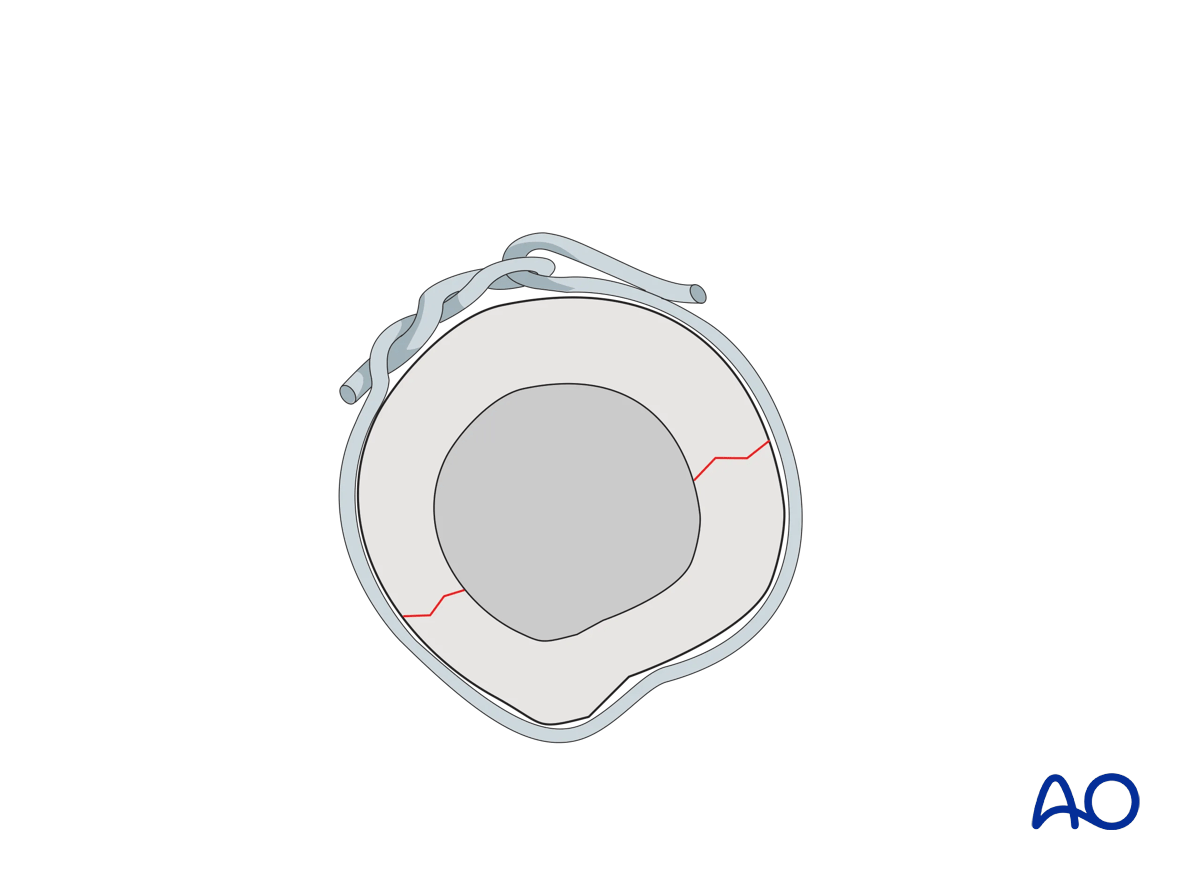
Cerclage wires technique
1. Indications
Indications for using cerclage wires are long oblique or spiral fractures, to which at least two wires can be applied.
They are usually used as an additional fixation method for fractures primarily repaired with an intramedullary pin or neutralization plate. Cerclage wires can protect bone fissures and be used as a temporary fragment stabilization but never as the sole means of fracture repair.
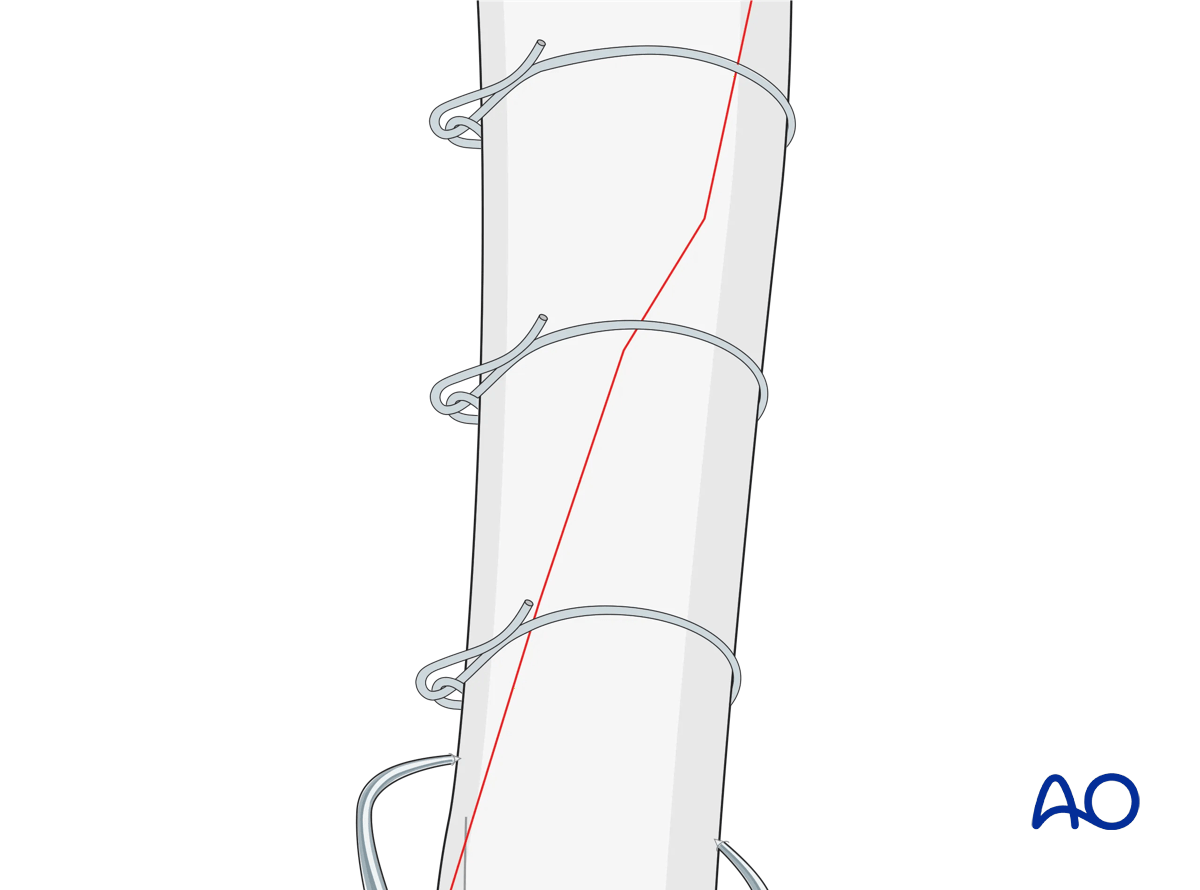
2. Wire application
The distance between the cerclage wires must be at least ½ bone diameter away from the tip of the fragment and ½–1 bone diameter away from each other. In general, this means 0.5 cm from the tip of a fragment and 1 cm between each wire.
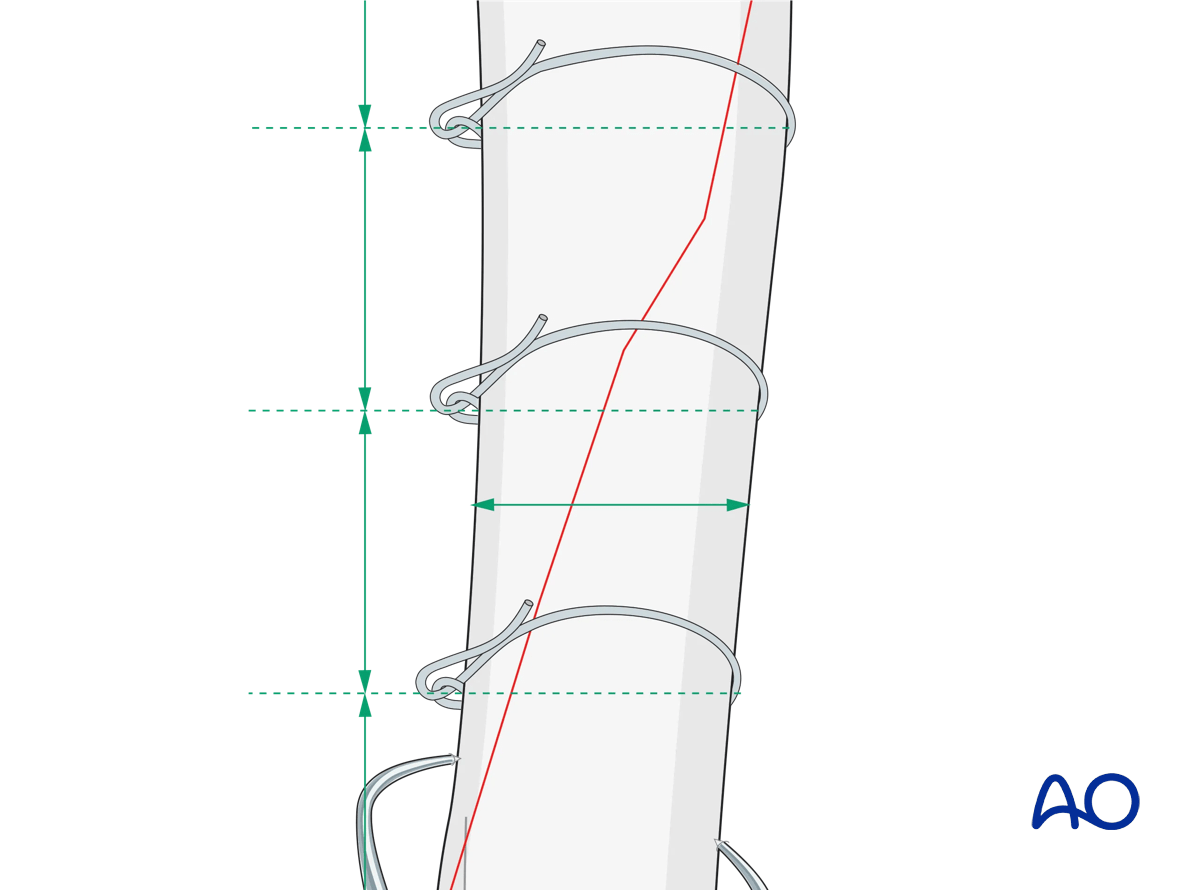
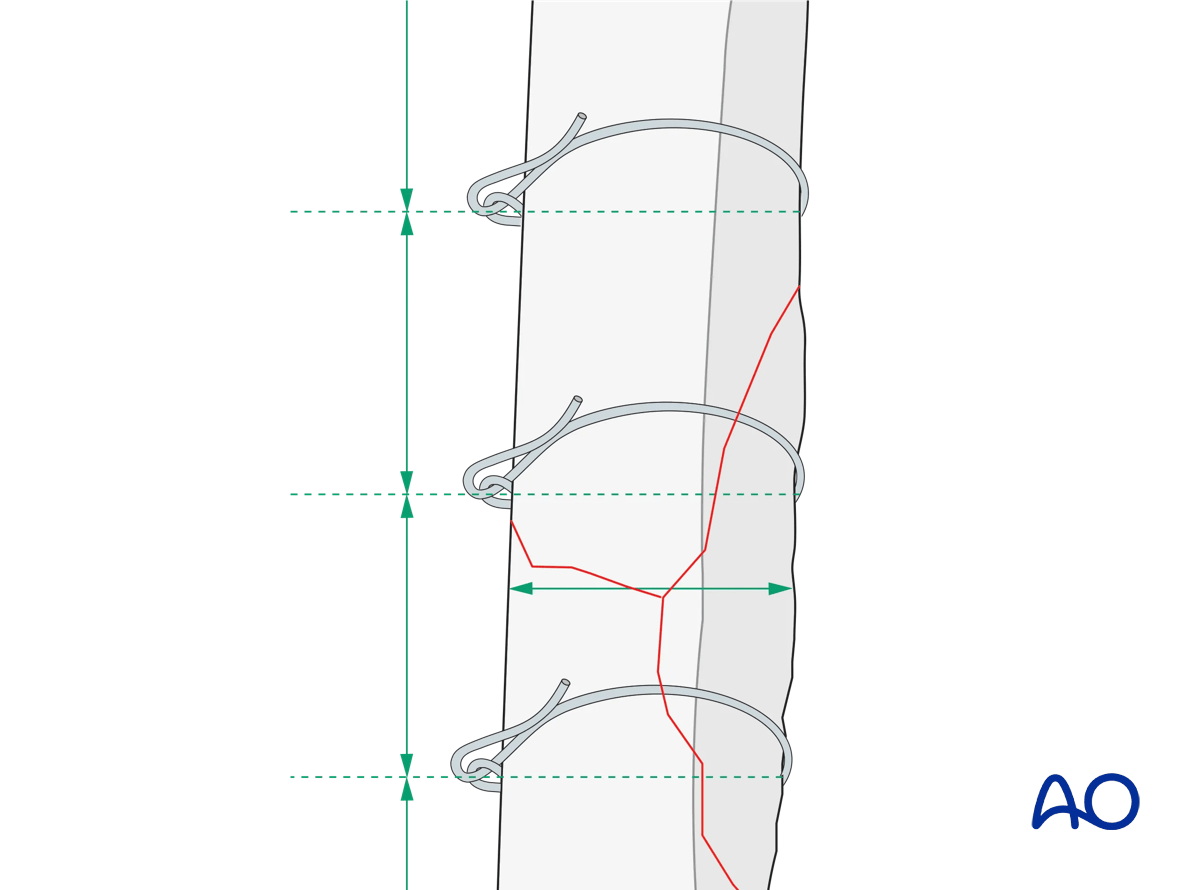
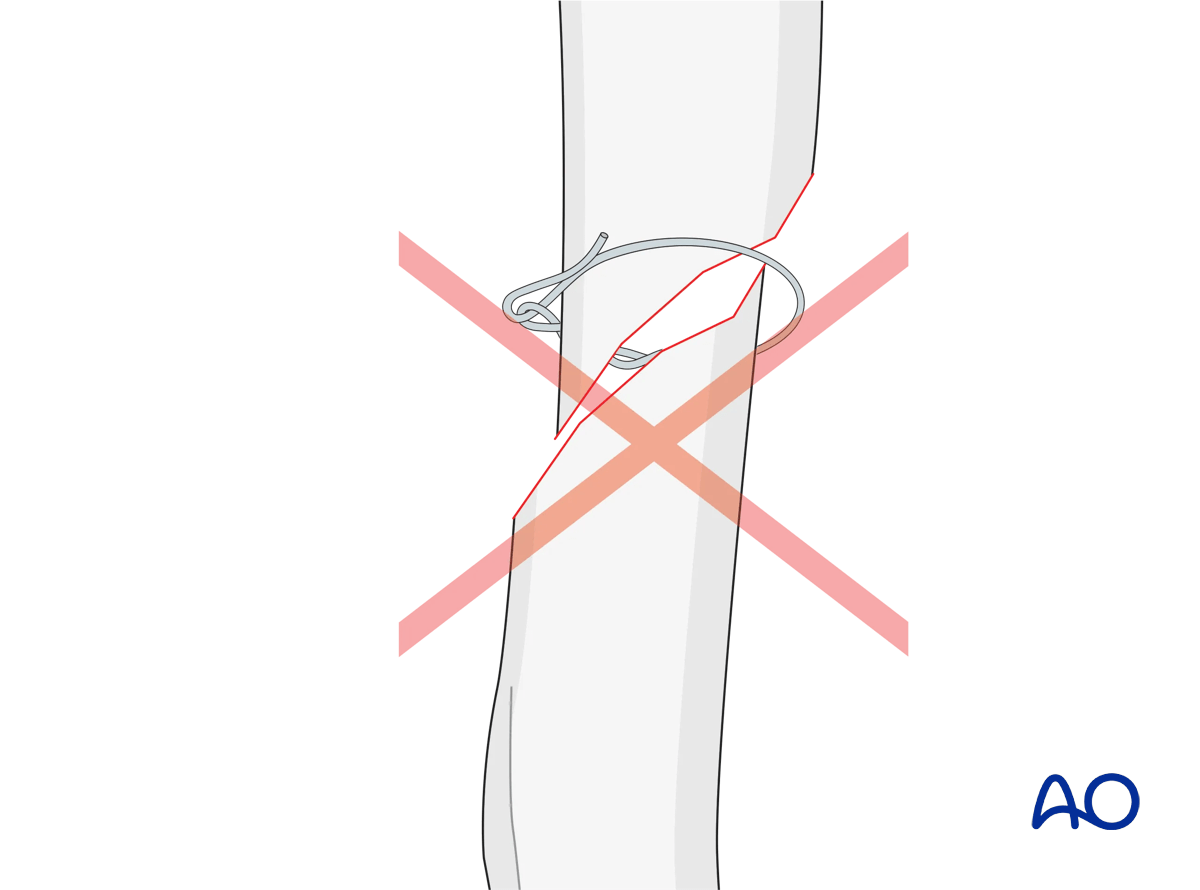
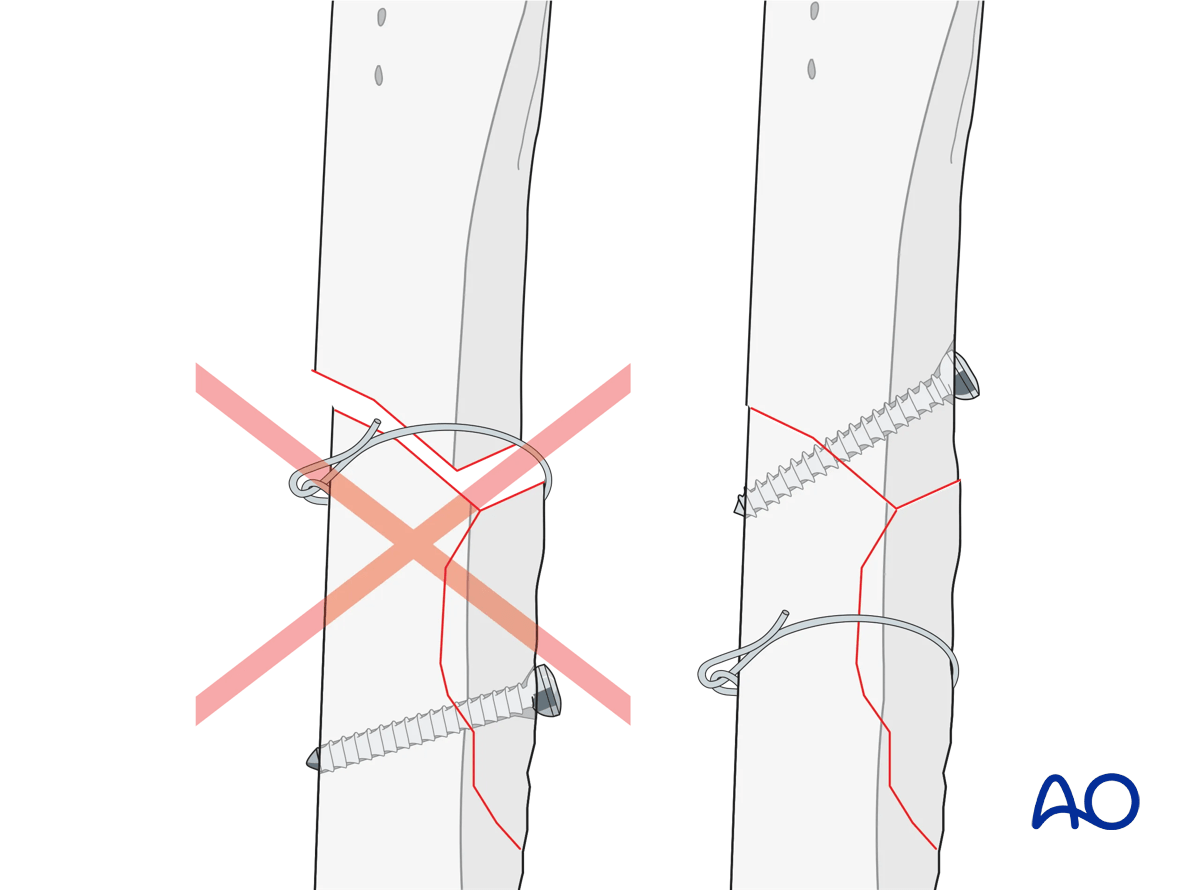
The cerclage wire is placed around the bone using a wire passer. Avoid any soft-tissue entrapment between the bone and the wire.
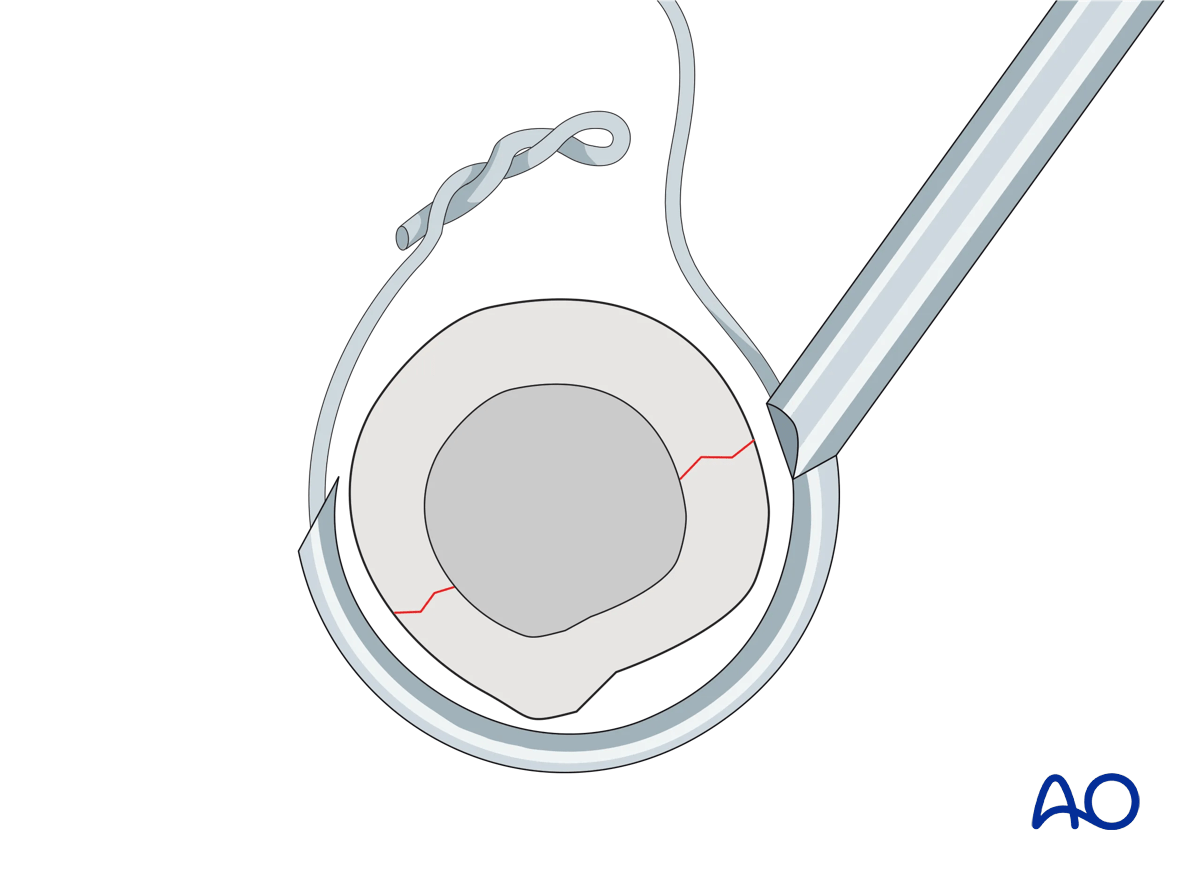
Twist knot, single loop, or double loop cerclage wire can be used. Double-loop knots have the greatest knot tightness, followed by a single loop and twist knot.