

Nonoperative treatment
1. General considerations
Nonoperative treatment is based on immobilization of the IP joint in extension.
After reduction, ensure that the flexor pollicis longus and the extensor pollicis longus functions are intact. In doubt, perform an ultrasound.
Nail-bed injuries may need repair and reduction of the nail plate into the nail fold.
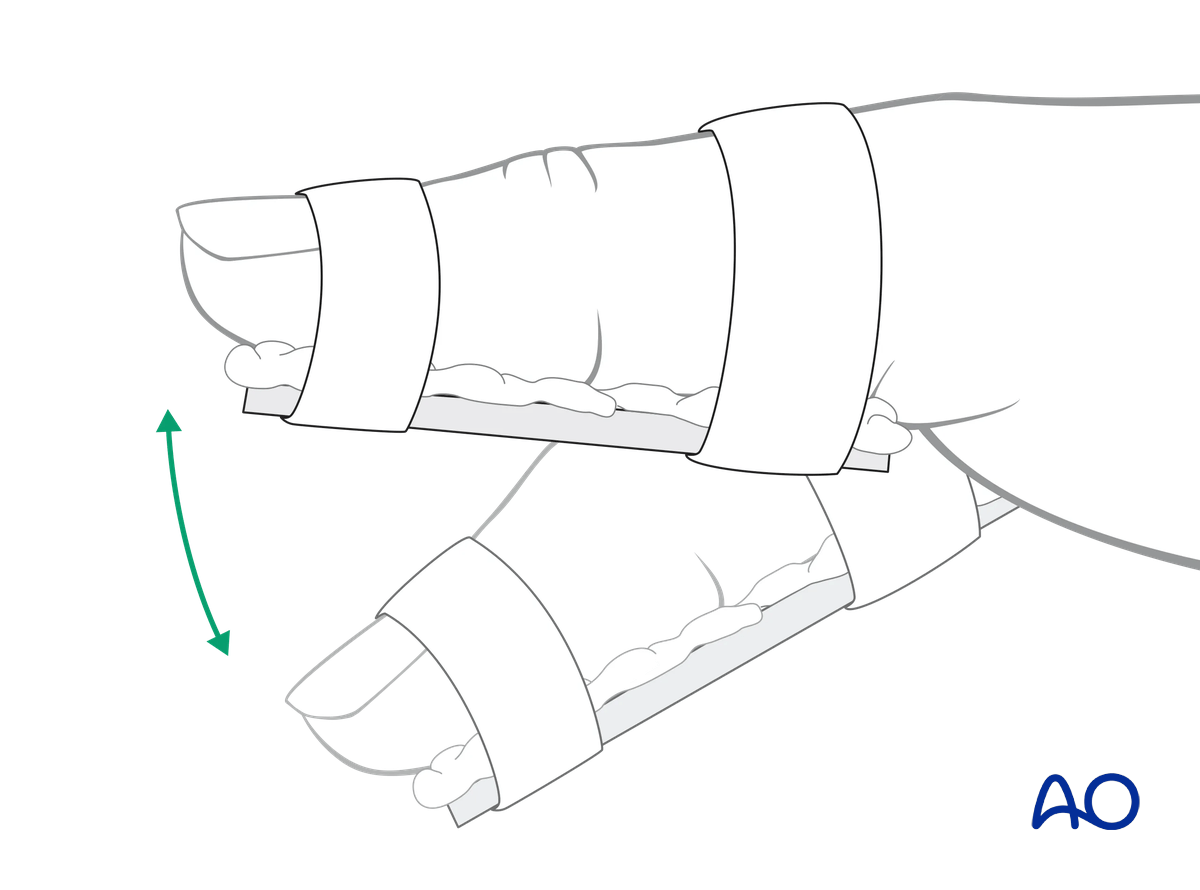
2. Closed reduction
Reduction of dorsal dislocation
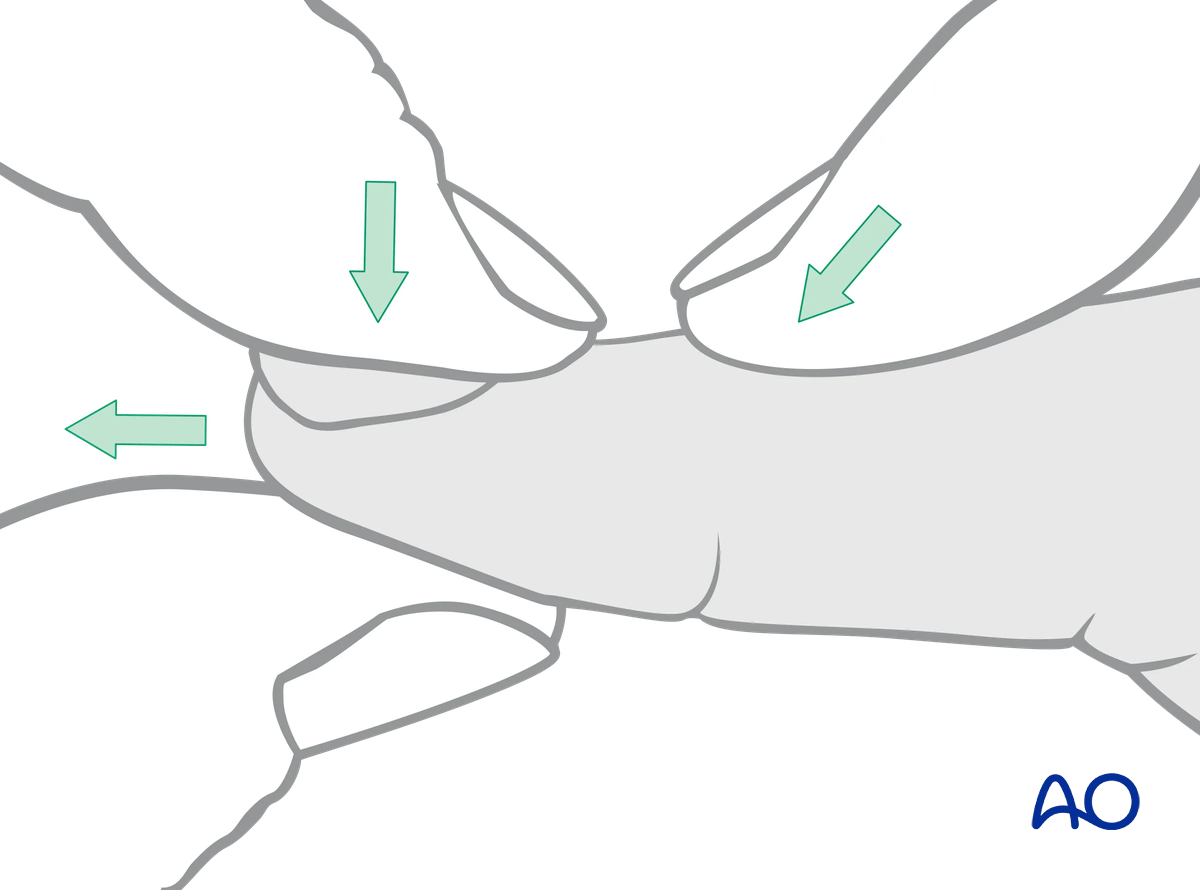
Most dorsal dislocations can be reduced by applying traction, flexion, and dorsal pressure on the base of the distal phalanx.
If the joint is stable and the flexor pollicis longus function is intact after reduction, nonoperative treatment is usually indicated.
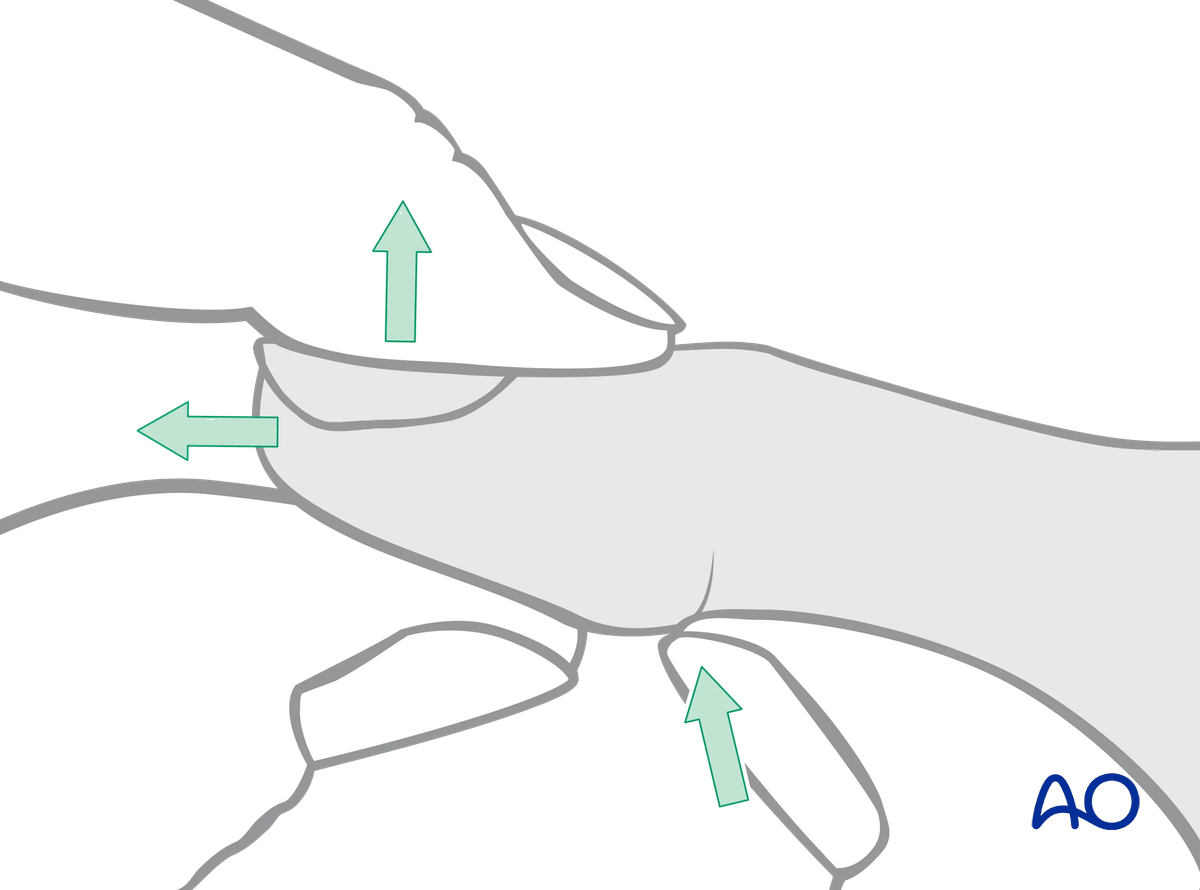
Reduction of palmar dislocation
In the case of a palmar dislocation, apply traction and extension. Then apply pressure with the thumb on the palmar aspect of the base of the distal phalanx.
In palmar dislocation the terminal extensor tendon is usually disrupted.
If the joint is stable after reduction, nonoperative treatment is usually indicated.
3. Splinting
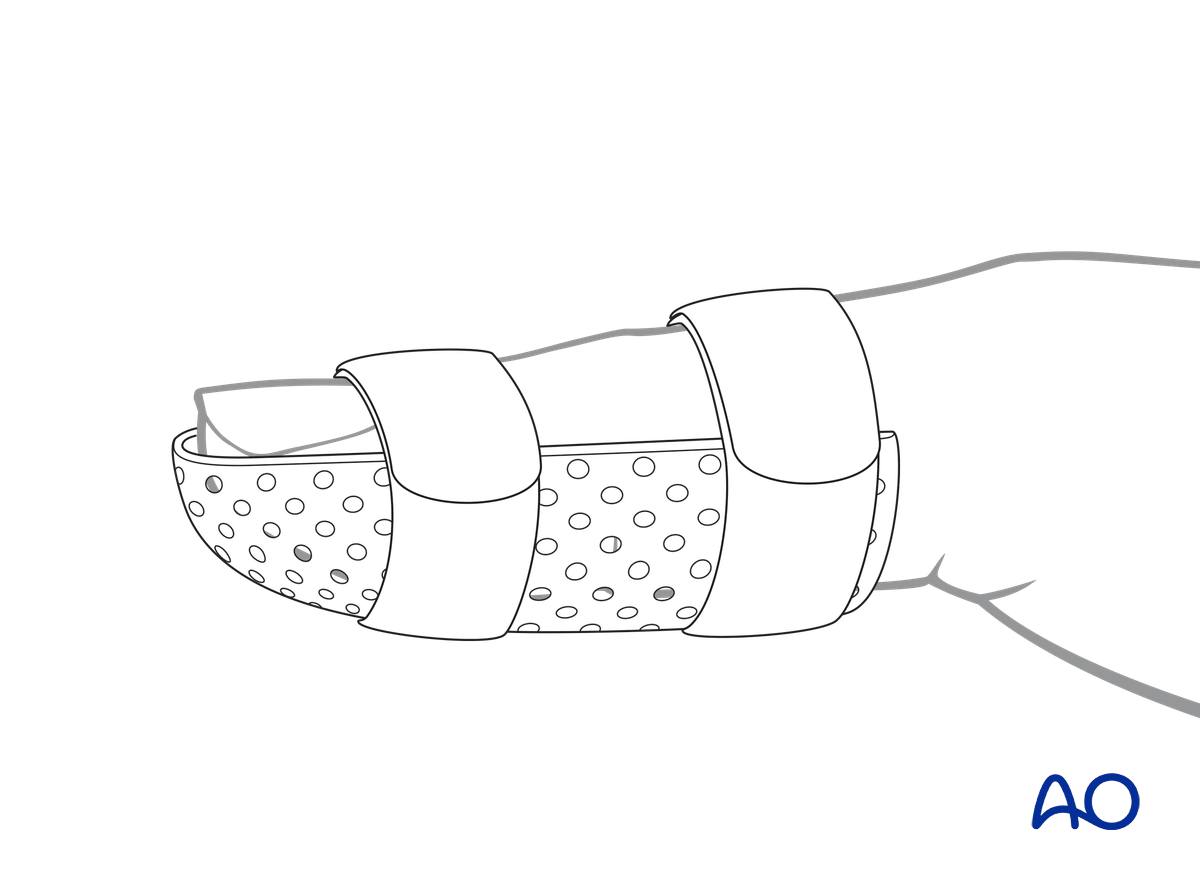
The IP joint should be splinted.
Using a dorsal splint has the advantage of leaving the patient with the ability to pinch.
However, proponents of palmar splinting argue that the palmar aspect is better cushioned than the dorsal and, thereby, can tolerate the splint better.
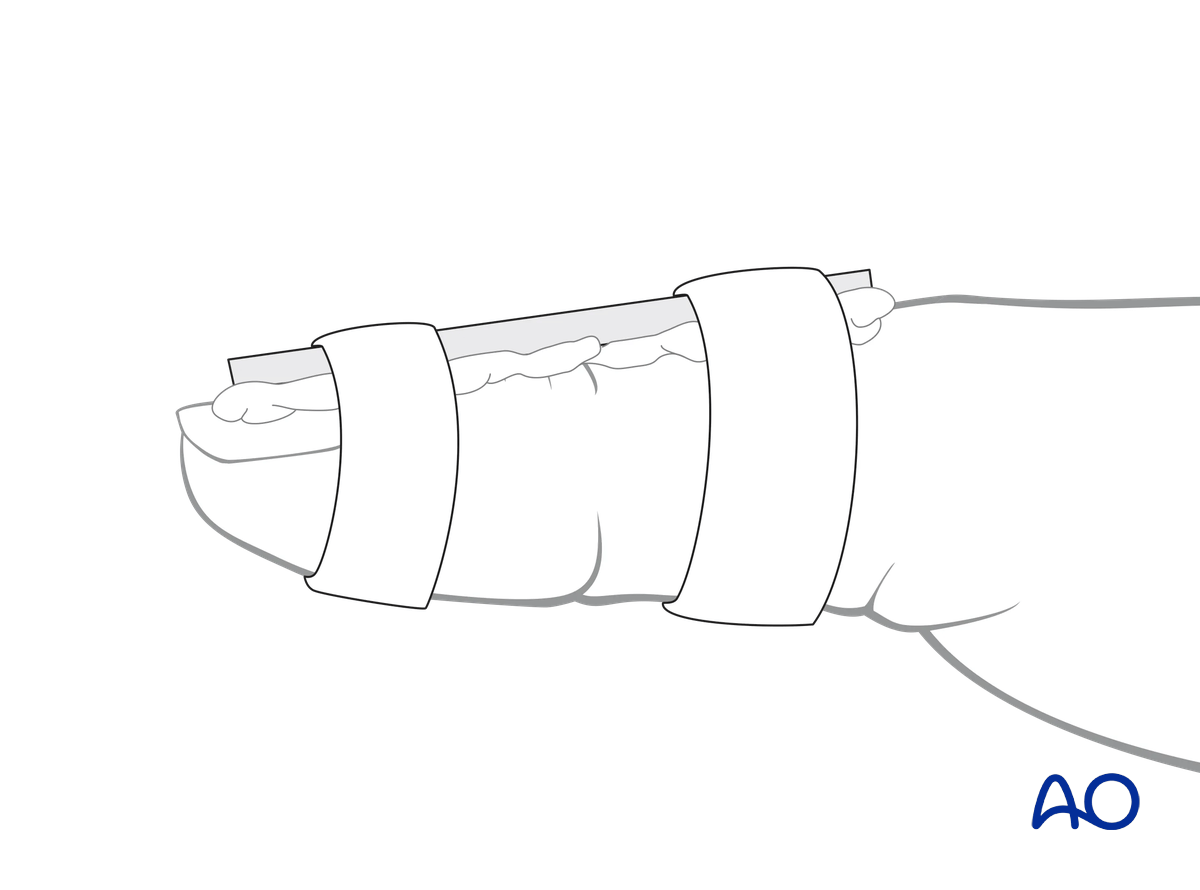
Contoured custom thermoplastic splint
The advantage of a custom thermoplastic splint is that it is adapted better to the shape of the thumb and is easier to change.
4. Aftercare
Healing phases
The aftercare can be divided into four phases of healing:
- Inflammatory phase (week 1–3)
- Early repair phase (week 4–6)
- Late repair and early tissue remodeling phase (week 7–12)
- Remodeling and reintegration phase (week 13 onwards)
Full details on each healing phase can be found in the chapter Postoperative treatment of thumb injuries.
Management of swelling
The splint allows for movement at the MCP joint and helps with pain and edema control. The arm should be actively elevated to help reduce the swelling.
Cleaning
Removal of the splint and skincare must be performed by the patient at weekly intervals.
Mobilization
Hand therapy is recommended to prevent soft-tissue atrophy and joint contracture, which leads to a poor outcome, and subsequent treatment is difficult.
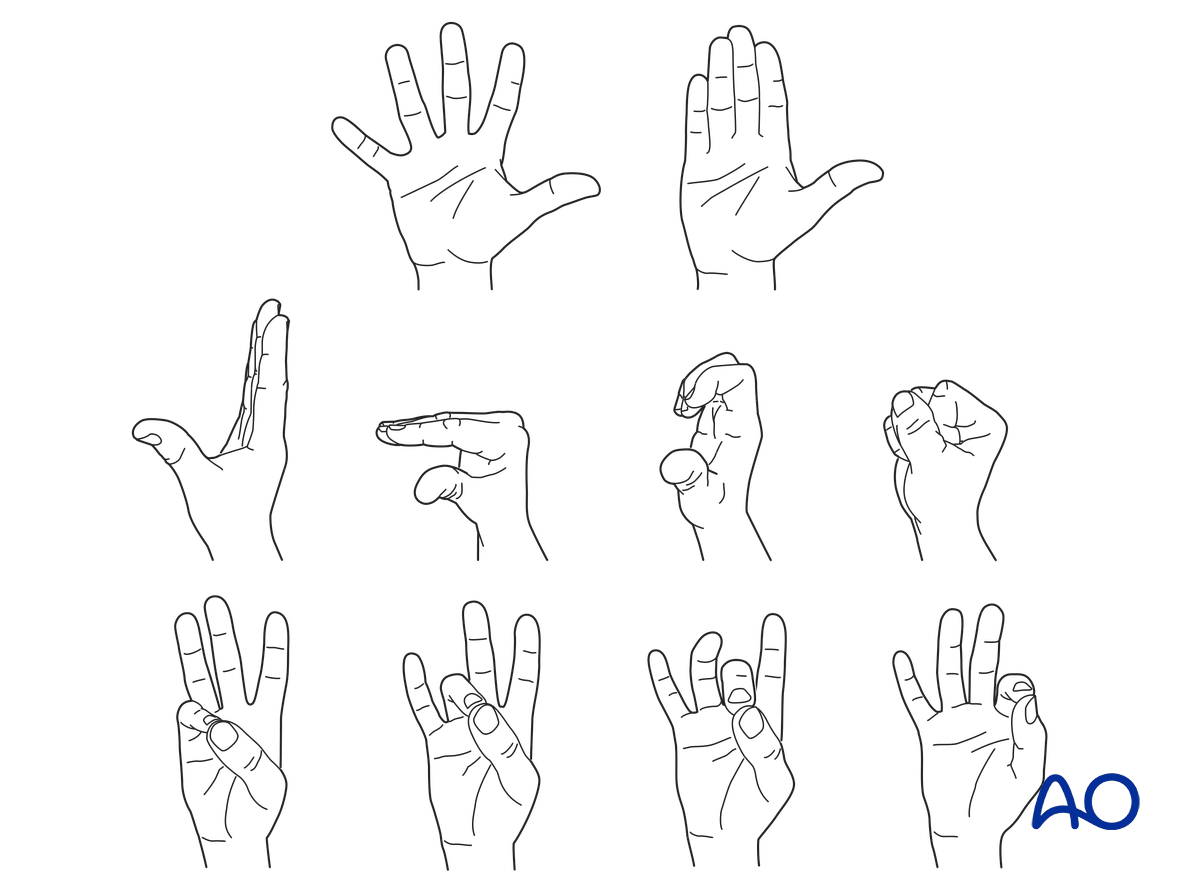
Functional exercises of the nonimmobilized joints should be started immediately to keep the uninjured joints mobile.
Follow-up with palmar plate avulsion
Splinting should be applied for 2–3 weeks. Thereafter, start remobilization of the IP joint.
Follow-up with extensor tendon avulsion
Strict immobilization for 8 weeks is needed for stable healing and good outcome.
After this period, start weaning the splint during daytime. Splinting during nighttime should be continued for an additional 4 weeks.


