Complications and technical failures
1. Introduction
The most frequent complications are related to soft-tissue problems including tendon adhesions, intraarticular fibrosis, and scarring around implants and the surgical site. Attention to careful soft-tissue management and early rehabilitation including mobilization and appropriate splintage are all relevant to prevent these problems.
Complications associated with fractures in the hand include:
- Severe soft-tissue loss including skin, muscle, and tendon
- Delayed wound healing
- Nerve injuries, altered sensibility
- Ischemia
- Compartment syndrome
- Infection
- Peritendinal fibrosis/adhesion
- Loss of reduction
- Malunion or nonunion
- Stiffness (complications with nonoperative treatment)
- Arthritis
- Loss of function including grip weakness
- Nail growth abnormalities in distal phalangeal fractures
The following complications are specific to the thumb:
- Swan neck deformity caused by malunion
- Soft-tissue scarring affecting functionality of the first web space.
2. Wound healing
Significant swelling, particularly when associated with blistering, may necessitate a delay in surgical treatment.
The hand is protected with a splint until the condition of the skin and soft-tissue envelope has improved.
In rare cases, a temporary external fixator is necessary to provide sufficient stability.
3. Soft-tissue, skin, and tendon issues
Frequent tendon issues include flexor and extensor adhesions after surgery. This can be prevented with a correct functional position of the hand in a dorsal splint and early mobilization.
The skin over implants may get irritated. Closure of the periosteum over the implant can help to prevent this.
Open fractures with severe skin compromise require specific skin management (flaps). A surgeon familiar with these techniques should be available.
Soft-tissue scarring
Limited first commissural opening may be caused by scar tissue and significantly affect grip and overall hand function.
Early hand therapy with scar tissue mobilization, application of a C-bar splint, and silicon pads. Scar tissue formation with later contraction limiting range of motion remains at risk up to 6 months.
4. Loss of reduction
Loss of reduction may result from inadequate fixation of an unstable injury.
This can be prevented by:
- Checking for soft-tissue interposition
- Assessing stability after reduction
- Using suitable implants, eg, appropriately sized plates/anatomical implants
- Confirming stability after fixation
5. Malunion
Malunion is usually a consequence of inaccurate reduction and ineffective fixation.
It strongly affects the balance of flexor and extensor mechanisms and biomechanical relations of the hand. For example:
- Angulation may result in loss of grip strength.
- Rotation is usually associated with an oblique or spiral fracture and may result in loss of length leading to reduction of dexterity.
- Rotational malalignment will also compromise palmar grip due to conflict with neighboring fingers.
Swan neck deformity
If the reduction of a metacarpal fracture has not been achieved anatomically this can lead to a disbalance of the whole thumb function.
A delicate balance of the thumb is maintained by extrinsic and intrinsic flexor and extensor muscles.
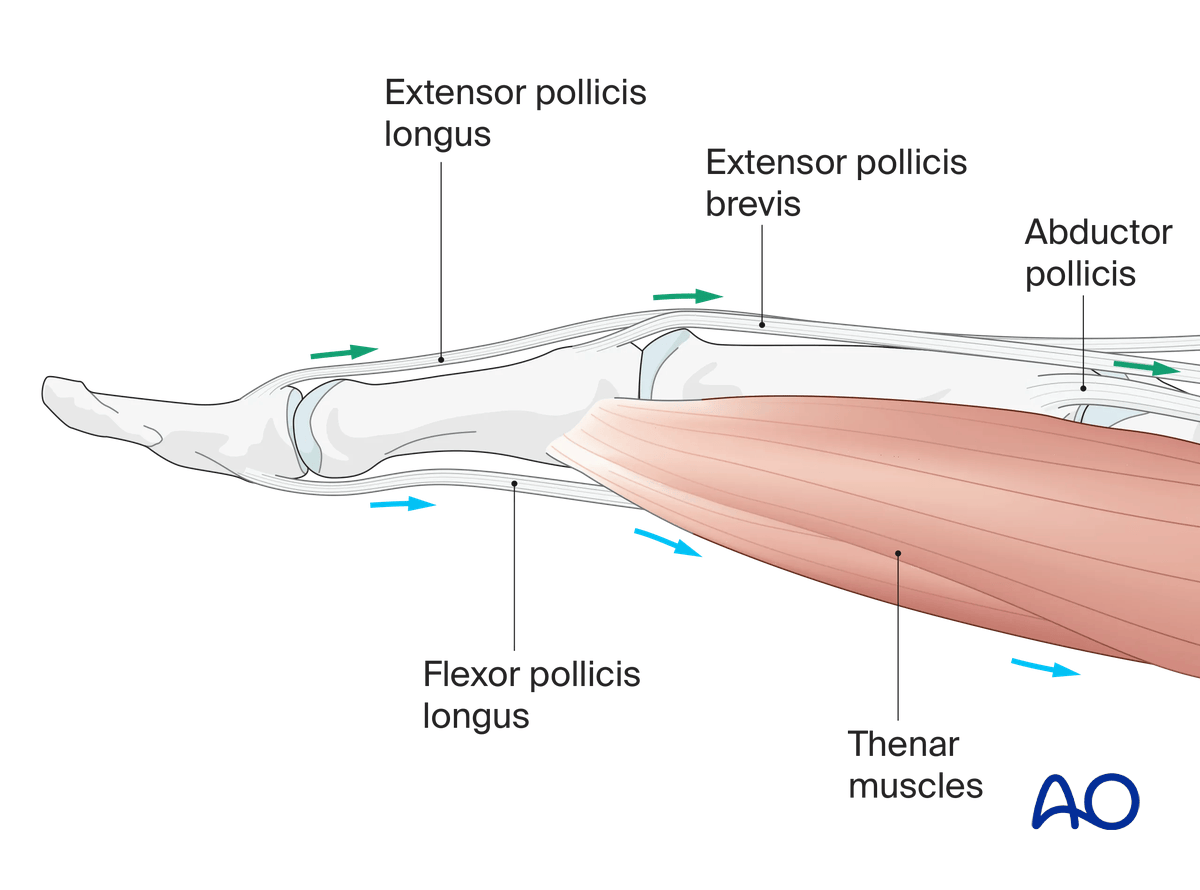
Axial malunion may therefore result in relevant disbalance leading, eg, to a Z-deformity (swan neck).
Rotational malalignment can be better tolerated.
The reduced first commissural angle may be compensated by the patient leading to painful hyperextension of the MCP joint with risk of arthrosis.
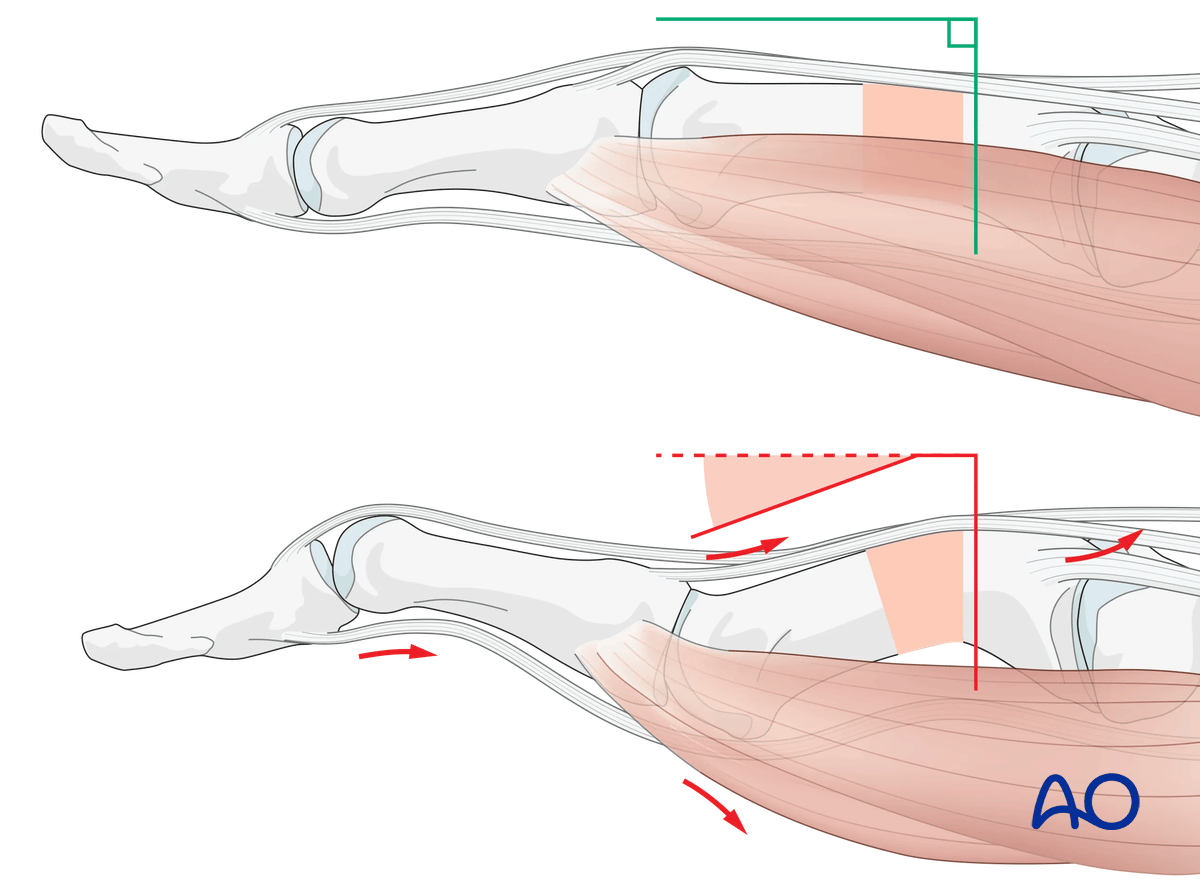
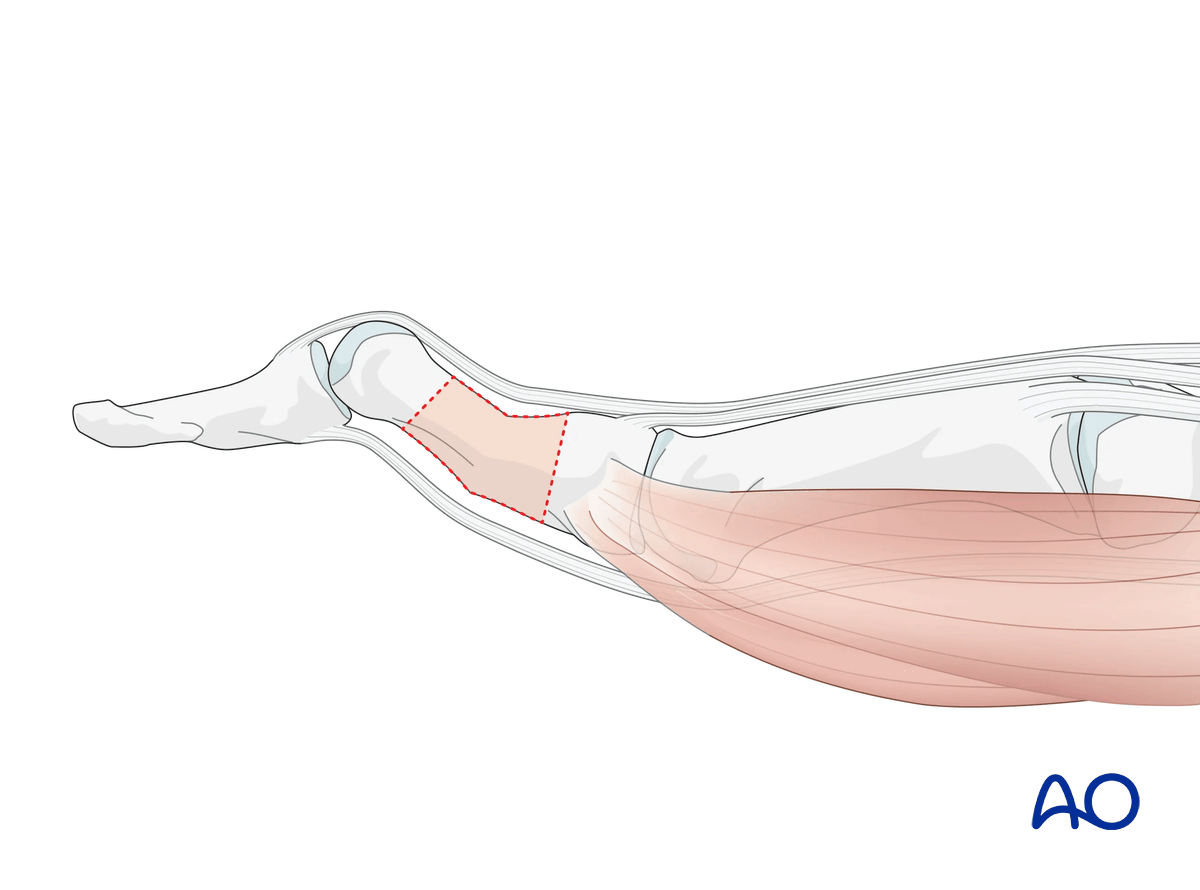
Z-deformity in proximal phalangeal fractures
Axial malunion with angulation may lead to a Z-deformity over time with impact on grip and pinch functionality and painful hyperextension at the MCP joint and risk of arthrosis.
The angulation is caused by the pull of the thenar muscles on the proximal fragment leading to shortening of the proximal phalanx.
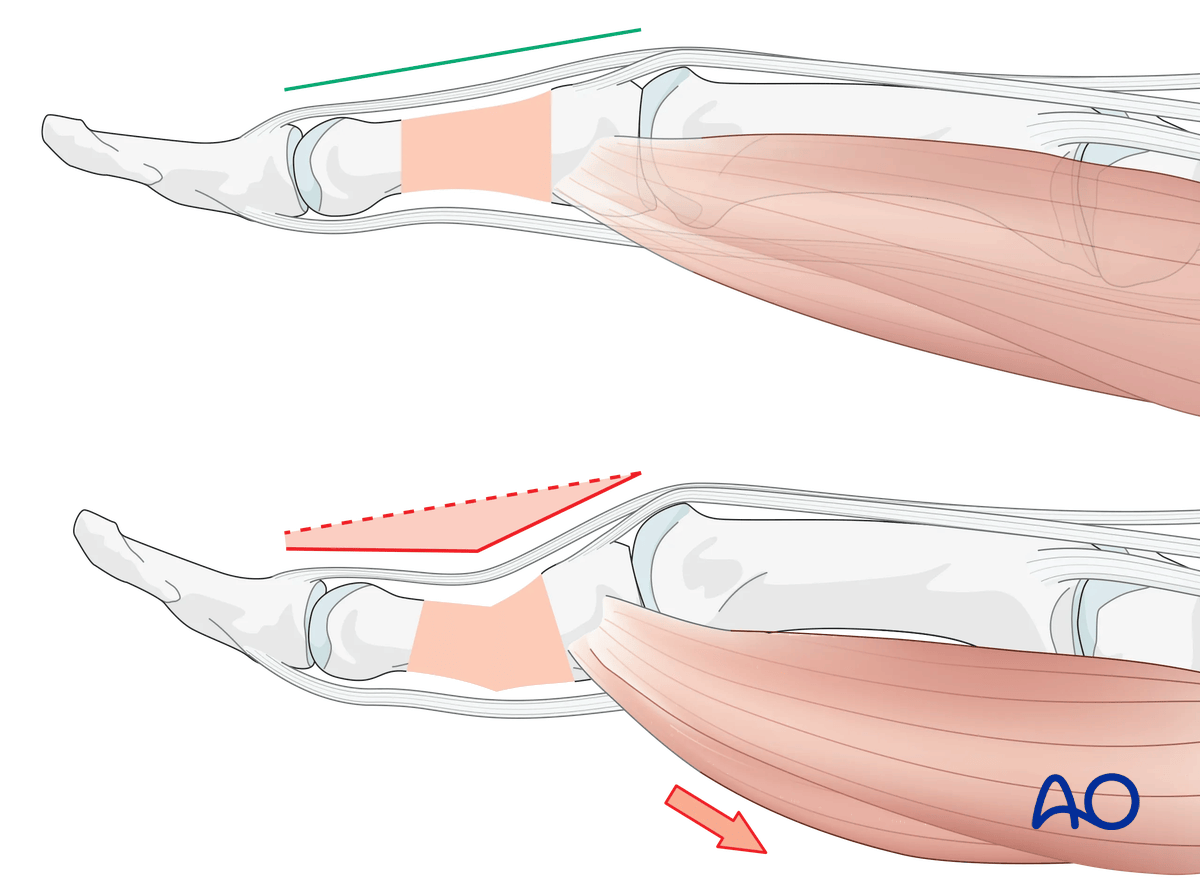
If this malalignment is not reduced and stabilized, compensatory MCP hyperextension and IP extension lag can result in Z-deformity.
6. Nonunion
Nonunion may be the result of insufficient fracture reduction and/or stabilization.
Confirm proper reduction, anatomical in articular fractures, before and after fixation in AP, lateral, and oblique views. Select the optimal fracture fixation based on fracture configuration, fracture biomechanics, the likely healing mode, and patient needs, expectations, and compliance.
7. Complications with nonoperative treatments
Inappropriate stabilization with a splint may lead to redisplacement, malunion, (hypertrophic) nonunion, stiffness, and shortening of the first web space.
A thumb splint should provide some tension on the web space alongside the immobilization of the necessary joints. All other finger joints should be accessible for early mobilization.
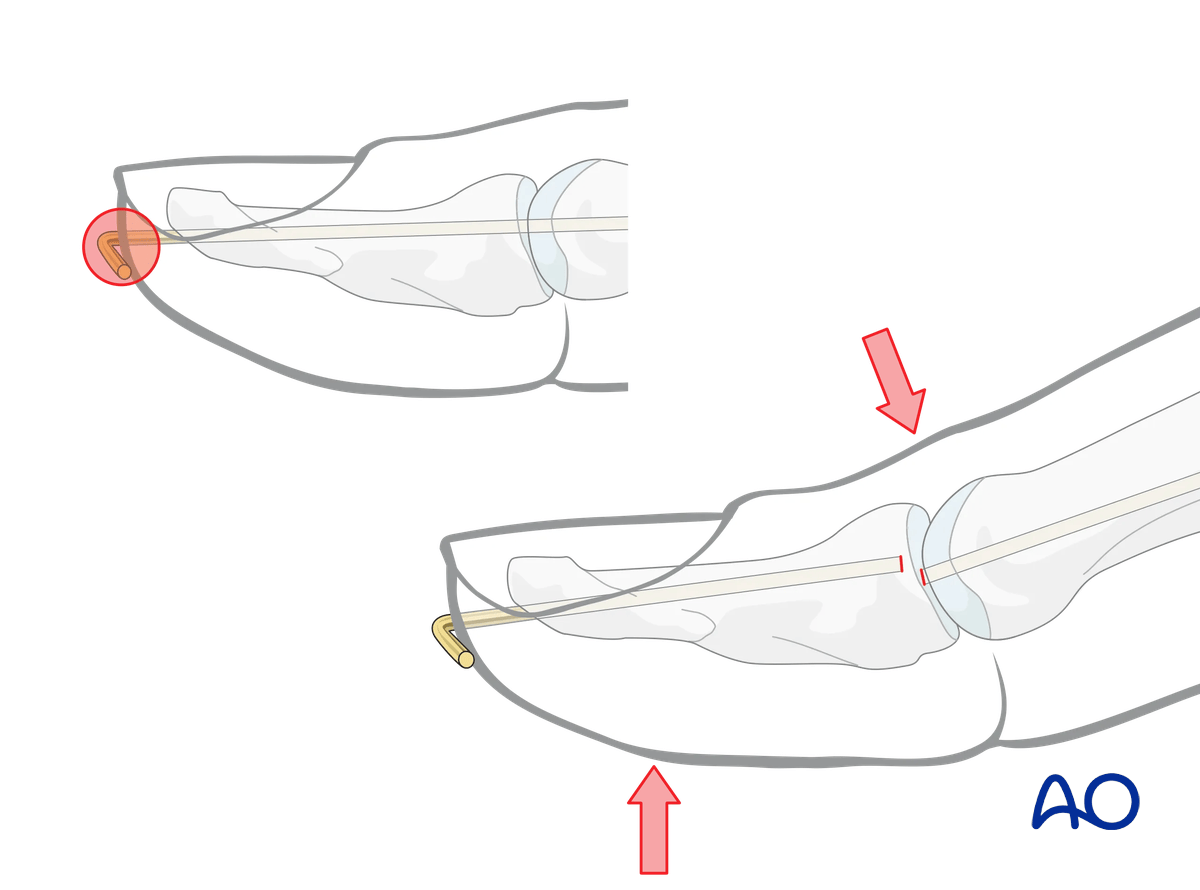
8. Potential risks of percutaneous pinning
The commonest risk of percutaneous K-wire immobilization is infection.
Breakage of the K-wire at the level of the IP joint can be avoided by using a wire of 1.2 or 1.4 mm diameter and counseling the patient to avoid stresses at the IP joint. The K-wire should be protected with a splint.
9. Stiffness
Long periods of immobilization or unstable fractures with pain may cause joint stiffness.
The patient should be instructed to mobilize the joints as soon as possible.
Unstable fractures should be reevaluated, and secondary surgical treatment should be considered.
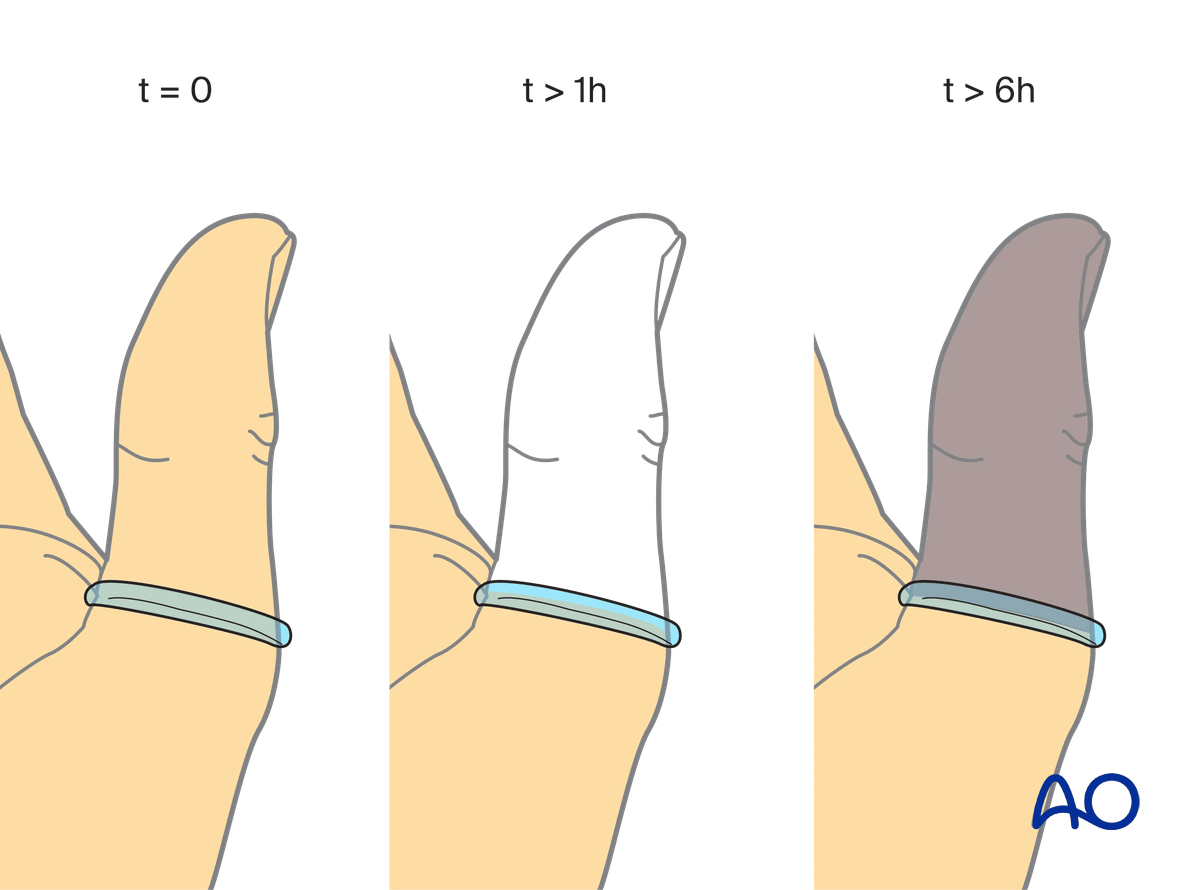
10. Small tourniquet removal
If a small tourniquet has been created with the finger of a glove, make sure to remove it at the end of the surgery.
Failure to do so may result in ischemia and subsequent loss of the thumb!