

Nonoperative treatment
1. General considerations
Nonoperative treatment is based on consistent immobilization of the IP joint in extension for at least 8 weeks, followed by another 4 weeks during the night in case of a tendinous rupture. In case of bony avulsion, the duration may be reduced to 6 weeks.
2. Splinting
The IP joint should be splinted.
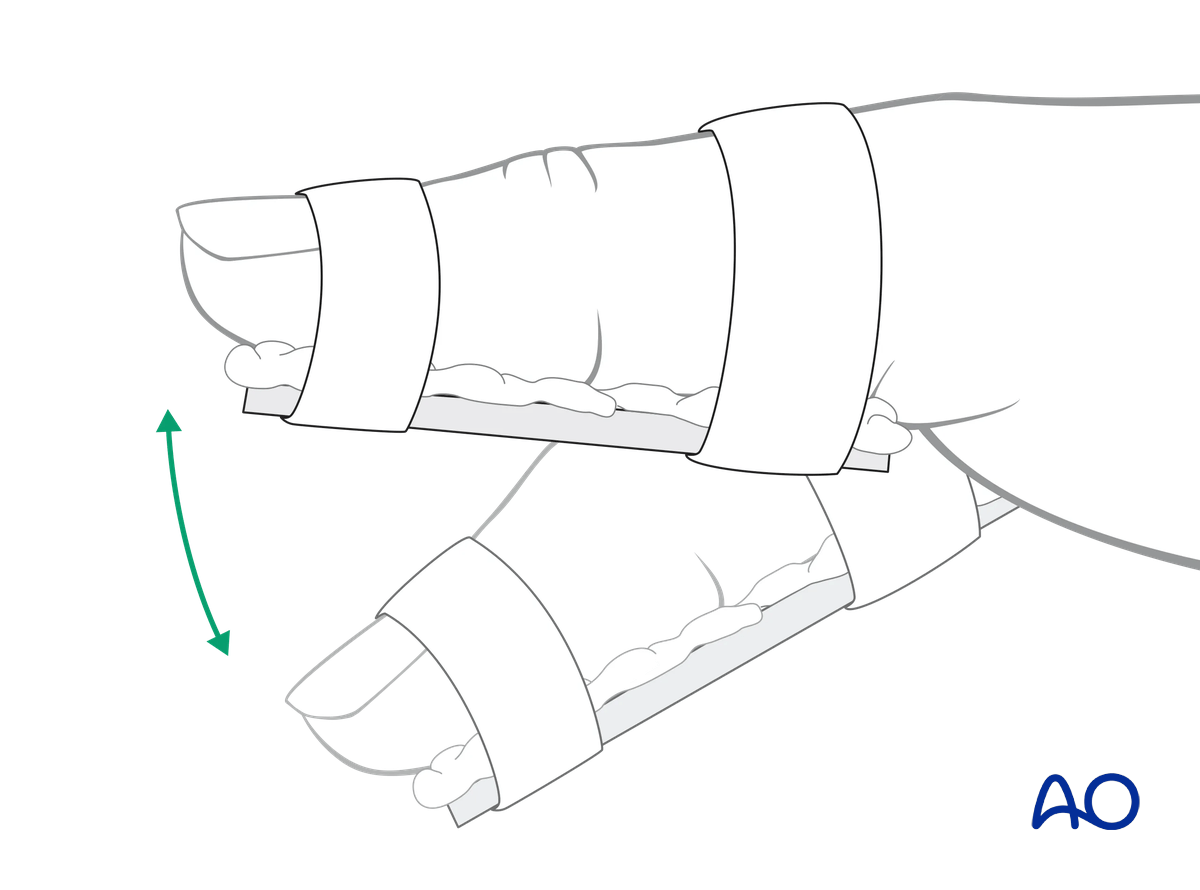
Using a dorsal splint has the advantage of leaving the patient with the ability to pinch.
However, proponents of palmar splinting argue that the palmar aspect is better cushioned than the dorsal and, thereby, can tolerate the splint better.
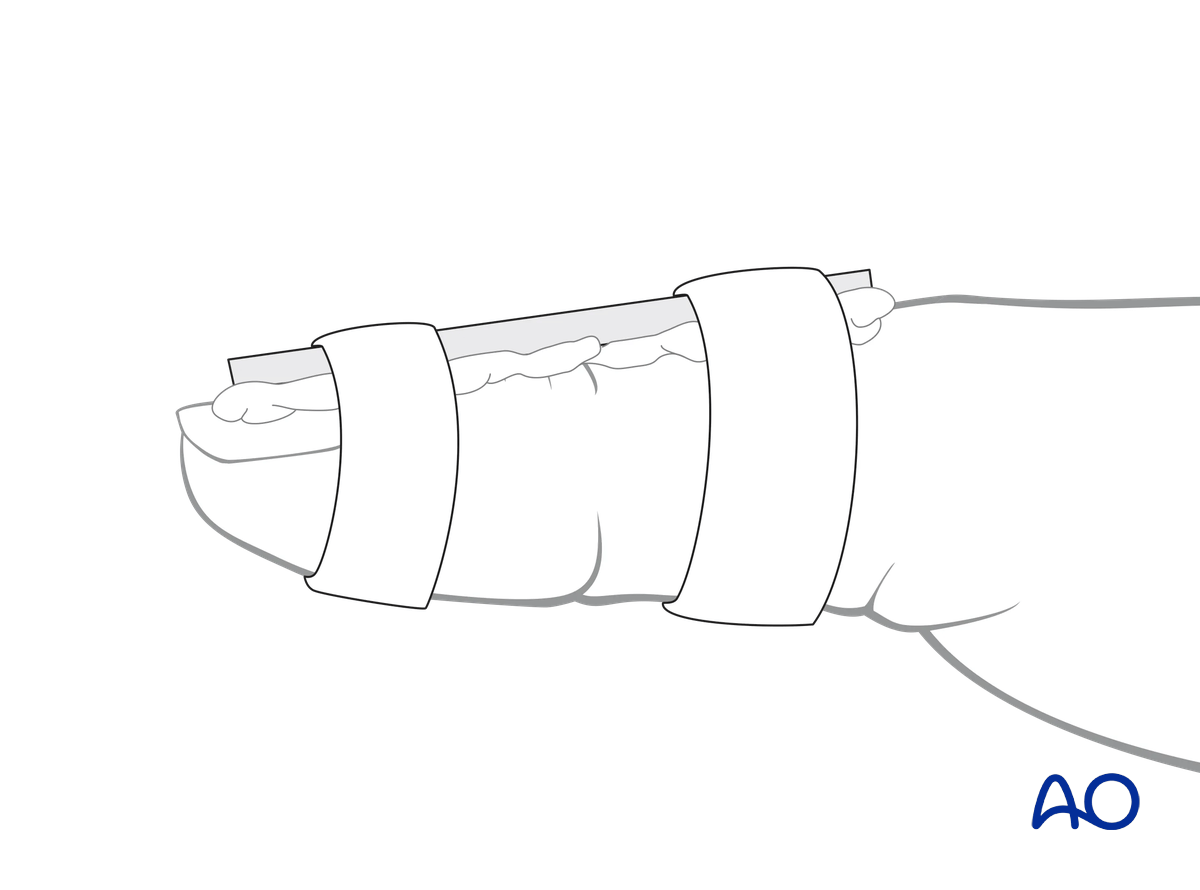
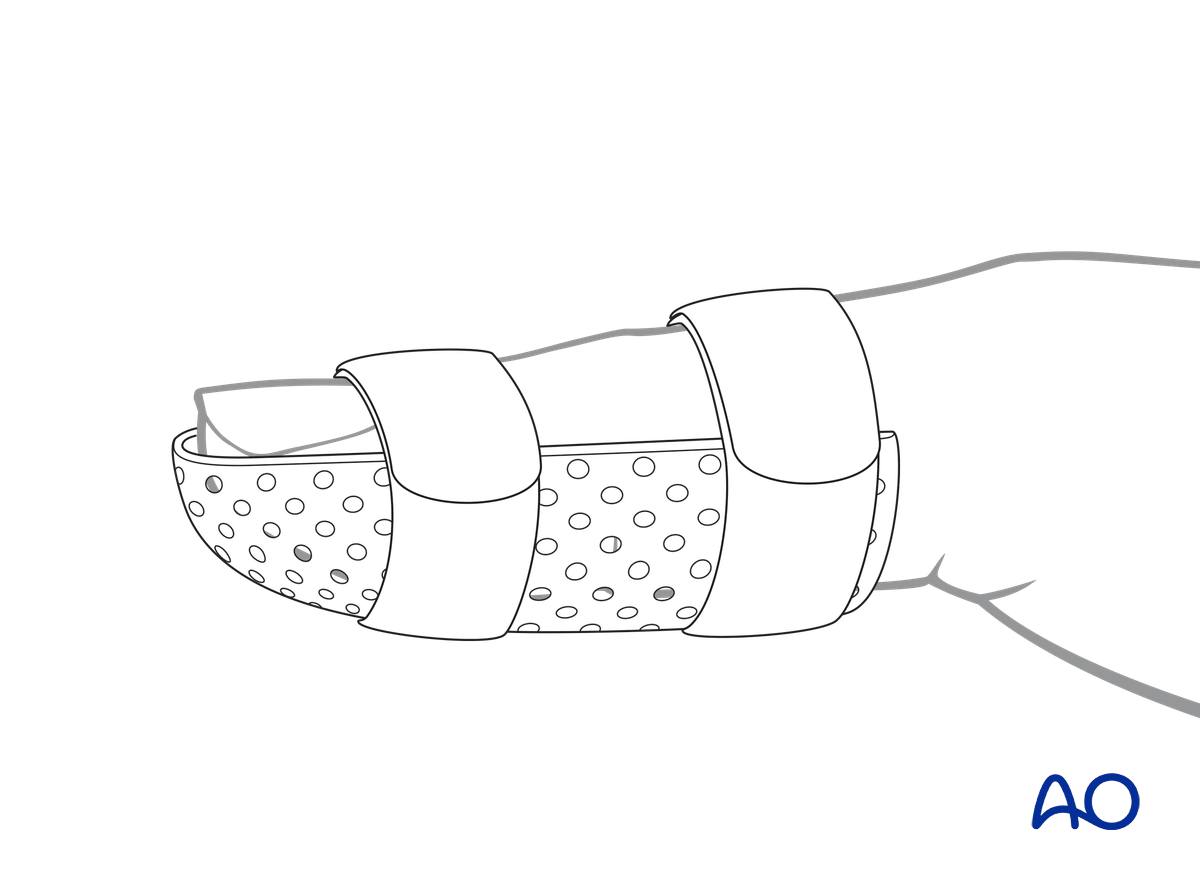
Contoured custom thermoplastic splint
The advantage of a custom thermoplastic splint is that it is adapted better to the shape of the thumb and is easier to change.
3. Duration of immobilization
In the case of bony avulsion injuries, an x-ray should be performed with the splint applied to confirm that no displacement has occurred. The splint must be worn for at least 6 weeks when an x-ray is taken to check for bone healing.
In the case of a disruption of the tendon, the IP joint should be consistently immobilized in extension for 8 weeks followed by 4 weeks during the night.
Keep in mind that the vascularity of this area is precarious, even in healthy patients, and healing is slow–any shorter period of immobilization risks rerupture. Joint stiffness is unusual after these injuries.
Outcome
Frequently, patients may complain of a dorsal prominence and loss of the last 10°–20° extension of the IP joint. Dorsal tenderness rarely persists for more than a month or so after the removal of the splint.
4. Aftercare
Healing phases
The aftercare can be divided into four phases of healing:
- Inflammatory phase (week 1–3)
- Early repair phase (week 4–6)
- Late repair and early tissue remodeling phase (week 7–12)
- Remodeling and reintegration phase (week 13 onwards)
Full details on each healing phase can be found in the chapter Postoperative treatment of thumb injuries.
Management of swelling
The splint allows for movement at the MCP joint and helps with pain and edema control. The arm should be actively elevated to help reduce the swelling.
Cleaning
Removal of the splint and skincare must be performed by the patient at weekly intervals.
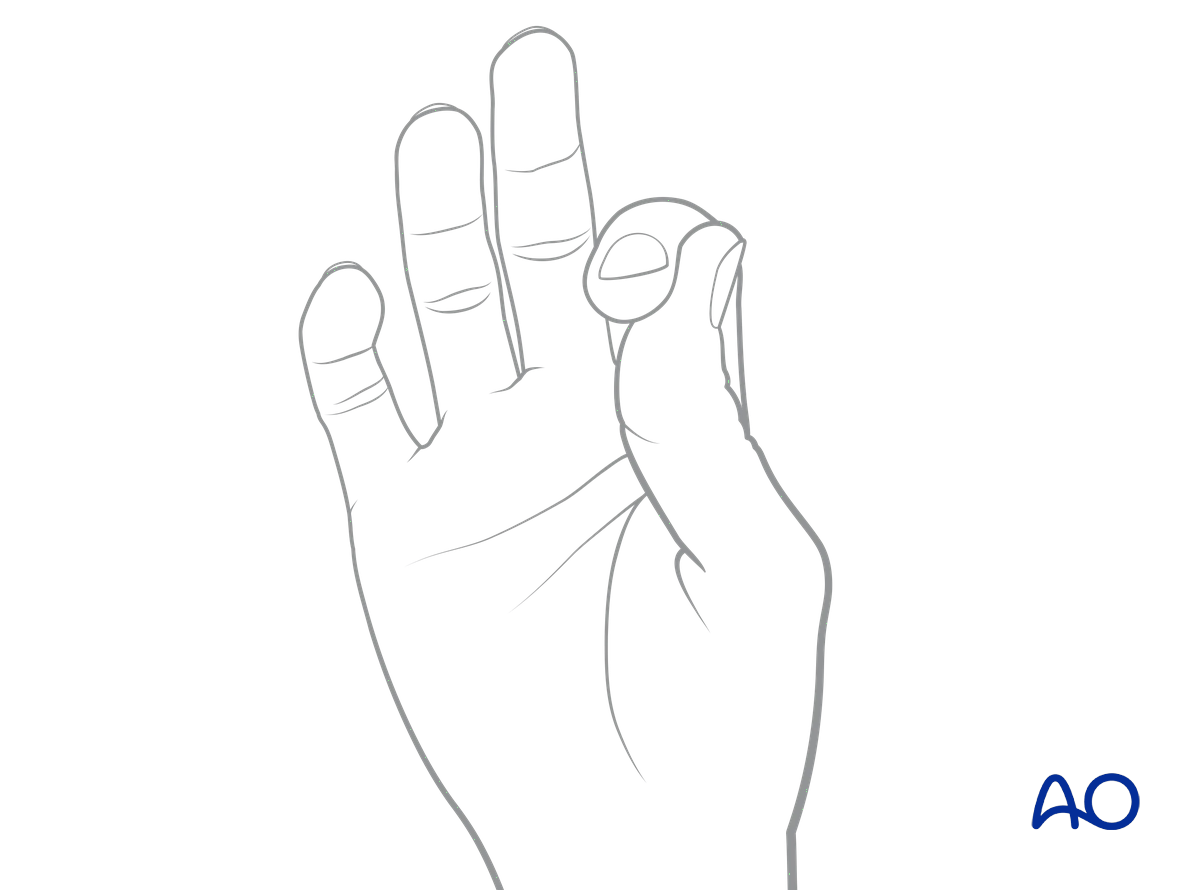
Instruct the patient to keep the thumb IP joint in extension by pinching it with the index or middle finger when the splint is taken off for cleaning or by pressing the tip of the thumb onto a tabletop.
Any flexing of the IP joint may disrupt the healing process.
Mobilization
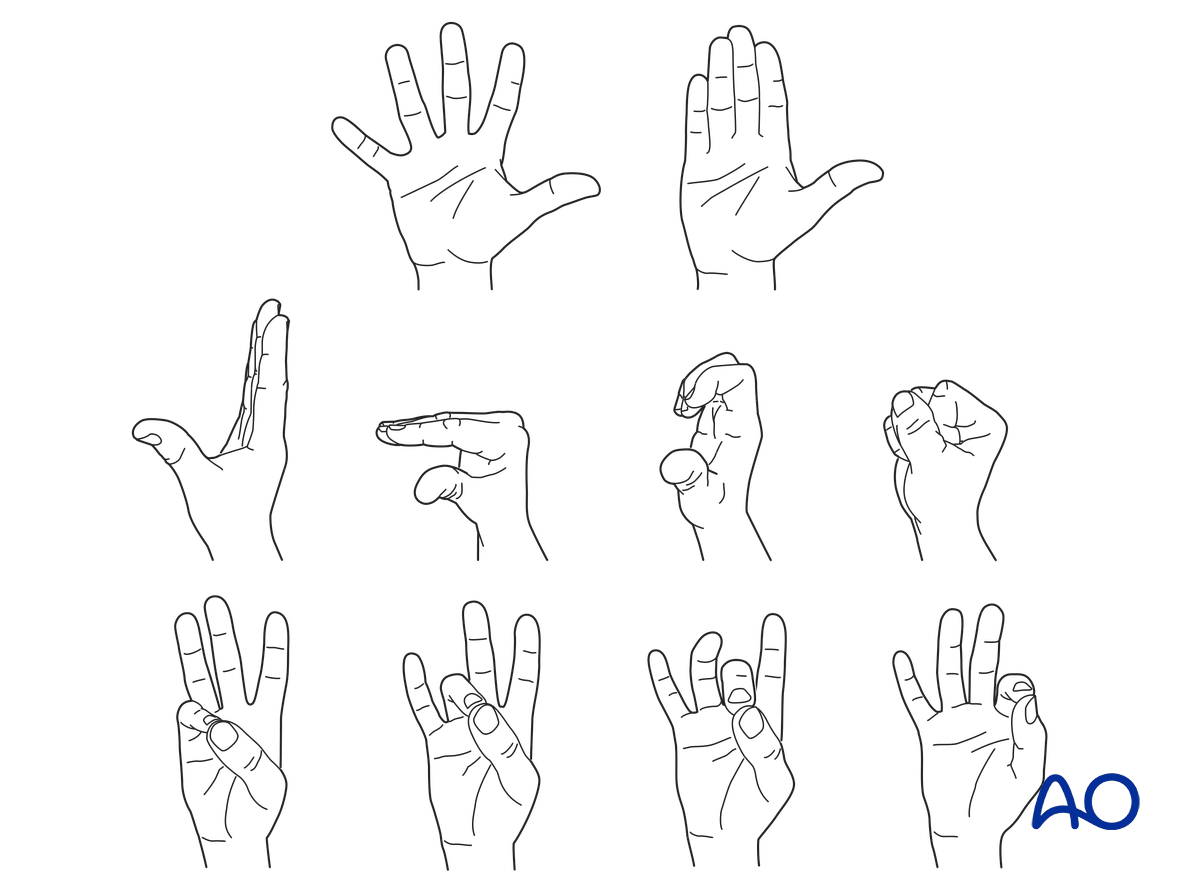
Hand therapy is recommended to prevent soft-tissue atrophy and joint contracture, which leads to a poor outcome, and subsequent treatment is difficult.
Functional exercises of the nonimmobilized joints should be started immediately to keep the uninjured joints mobile.
Follow-up with bony avulsion
X-ray controls have to be performed immediately after the splint has been applied.
After 6 weeks, an x-ray without the splint is taken. At this point, the fracture is usually still visible on x-ray. The decision about further treatment is based on clinical examination (no pain to pressure on the fracture zone). Splinting can then usually be discontinued, and active mobilization is initiated.
Follow-up with tendon avulsion
Strict immobilization for 8 weeks is needed for stable healing and good outcome.
After this period, start weaning the splint during daytime. Splinting during nighttime should be continued for an additional 4 weeks.


