

Surgical treatment
1. General considerations
In case of complete articular fracture of the distal phalanx, a double bony avulsion of the flexor and extensor tendons must be suspected (Leddy Packer type-V).
Nonoperative treatment is not recommended.
These fractures are considered very unstable, and fixation is technically highly demanding, and a specialized hand surgeon should be consulted.
Often, there is only one attempt for surgical treatment with reduction and fixation possible.
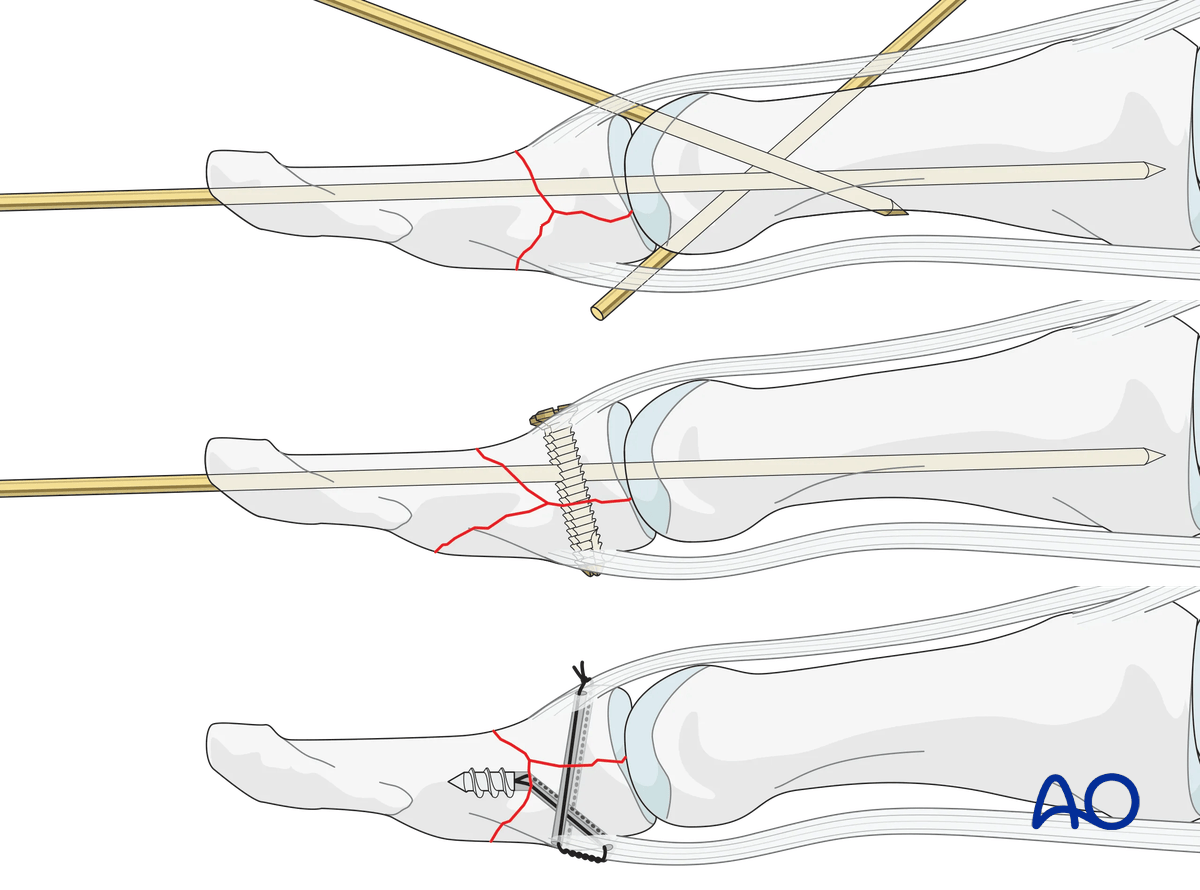
2. Treatment options
Joint transfixation with flexion and extension block
K-wire joint transfixation may be sufficient in stable and minimally displaced fractures. Flexion and extension block K-wire are added.
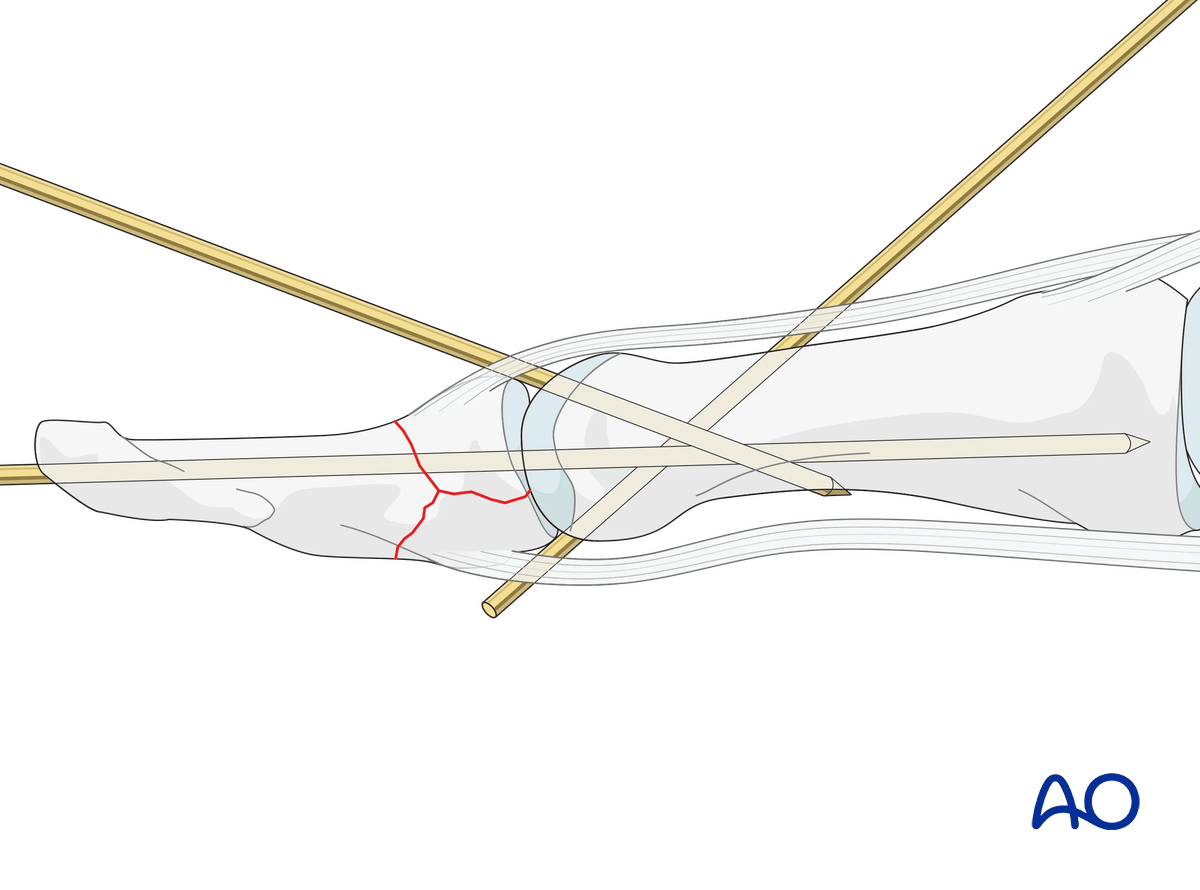
Lag-screw fixation with joint transfixation
Lag screws may be used to stabilize larger articular fragments in displaced fractures. The articular block and the shaft of the distal phalanx are then stabilized with joint transfixation.
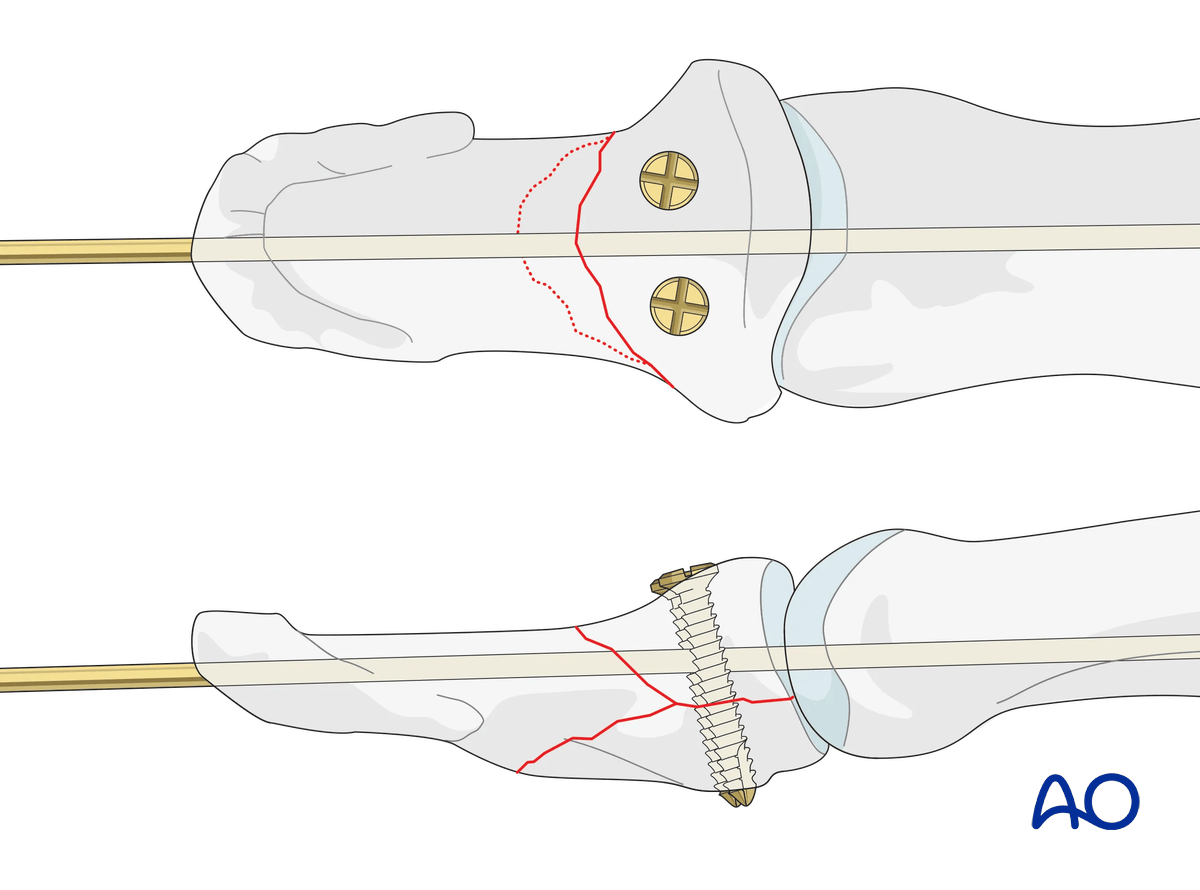
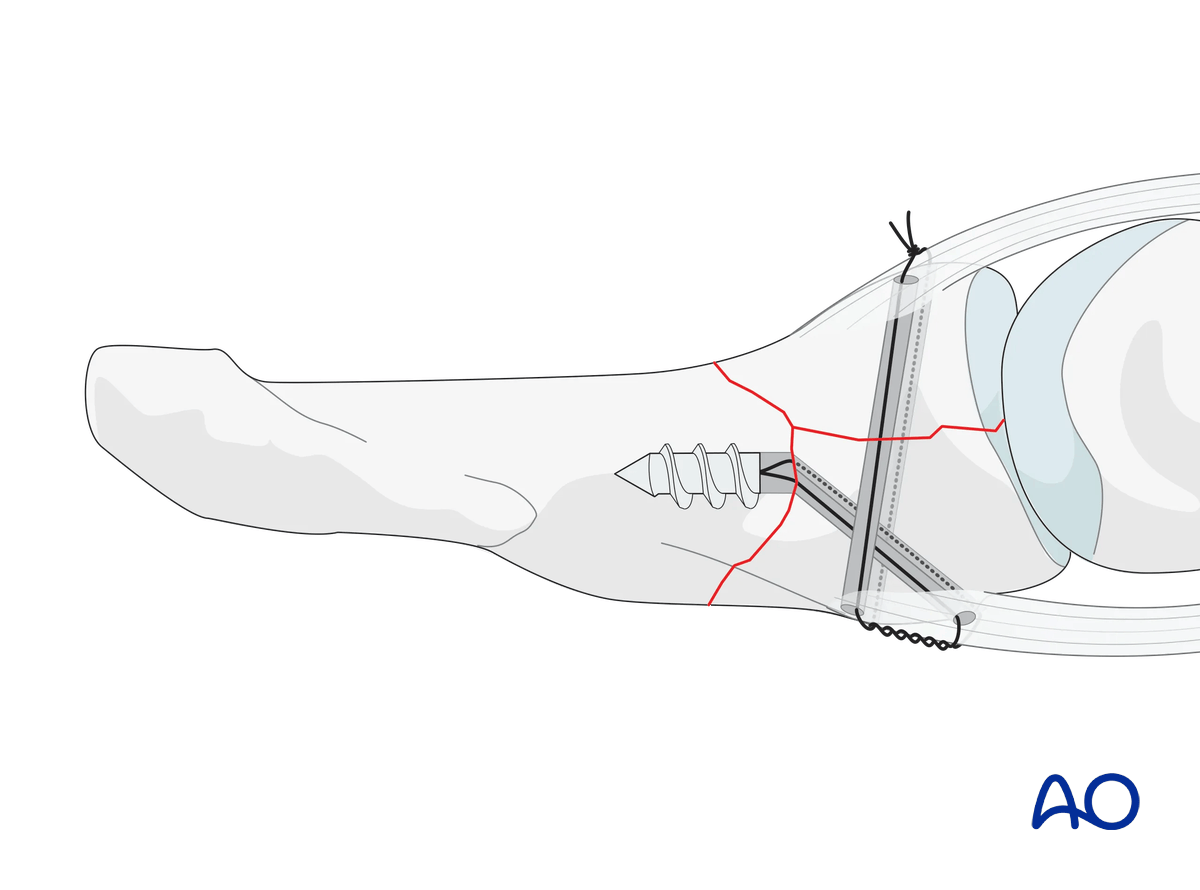
Intramedullary suture anchor fixation
This technique may be used if the medullary canal allows sufficient width. It offers the advantage of stabilizing all fragments of the distal phalanx with compression without protruding implants.
- Riedel BB, Miller RE, Chen YH, et al. Intramedullary Suture Anchor Fixation of a Type Vb Flexor Digitorum Profundus Avulsion: A Case Report. JBJS Case Connect. 2021 Jul 15;11(3).
3. Immobilization
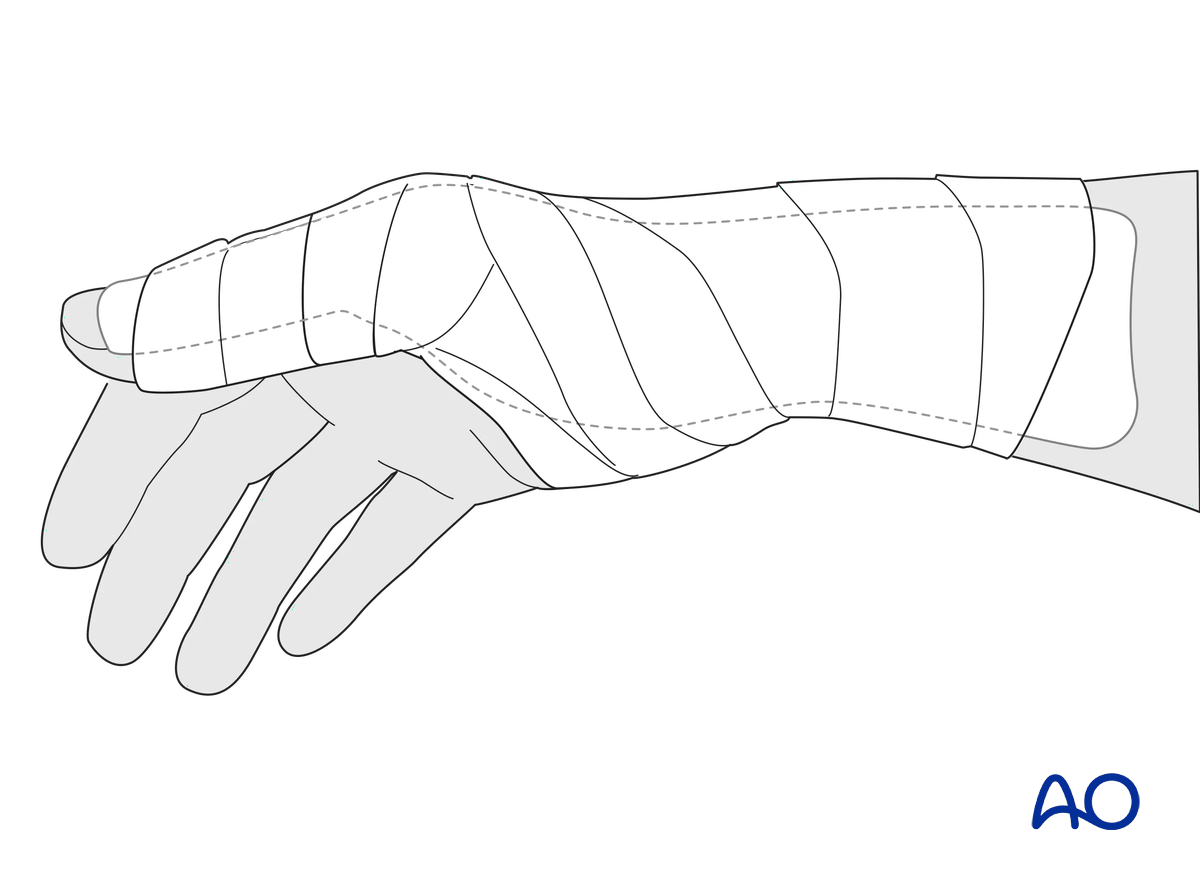
Apply a thumb spica splint with the wrist and IP joint in neutral position and MCP joint in 20° flexion for 6 weeks. This also protects a transarticular K-wire from breakage.
4. Aftercare
Healing phases
The aftercare can be divided into four phases of healing:
- Inflammatory phase (week 1–3)
- Early repair phase (week 4–6)
- Late repair and early tissue remodeling phase (week 7–12)
- Remodeling and reintegration phase (week 13 onwards)
Full details on each healing phase can be found in the chapter Postoperative treatment of thumb injuries.
Management of swelling
The splint allows for movement at the MCP joint and helps with pain and edema control. The arm should be actively elevated to help reduce the swelling.
Mobilization
Hand therapy is recommended to prevent soft-tissue atrophy and joint contracture, which leads to a poor outcome, and subsequent treatment is difficult.
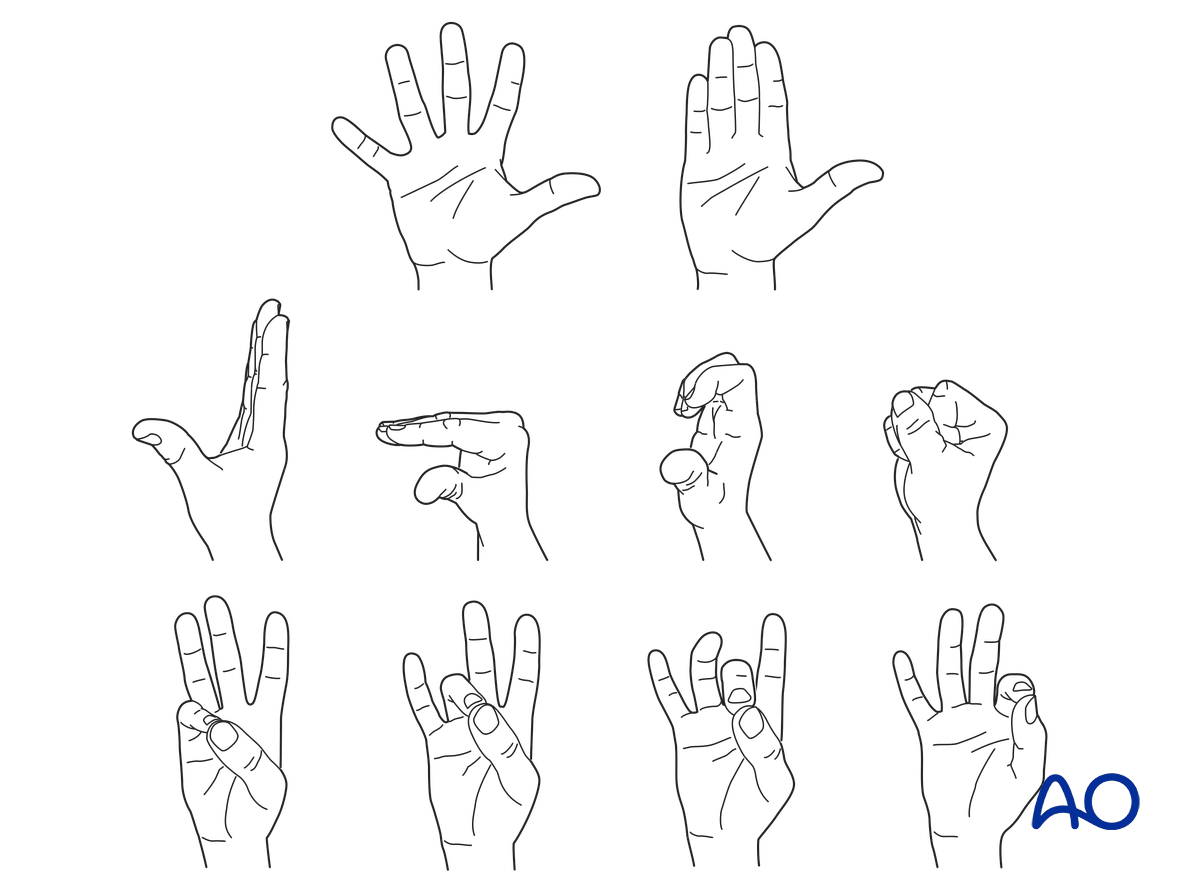
Functional exercises of the nonimmobilized joints should be started immediately to keep the uninjured joints mobile.
K-wire removal
Depending on the injury, any K-wires may be removed usually after 6 weeks.
At this stage, X-rays should be taken to confirm healing.


