

Support splinting of the thumb
1. Introduction
A cast or splint is applied postoperatively. This allows for better pain and edema control and early mobilization of uninvolved joints.
Once swelling has subsided, the initial splinting may be changed to a thermoplastic splint.
The type of splint may vary depending on the injury type and should be decided on a case to case basis. Below is shown the application of a thumb spica splint.
2. Postoperative immobilization
Thumb spica splint (long)
A thumb spica splint with open 1st webspace helps to neutralize fracture displacing muscle forces and keep the fragments aligned.
This splint immobilizes the 1st MCP, 1st CMC, and wrist joints.
In proximal and diaphyseal metacarpal fractures, the IP joint should be left free to help with early EPL and FPL mobilization.
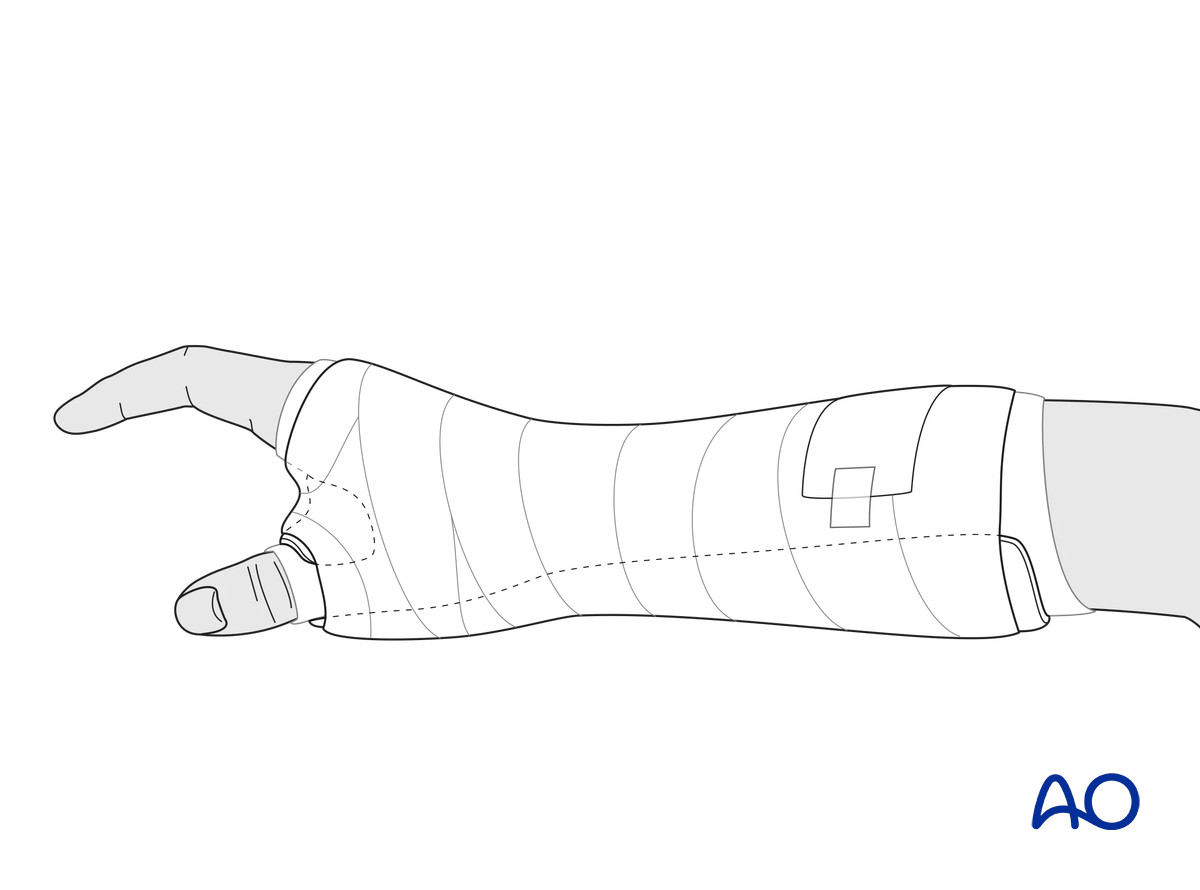
The IP joint needs to be included in the splint if the fracture involves the MCP joint, eg, distal metacarpal fracture, tendon injuries, or any phalangeal fracture.
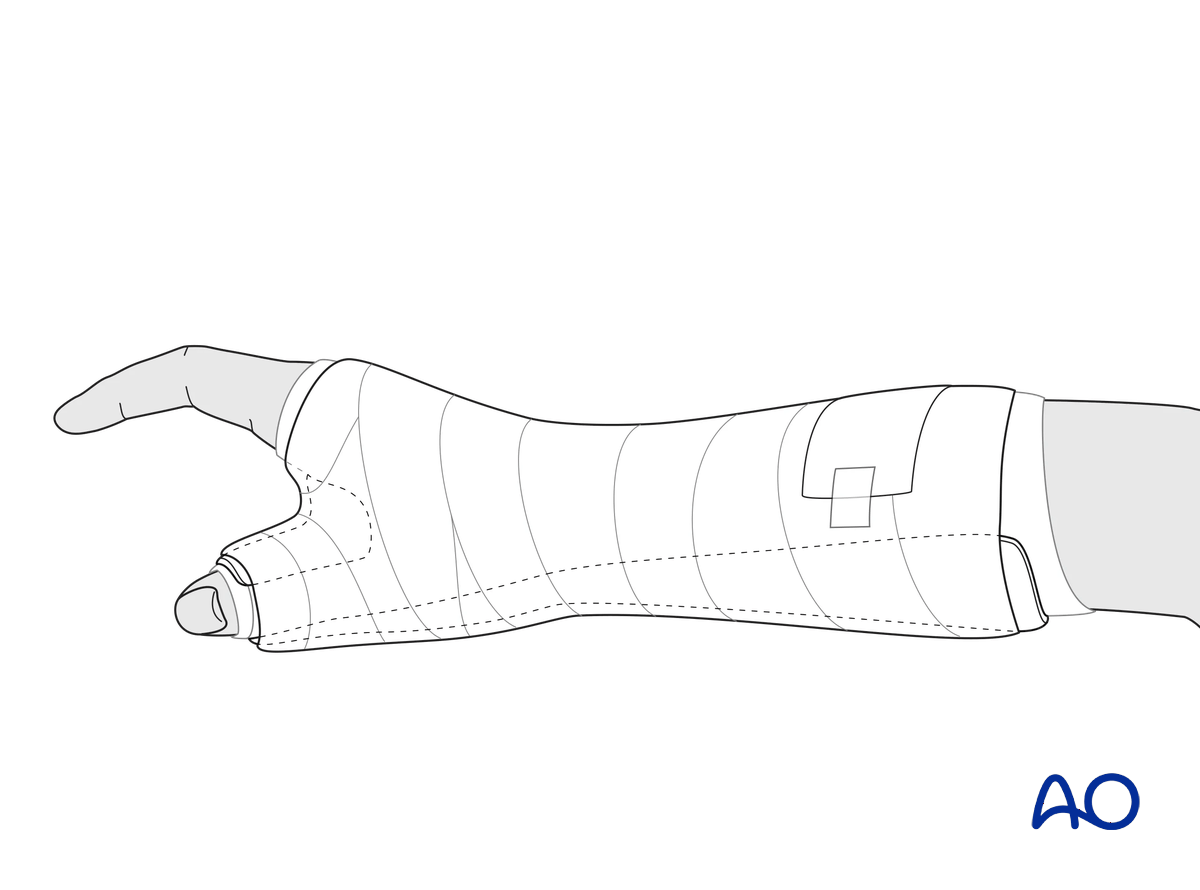
Thumb spica splint (short)
The thumb spica may be shortened leaving the wrist free. This may be used in ligamentous injuries and avulsion fractures of the MCP joint, eg, skier’s thumb.
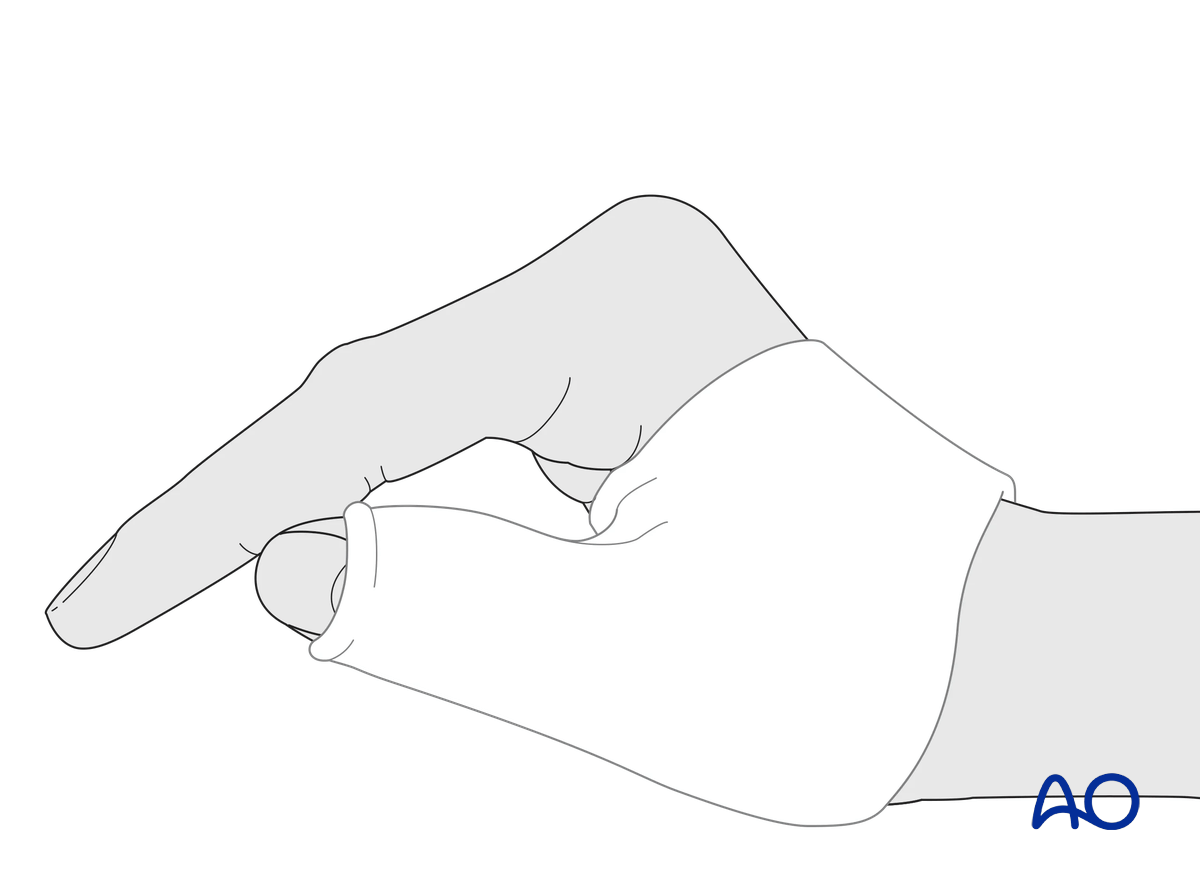
3. Splint application
Immobilize the hand and wrist in a well-padded thumb spica splint with the wrist slightly extended and the 1st MCP joint immobilized in a position of abduction.
Metacarpal and Phalanx—Fractures and Soft-tissue Injuries—Thumb Spica
Paul Demmer, Doron JM Frantzen, Nikolaas GJ Maritz
The thumb spica is a circular plaster cast used to immobilize the thumb. In this presentation the application of the thumb spica will be demonstrated.
Maintaining reduction of metacarpal injuries
During the application of the splint, it is important to maintain thumb abduction by pressure over the palmar aspect of the first metacarpal head and the dorsal aspect of the 1st metacarpal base.
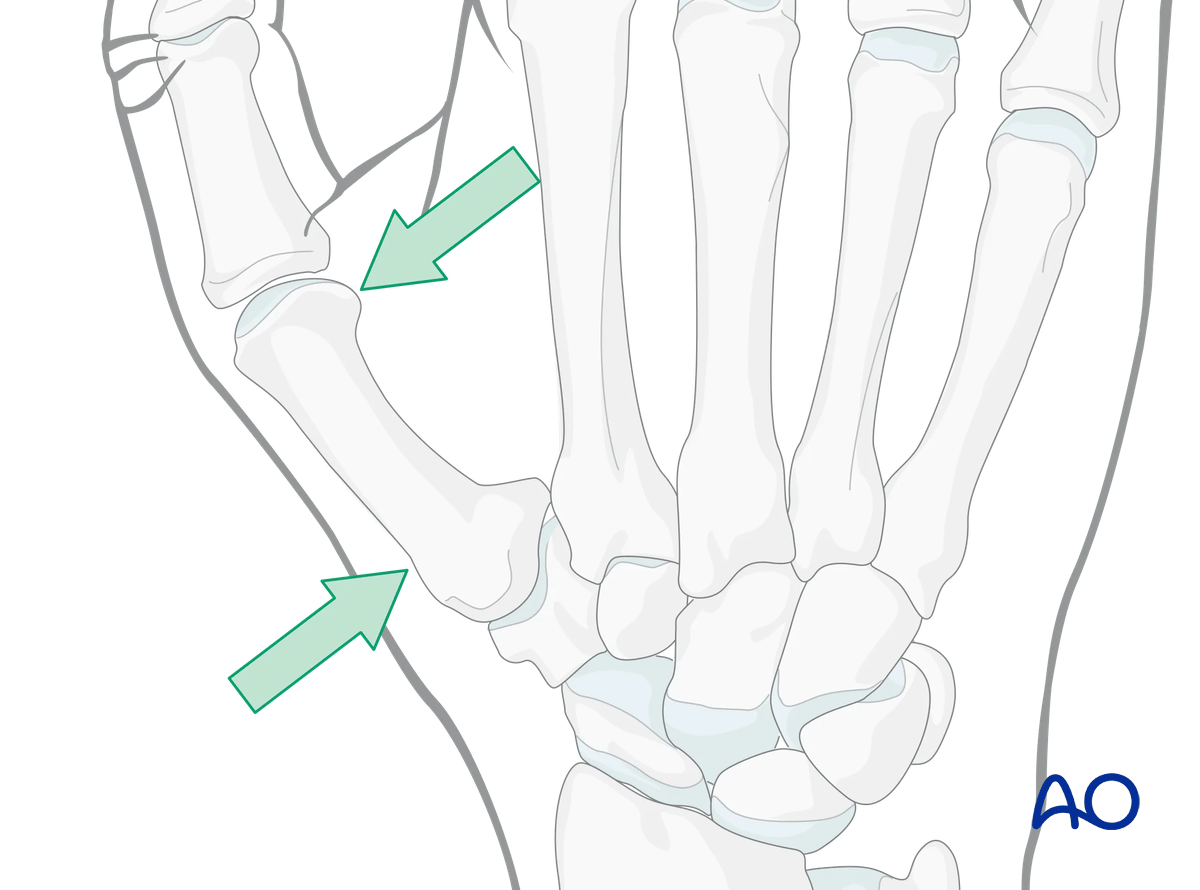
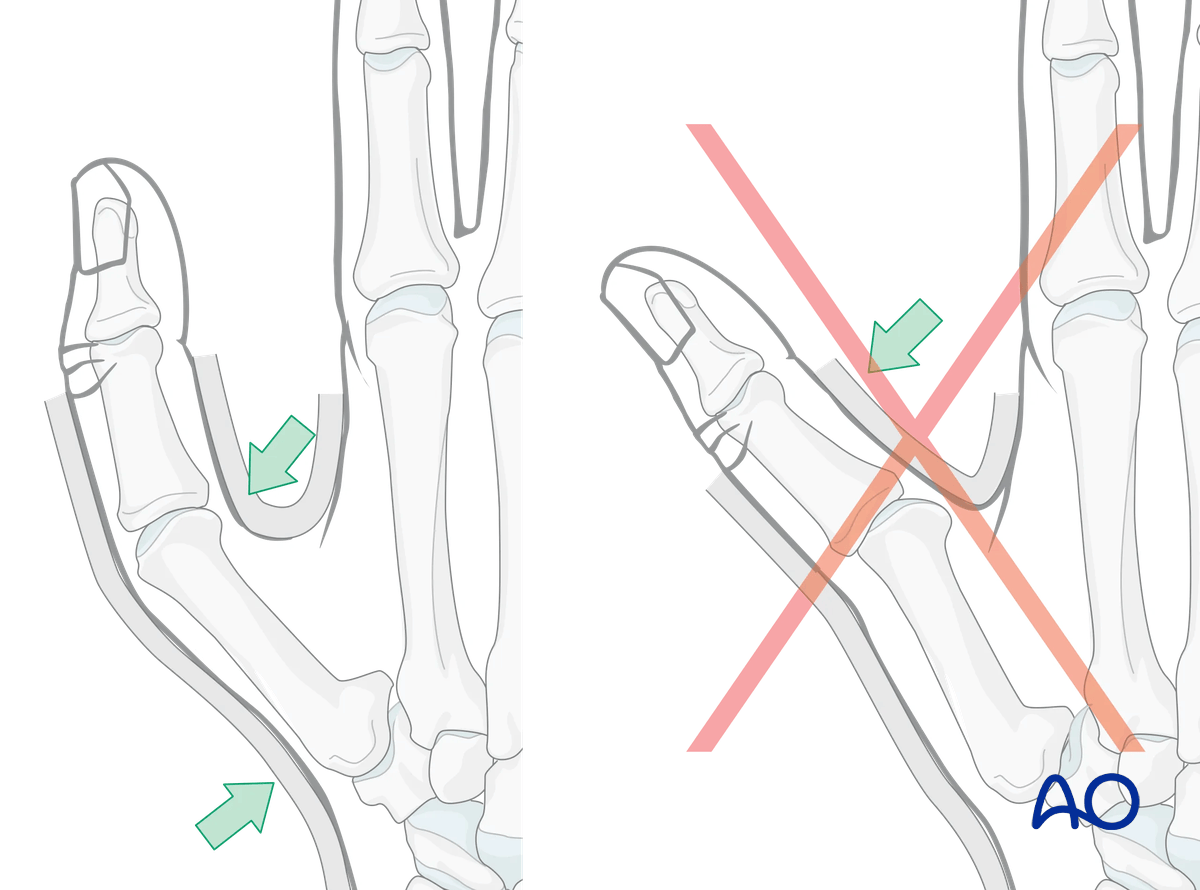
Splinting
Protect the skin of the arm and hand with padding/cotton sleeve to avoid pressure sores, especially on the 1st webspace, distal ulna, and styloid process of the radius.
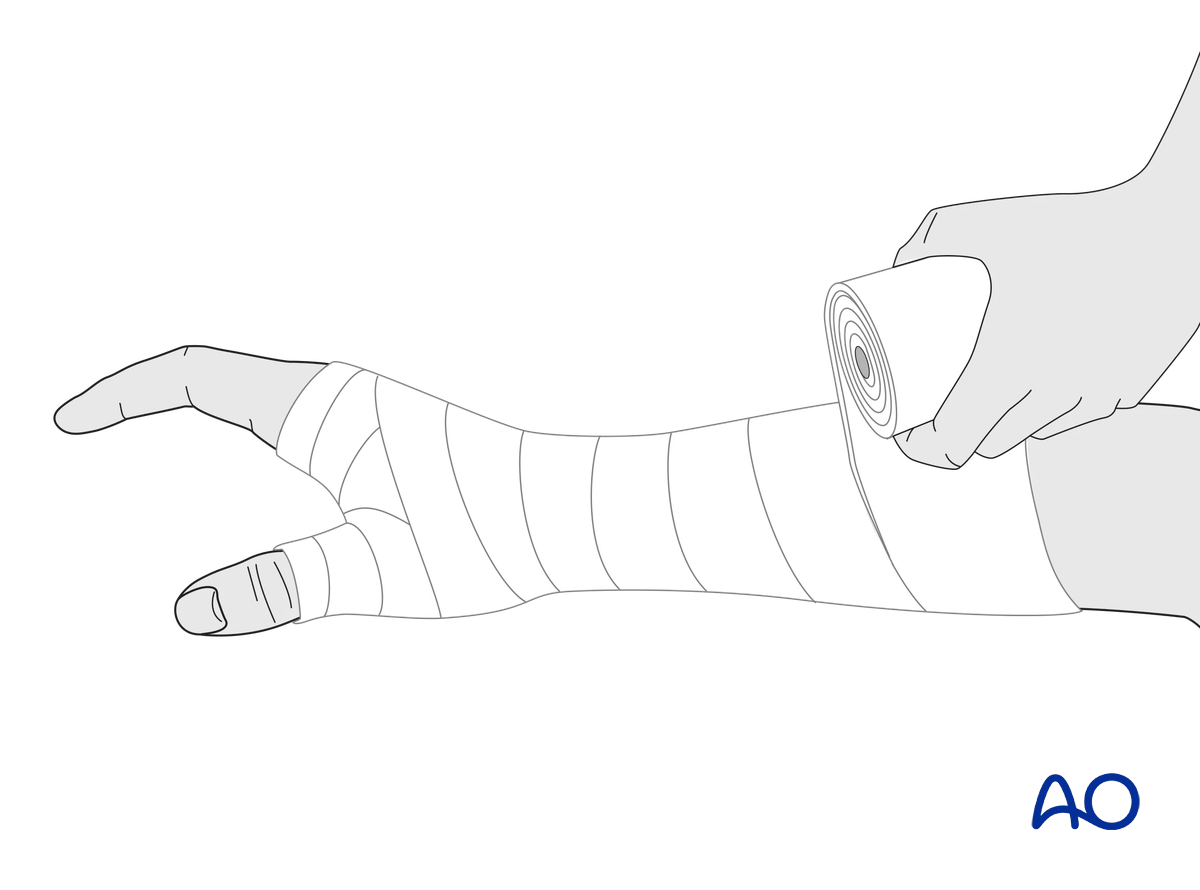
Create a splint of several layers of cast bandage depending on the specific type of bandage available. It should cover the palmar half of the forearm, wrist, and thumb.
The wrist should be in neutral or slight extension.
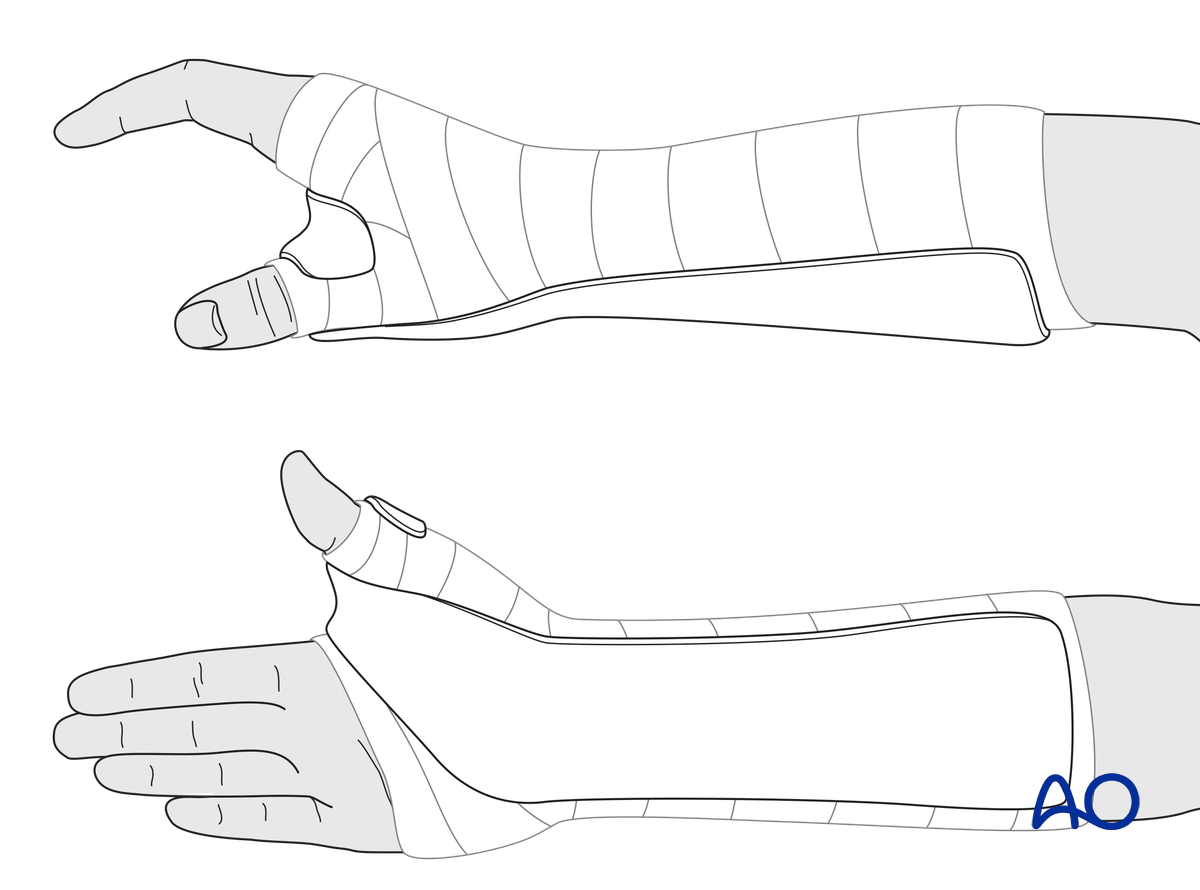
Make sure that the splint does not extend too far distally, either at the level of the finger metacarpophalangeal (MCP) joints, or the interphalangeal joint of the thumb. The splint must not limit complete flexion of these joints.
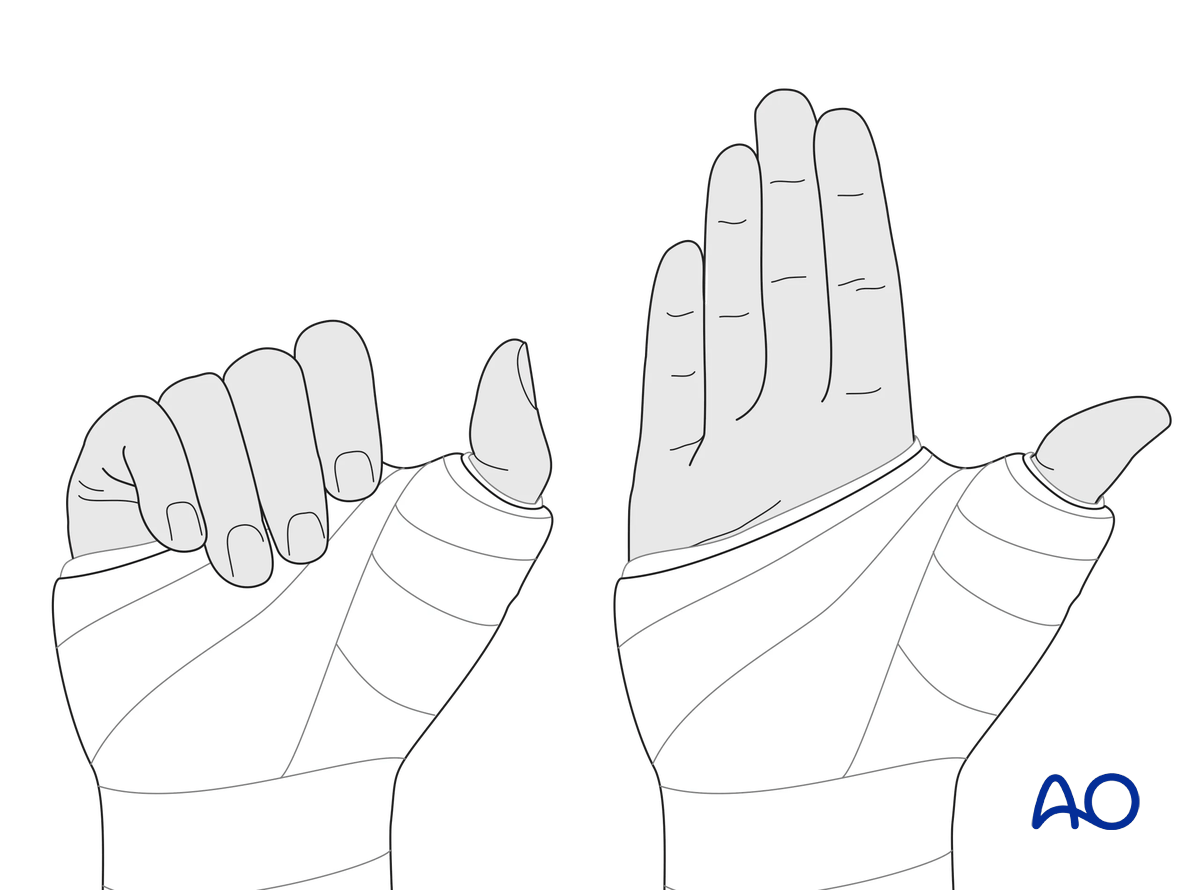
The splint is held in place with an elastic bandage. The bandage should not be overtightened, especially at the level of the wrist joint and 1st webspace, to avoid pain and excessive swelling of the hand.
Direct skin contact with adjacent fingers should be prevented by placing gauze pads between them.
The patient should be instructed to add another elastic bandage if necessary.


