Dorsal approach to the MCP joint of the thumb
1. Introduction
Indications
This approach is indicated for intraarticular, or periarticular, fractures of the metacarpophalangeal (MCP) joint of the thumb.
It is also used for arthrodesis of the MCP joint.
AO teaching video
Thumb—Metacarpophalangeal joint—Dorsal approach
Renato M Fricker, Klaus Lowka, Regula Steiger
2. Surgical anatomy
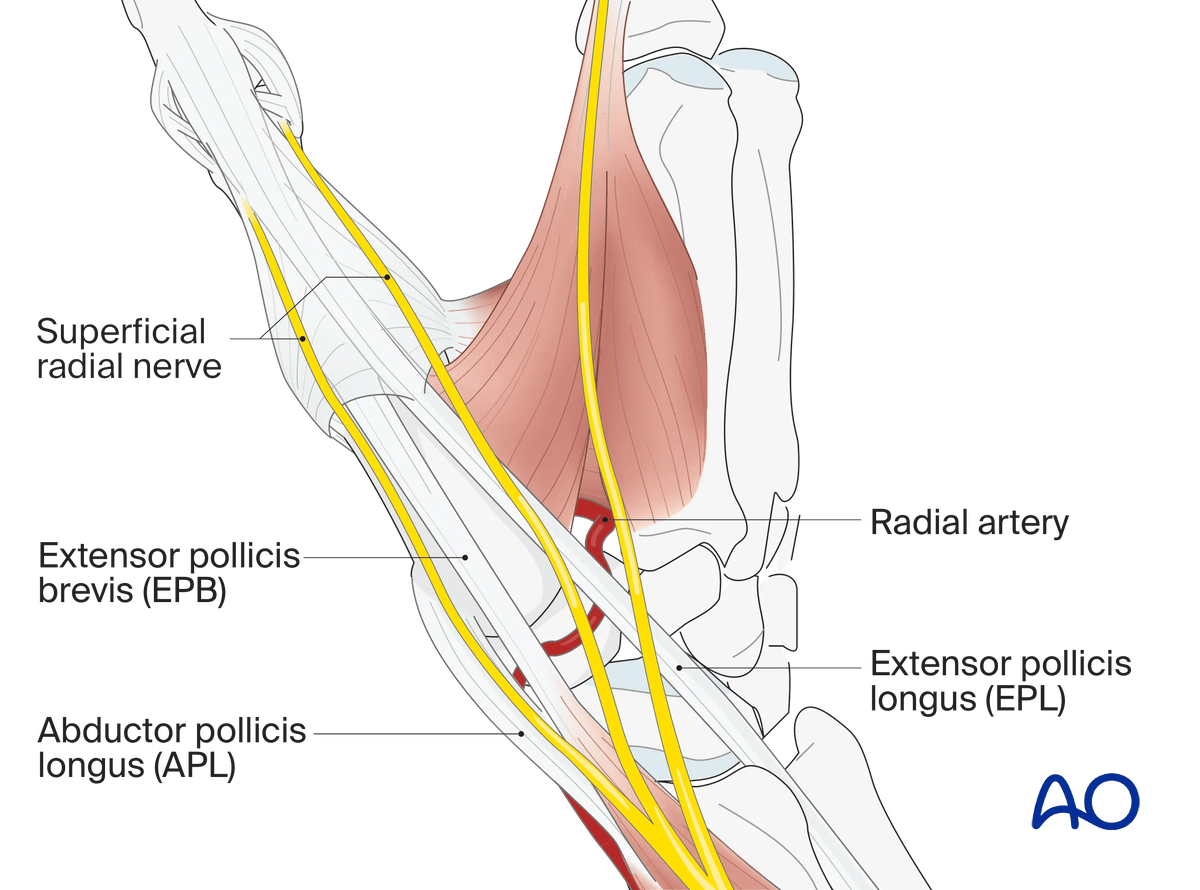
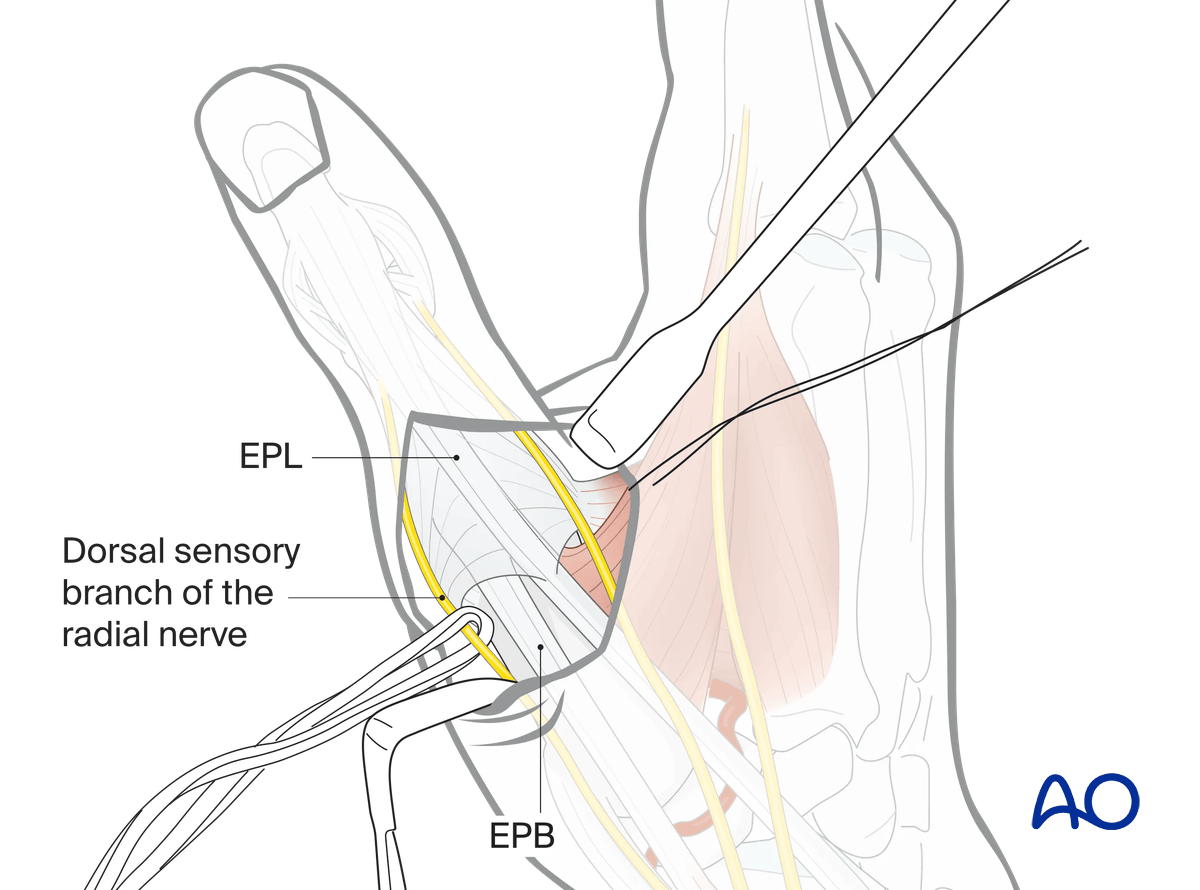
For this approach, identification and protection of the dorsal sensory branches of the superficial radial nerve is important.
3. Skin incision
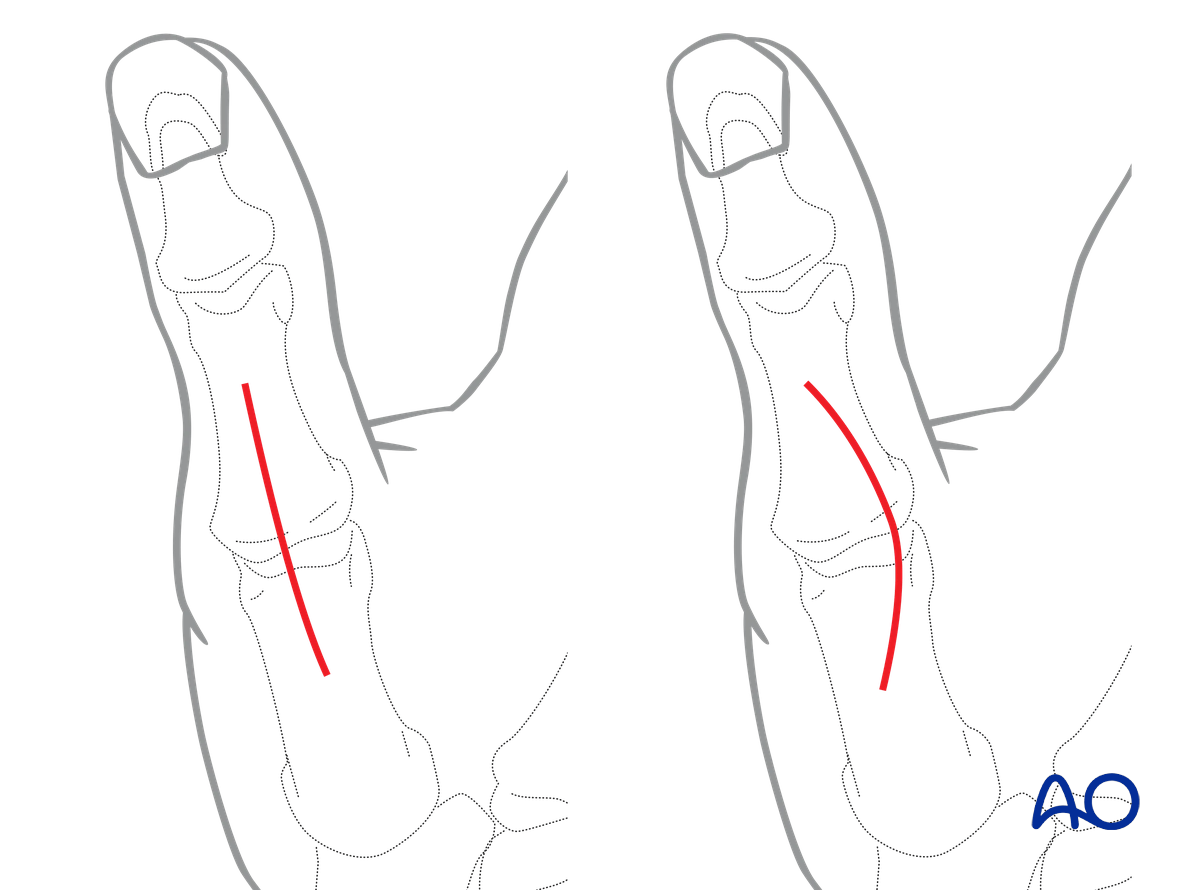
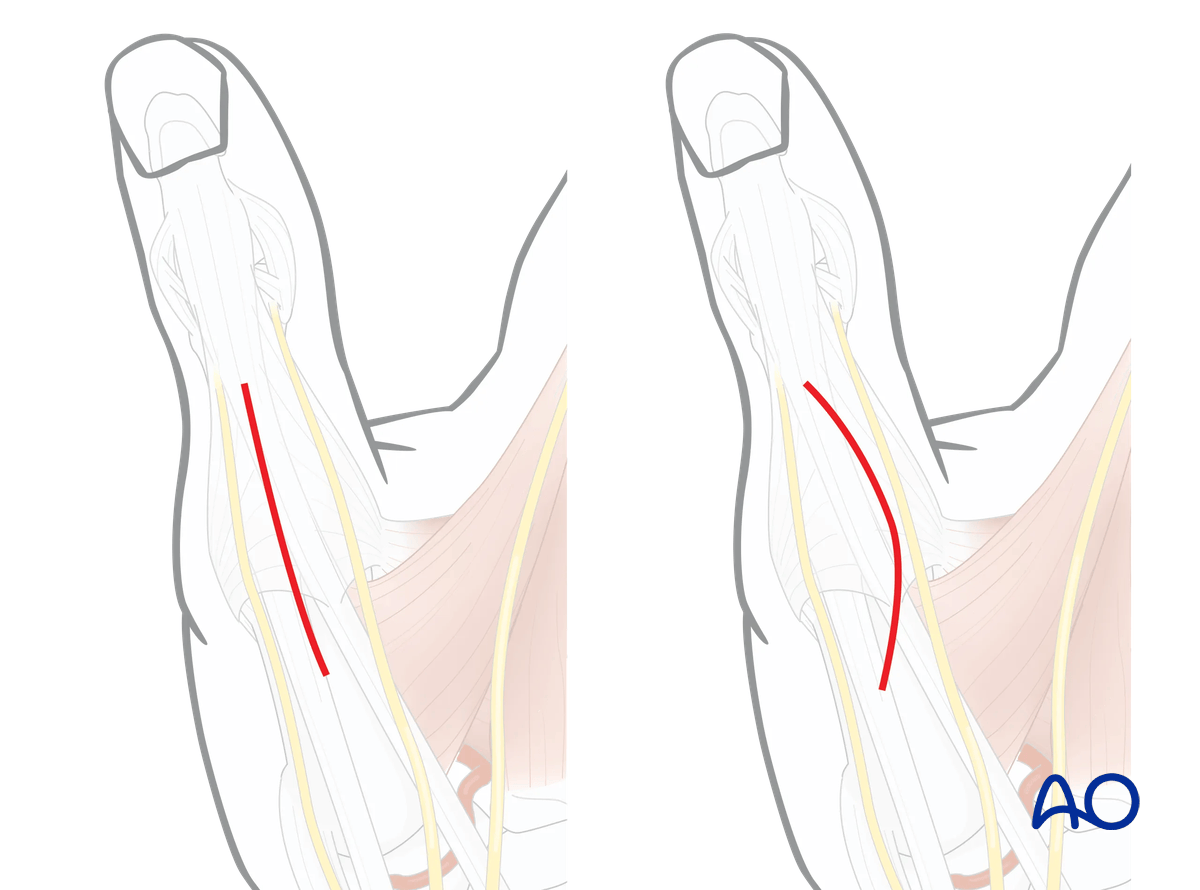
A straight, or gently curved, skin incision can be used.
Start the incision 2 cm proximal to the MCP joint, extending it to approximately 2 cm distally.
Identify and protect the dorsal digital branches of the superficial radial nerve.
4. Exposure of the extensor tendons
Elevate the skin and fine subcutaneous tissue as a single layer by blunt dissection on the paratenon of the extensor mechanism and expose the extensor pollicis longus (EPL) and extensor pollicis brevis (EPB) tendons.
5. Splitting of the extensor hood
For dorsal access to the MCP joint, incise between the EPL and the EPB tendons.
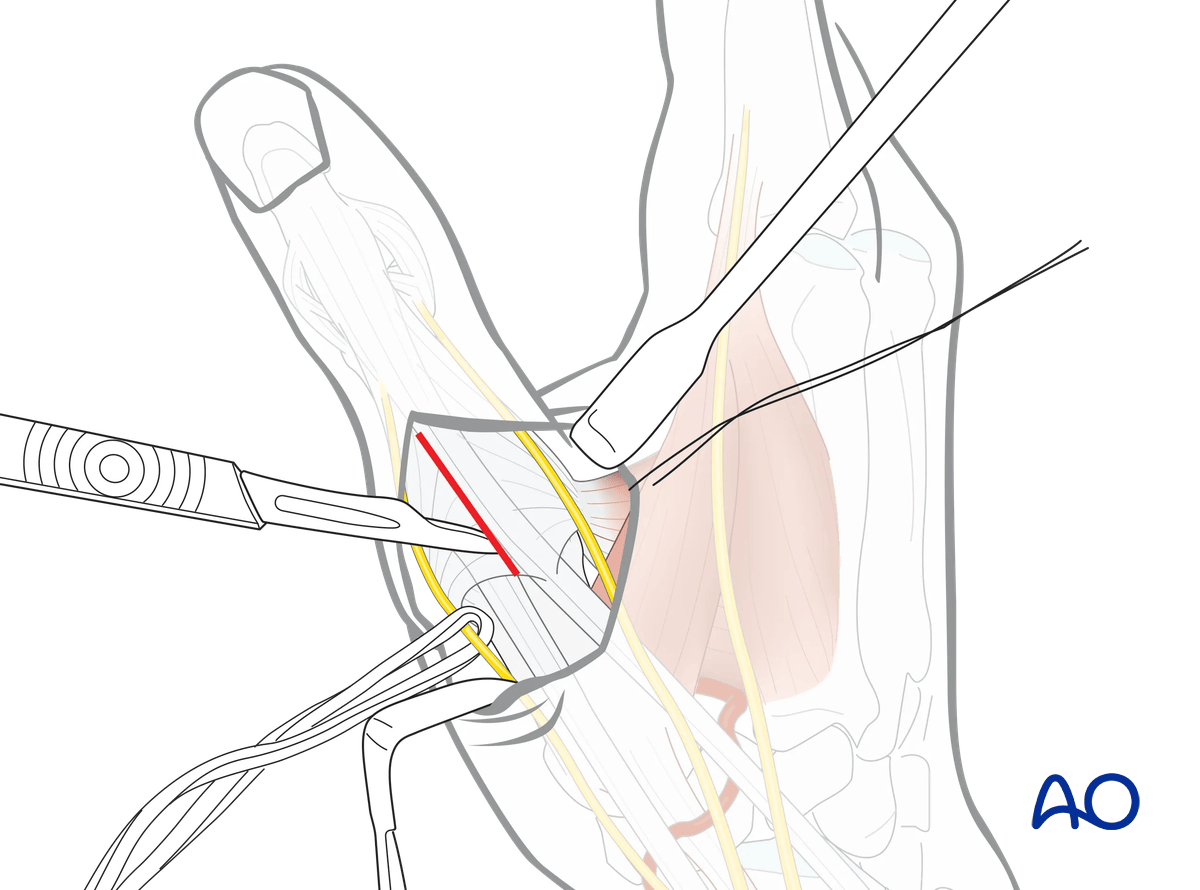
Be careful not to detach the insertion of the EPB from the base of the proximal phalanx.
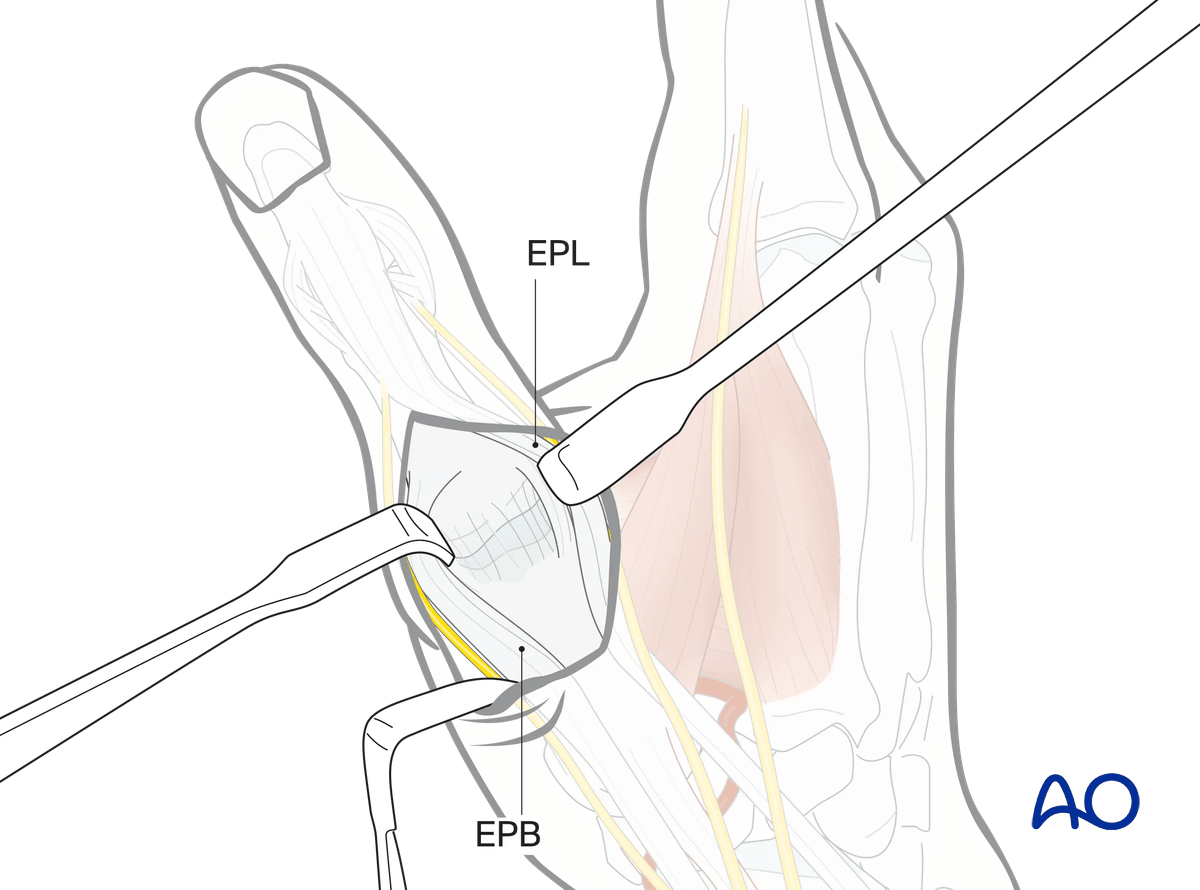
6. Capsulotomy
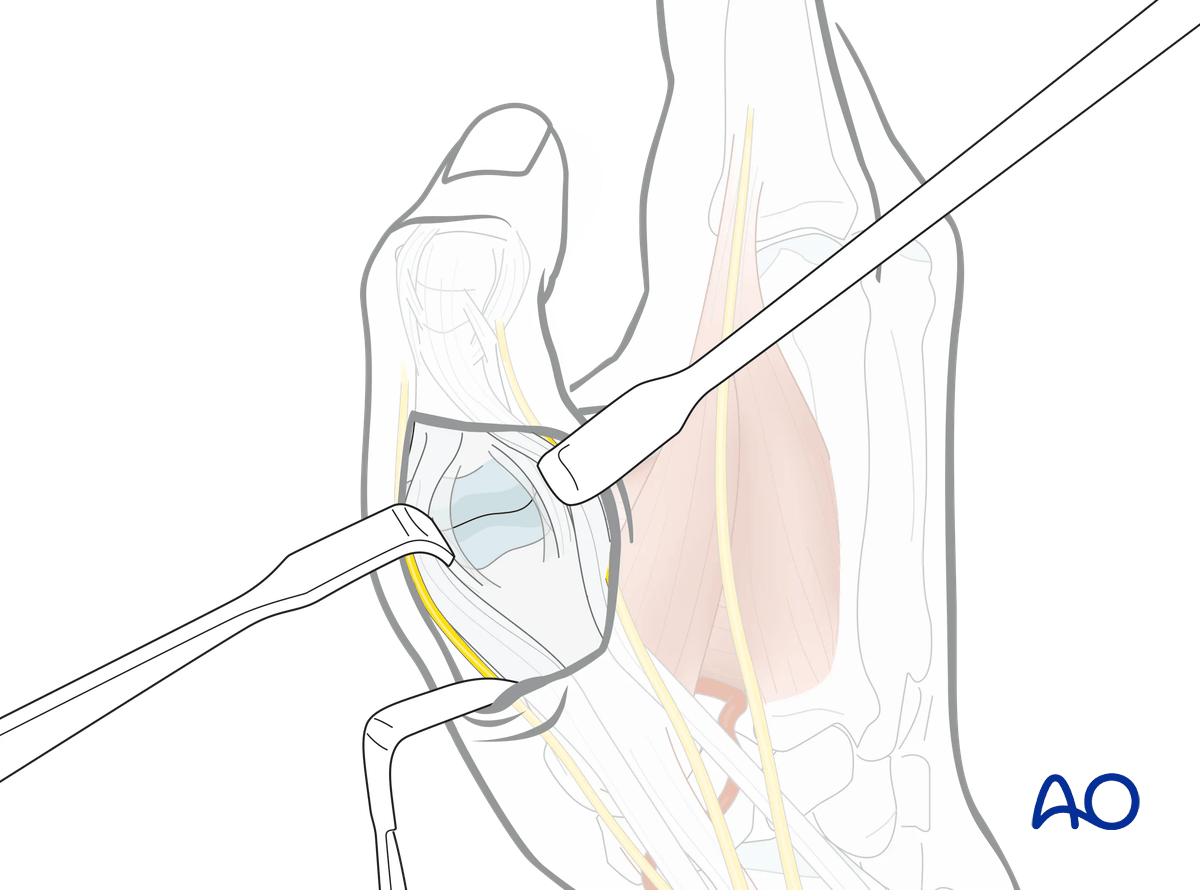
After separating the extensor tendons, identify the joint capsule. Perform a longitudinal capsulotomy to enter the joint.
Take care not to detach the collateral ligaments.
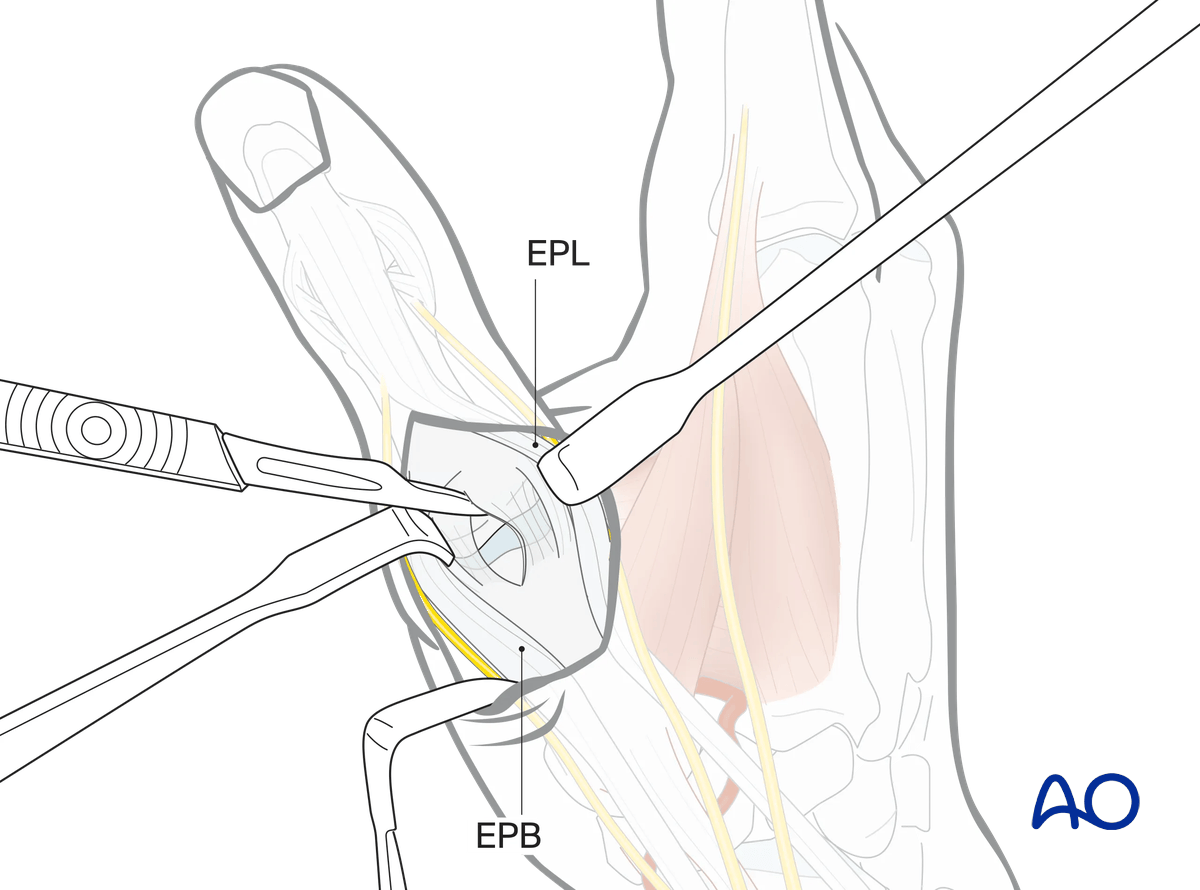
Exposure of the joint
Flex the thumb to expose the MCP joint fully.
7. Wound closure
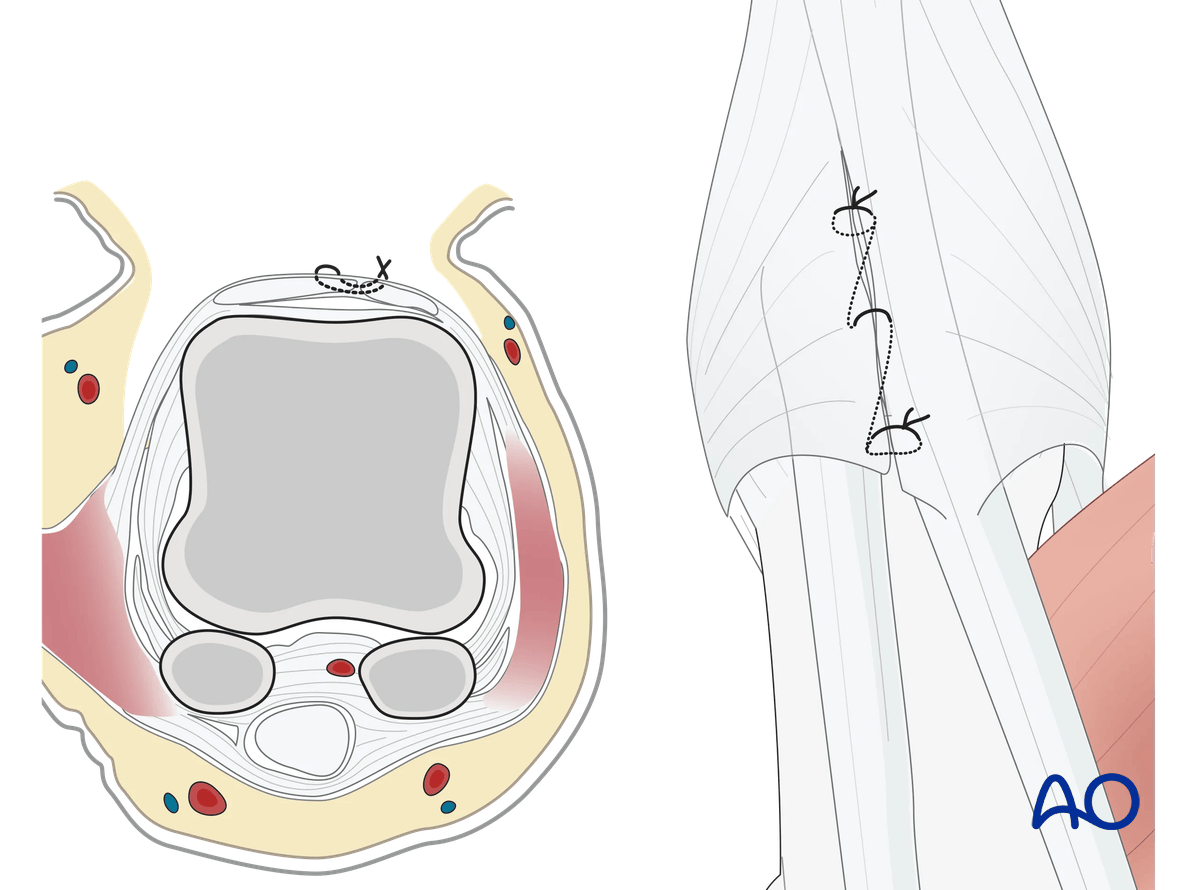
Repair the capsulotomy together with the separated EPL and EPB tendons with resorbable, fine sutures (usually PDS 5-0 or 6-0 either uninterrupted or interrupted).