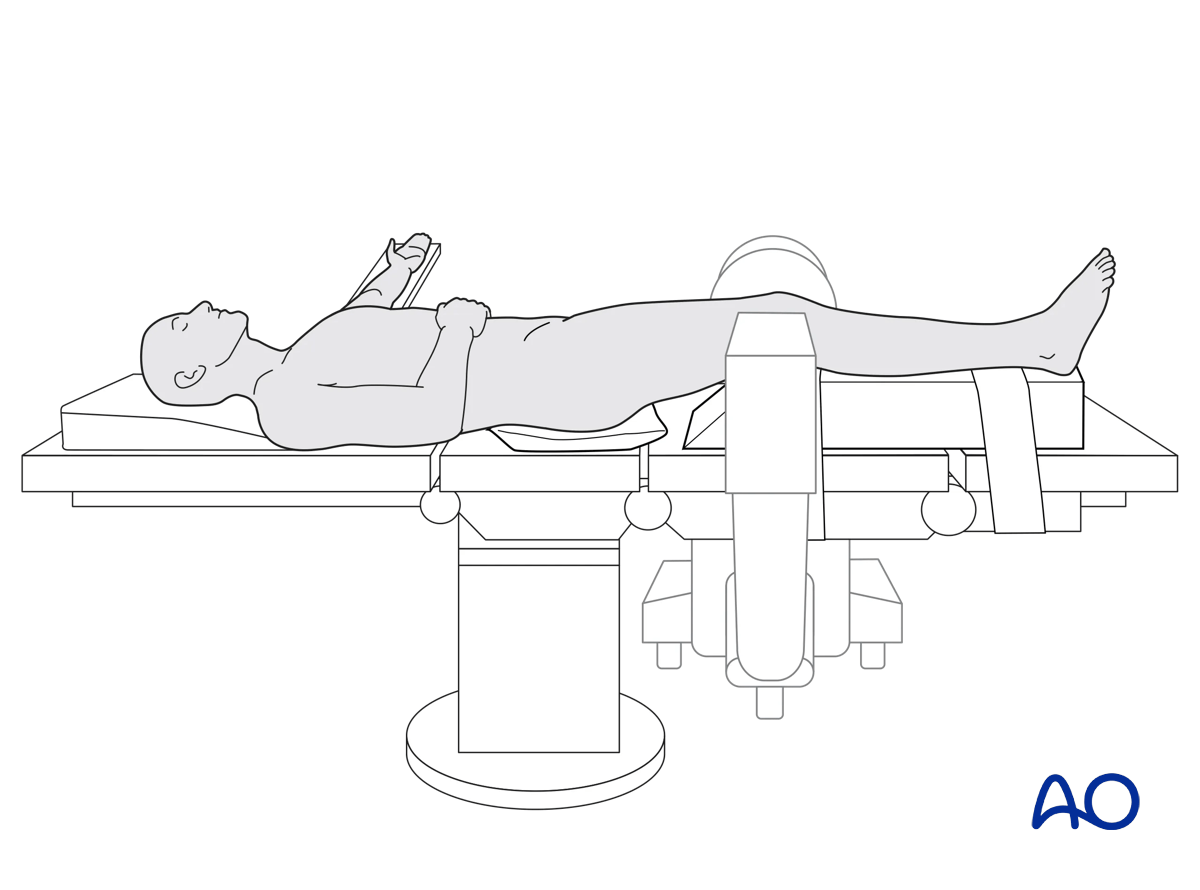
Supine position
1. Positioning
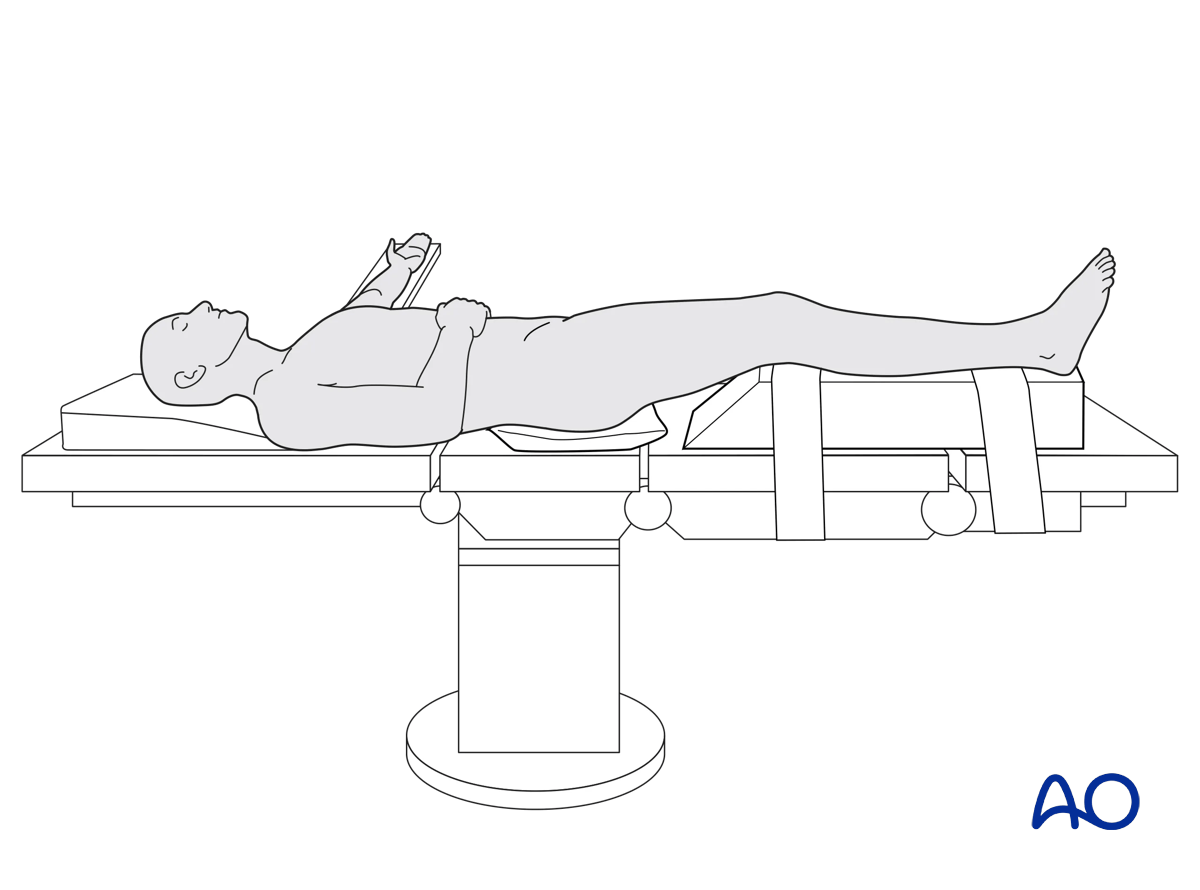
A small bump or roll is frequently helpful, particularly for isolated lateral plateau approaches. It can be counterproductive when working posteromedially. When used, the bump is placed beneath the ipsilateral buttock and torso to allow the patella of the injured limb to be oriented straight anteriorly. Prepare the limb from the ankle to the groin and drape the foot which will allow free mobility of the whole limb. Place a sterile pack or removable ramp pillow under the knee to allow approximately 20–30° of flexion. At times full extension of the knee may be necessary to reduce traction on the patellar ligament.
2. Tourniquet usage
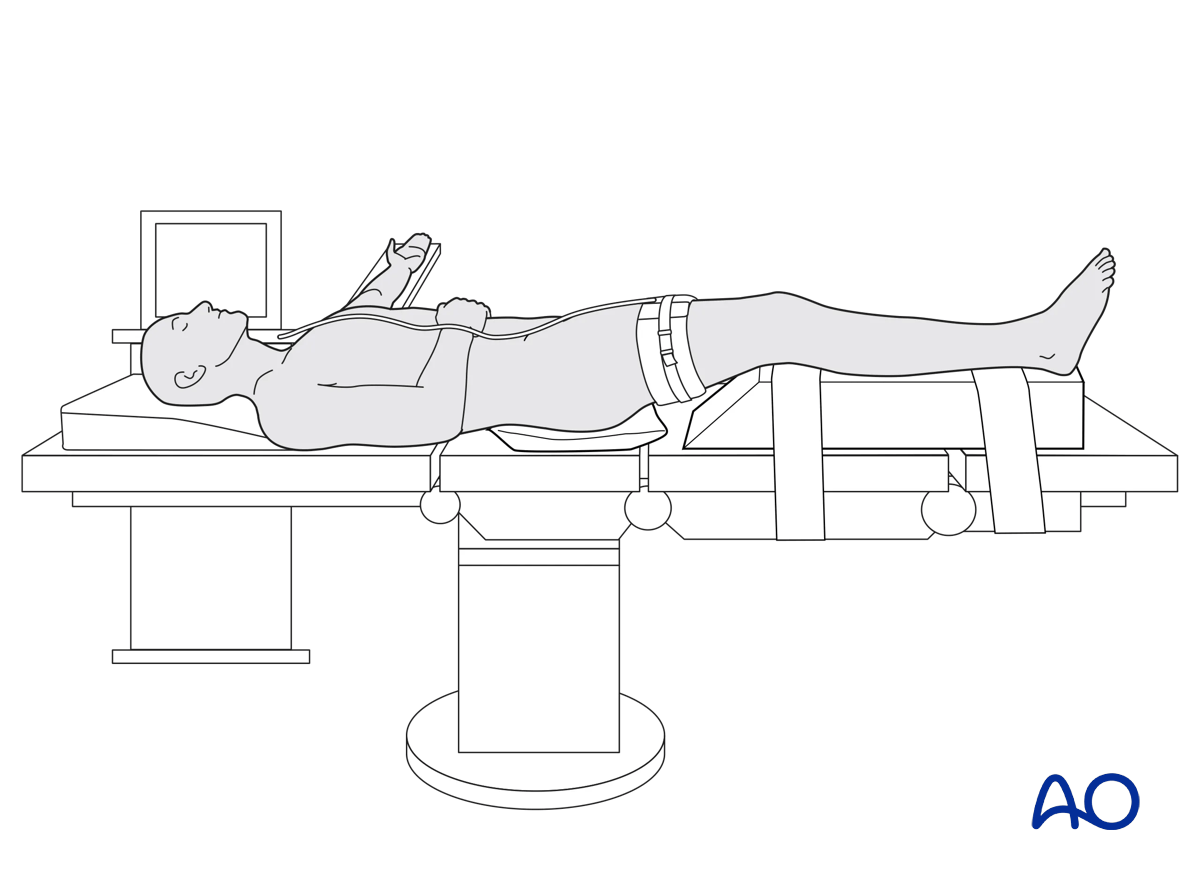
The use of a tourniquet may be necessary in open and direct reduction of articular fractures.
It is also helpful in open direct reduction and screw and plate fixation. It is not necessary whenever MIO techniques are employed. It is contraindicated for the insertion of external fixator pins, in intramedullary nailing, and under most circumstances when dealing with open fractures.
3. C-arm positioning
C-arm positioning must allow for perpendicular images of the plateau, especially accounting for the posterior slope of the proximal tibia. A true lateral image must be easily obtainable as well. The C-arm should be placed on the non-injured side of the patient.