

Approach for minimally invasive osteosynthesis (MIO) of the proximal tibia
1. Principles
Minimally invasive osteosynthesis (MIO) of the proximal tibia is particularly useful for extra-articular or simple metaphyseal fractures where preserving soft tissue and periosteal blood supply is critical.
2. Teaching video
AO teaching video: MIO tibia, proximal
anterolateral approach
3. Skin incision
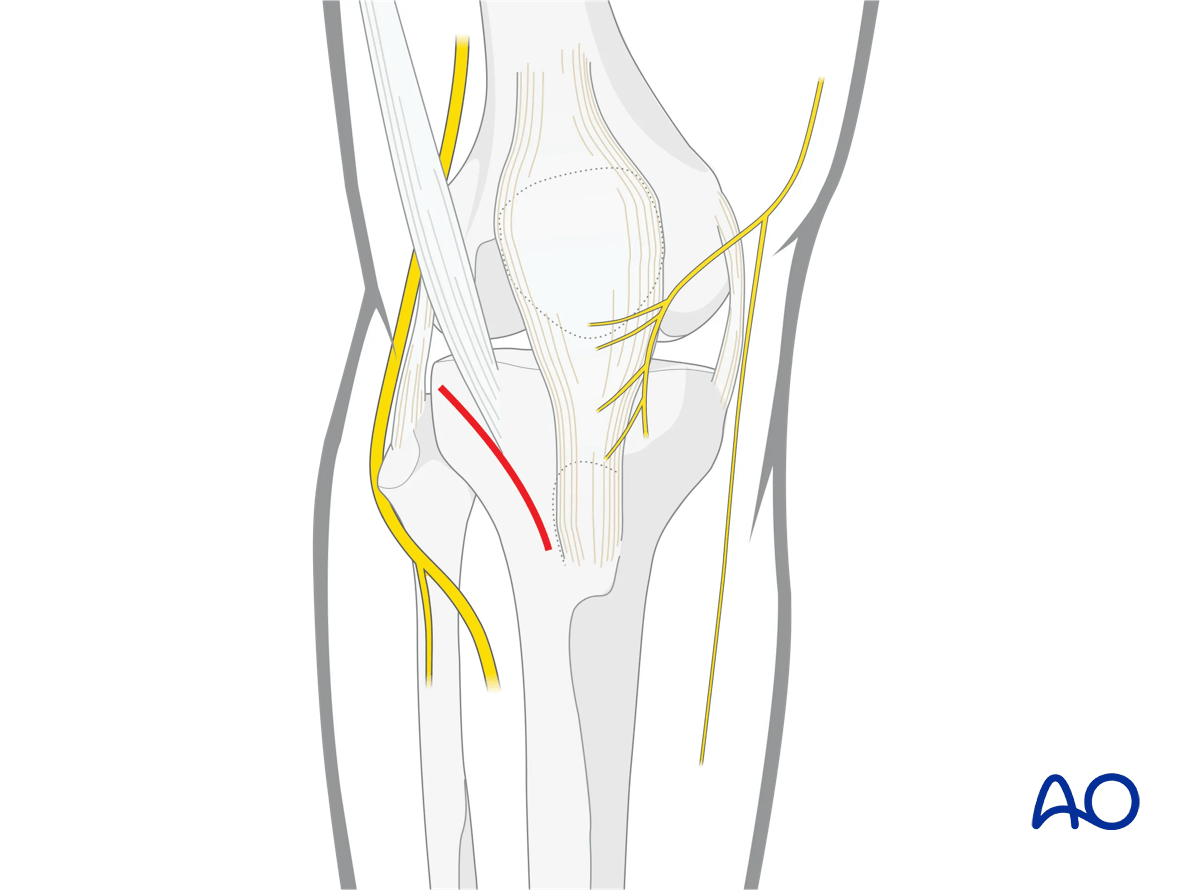
Identify Gerdy’s tubercle. Make a straight incision about 5 cm in length starting posteriorly to Gerdy’s tubercle and running distally and anteriorly.
4. Opening the fascia
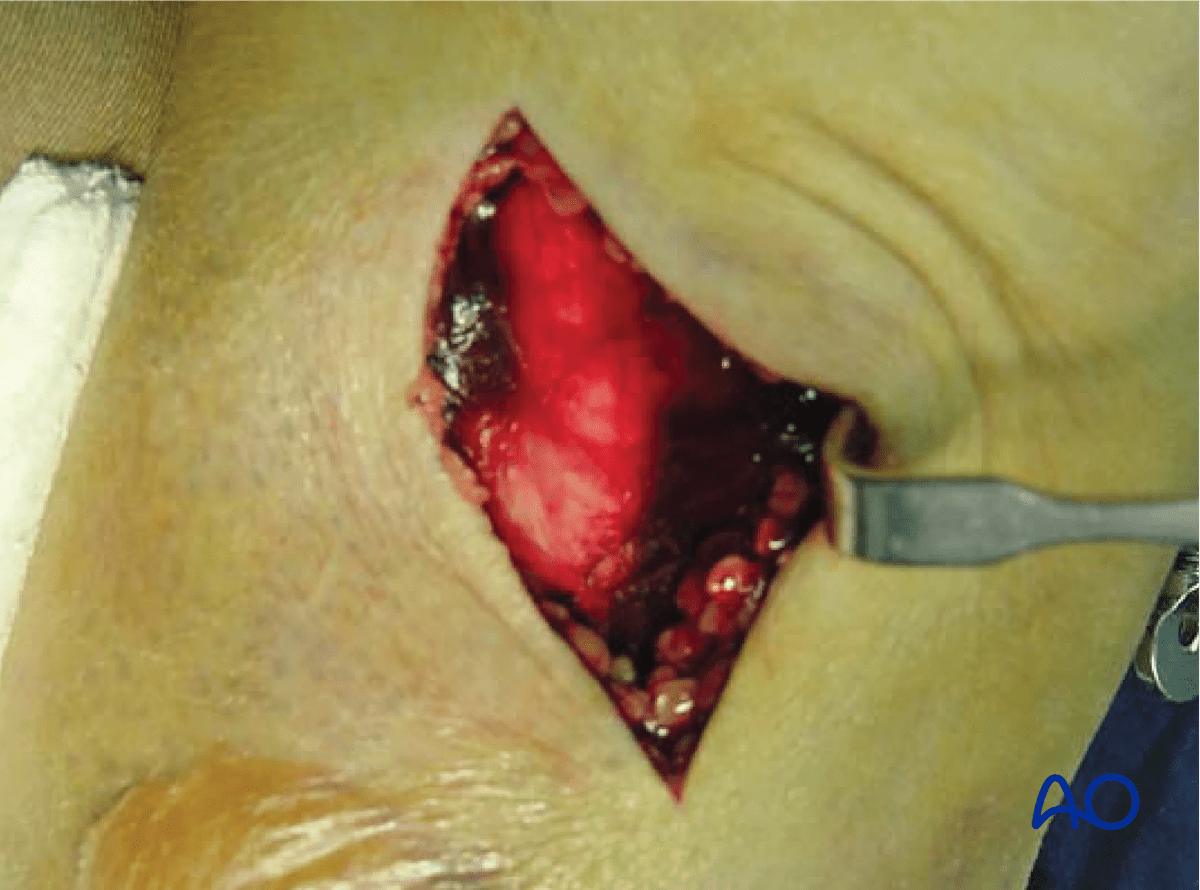
Open the deep fascia starting at Gerdy’s tubercle and extend it distally. Expose the bone by releasing the anterior attachment of tibialis anterior.
5. Arthroscopy
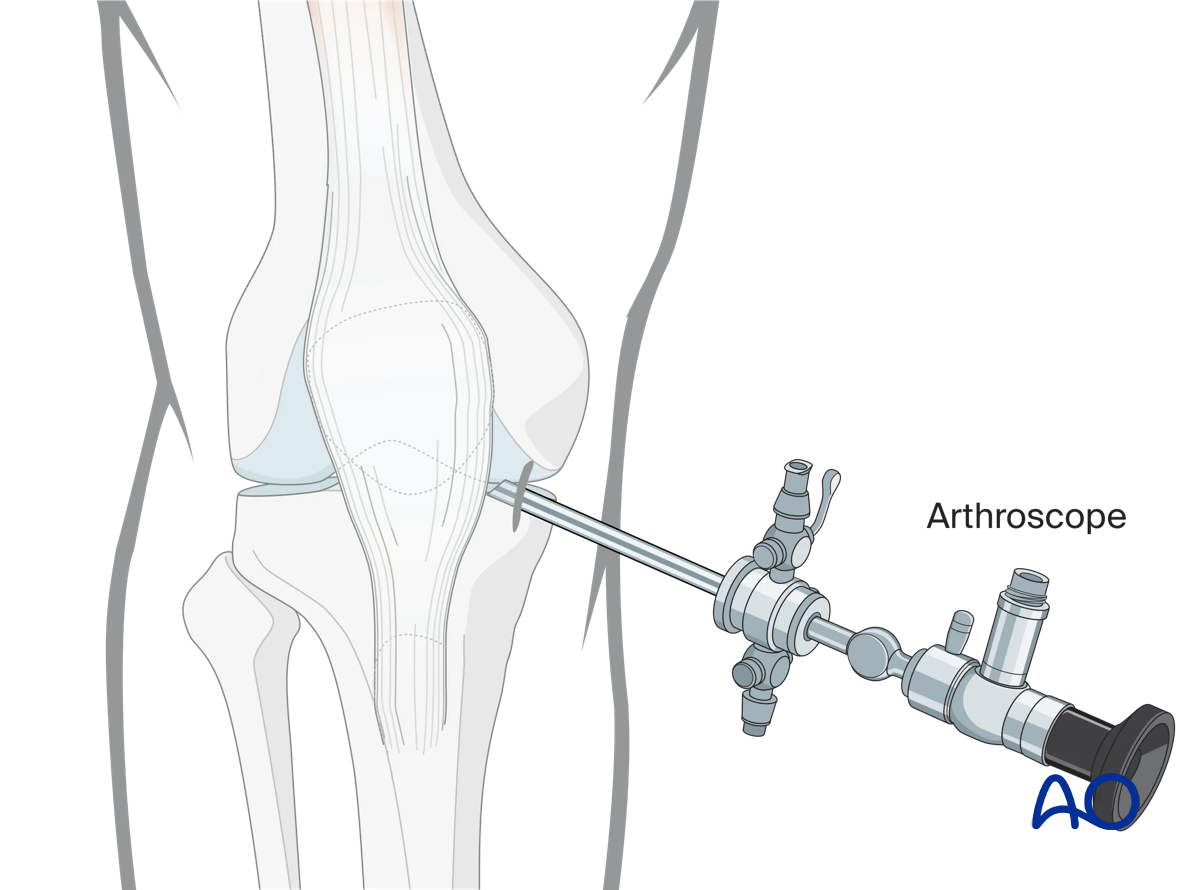
To control the articular reduction, insert an arthroscope through a medial portal. You cannot make an adequate arthrotomy laterally through the small lateral incision of a minimally invasive approach.
6. Wound closure
To avoid compartment syndrome do not close the fascia. Close the soft tissues in a routine manner.


